
Have you ever noticed how much better you feel after spending time with someone who truly understands you?
Maybe it is a conversation with a close friend.
Maybe it is laughing with someone you love.
Or perhaps it is simply having someone sit beside you when you are having a difficult day.
Human connection is something we often take for granted. But what if friendship is not just something that makes life happier? What if it is also something our brains need?
For people living with traumatic brain injury (TBI), social connection can be especially meaningful. Changes in memory, communication, energy, and emotional well-being may affect how we interact with others.
Sometimes, friendships change. Social activities become harder. And feelings of loneliness can become part of life after brain injury.
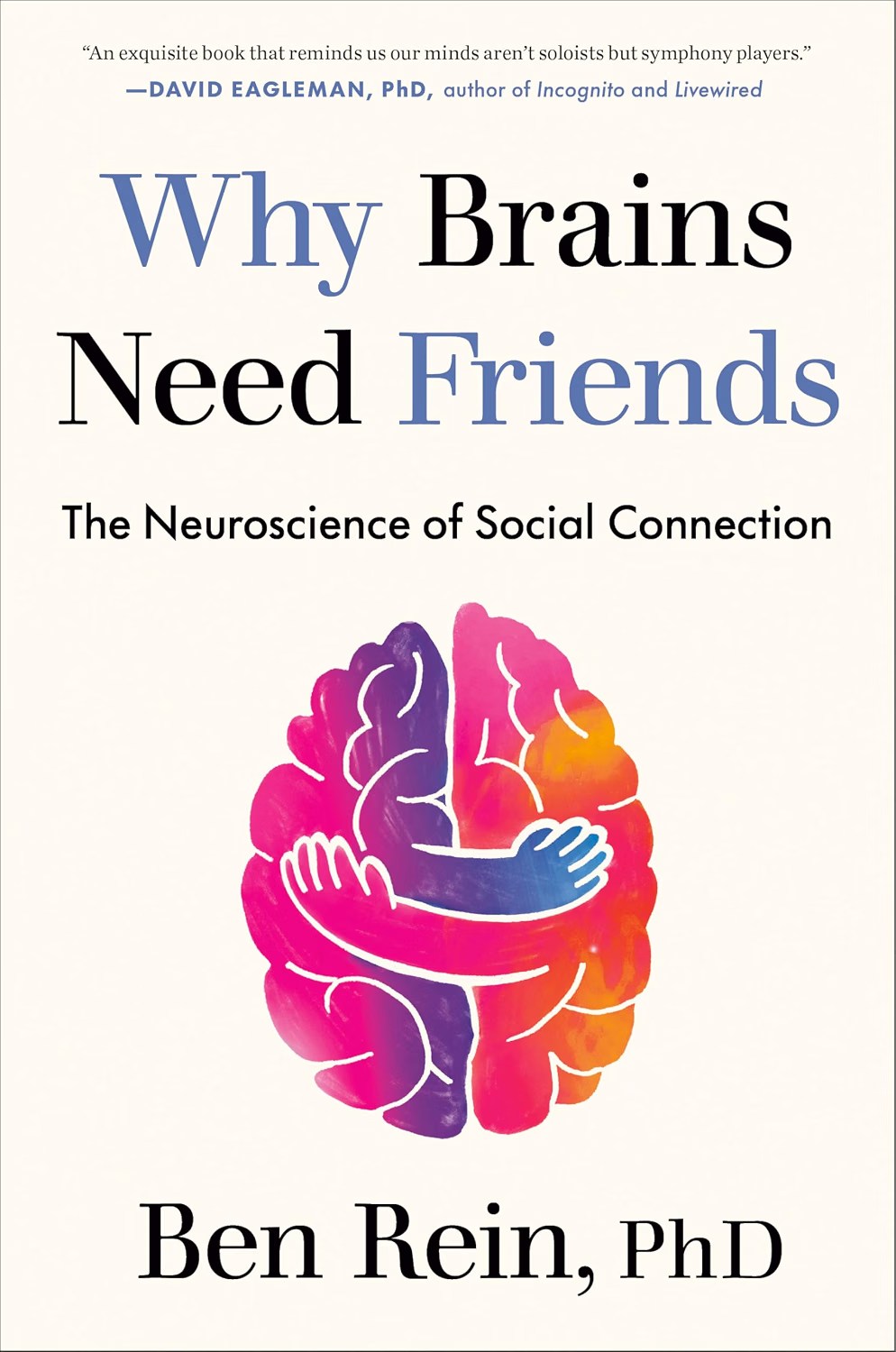
Why Brains Need Friends: The Neuroscience of Social Connection by Ben Rein, PhD, explores the science behind human relationships and why connection matters to our brains and overall well-being.
Drawing on neuroscience research, Dr. Rein explains how everyday social interactions influence us, why isolation can be harmful, and how we can build healthier connections.
This book offers an opportunity to look at friendship in a new way: not simply as something we enjoy, but as an important part of our lives.
🧠 Understanding Why Our Brains Need Social Connection
We often think about brain health in terms of exercise, nutrition, sleep, and mental stimulation.
But there is another important part of our well-being: our relationships with other people.
Dr. Rein explores how social interactions affect the brain and body.
Even ordinary moments can matter.
A friendly conversation with a barista, greeting a neighbor, talking with a family member, or spending time with a close friend can all contribute to our social lives.
These interactions may seem small, but they are part of the connections that help us feel involved in the world around us.
For someone living with a brain injury, this is an important reminder.
You do not need a large circle of friends or a busy social calendar to experience meaningful connection.
Sometimes, one genuine conversation can make a difference.
🤝 The Hidden Effects of Social Isolation
One of the important topics explored in Why Brains Need Friends is the relationship between social isolation and brain health.
Dr. Rein explains why spending too much time disconnected from others can affect our well-being.
Loneliness is not simply about being physically alone.
You can be surrounded by people and still feel lonely.
You can also enjoy time by yourself without feeling isolated.
The difference often comes down to whether you have the meaningful connections and support you need.
After a brain injury, social isolation can happen for many reasons.
You may have less energy for social activities.
You may find conversations harder to follow.
You may feel uncomfortable in noisy or crowded environments.
Or you may feel that other people do not understand what life after TBI is really like.
These experiences can make it harder to maintain relationships.
The book encourages us to recognize the importance of connection and to be more intentional about including it in our lives.
💬 In-Person Conversations and the Virtual World
Technology makes it easier than ever to communicate.
We can send messages, make video calls, and connect with people through social media.
These tools can be especially helpful when distance, disability, or limited energy makes in-person visits difficult.
However, Dr. Rein explores how the brain experiences virtual interactions differently from face-to-face conversations.
In-person interactions involve more than words.
We also experience facial expressions, body language, eye contact, gestures, and other social signals.
For people with brain injuries, virtual communication can offer a useful way to stay connected while managing energy and other challenges.
At the same time, meaningful face-to-face interactions may provide experiences that digital communication cannot fully reproduce.
The important thing is finding a balance that works for your needs and abilities.
Connection does not have to look the same for everyone.
❤️ The Science of Empathy and Deep Connections
Another fascinating topic in the book is empathy.
Empathy helps us understand and respond to what another person may be feeling.
It plays an important role in building trust, friendship, and meaningful relationships.
Think about someone who listens without interrupting.
Someone who does not judge you when you are having a difficult day.
Someone who understands that you may need to cancel plans or take a break.
These small acts of understanding can help create a sense of safety and belonging.
For people living with TBI, having friends who understand their challenges can be especially valuable.
You should not have to explain every symptom or apologize for every limitation to feel accepted.
Sometimes, the best friendships are those in which you can simply be yourself.
🐶 The Special Connection Between Humans and Animals
One of the lovely topics explored by Dr. Rein is the relationship between humans and animals.
Many people experience meaningful companionship through their pets.
A dog greeting you at the door, a cat resting beside you, or simply spending time with an animal can bring comfort and a sense of connection.
Dr. Rein explores the neuroscience behind human-animal relationships and how these interactions may support our well-being.
For people living with brain injuries, animals can also be important companions.
Some survivors have service dogs or emotional support animals that play meaningful roles in their everyday lives.
These relationships remind us that connection is not limited to conversations between people.
Love and companionship can come in many forms.
🌱 Creating Your Own Social Diet
One of the interesting ideas in Why Brains Need Friends is the concept of a social diet.
Just as we pay attention to what we eat, we can become more intentional about the social interactions we include in our lives.
Not every interaction has to be long or complicated.
You can begin with small steps:
💌 Send a message to someone you miss.
☎️ Call a friend or family member.
☕ Have a short conversation with someone.
🐾 Spend time with a beloved pet.
🌳 Join a community or activity that interests you.
❤️ Make time for people who make you feel accepted.
Dr. Rein also provides supplemental materials, including a social journal and an extroversion scale, to help readers reflect on their social preferences and needs.
For someone living with TBI, this idea can be especially helpful.
You may need to consider how much social activity feels comfortable, when you have the most energy, and which interactions leave you feeling supported rather than exhausted.
Building a social life does not mean saying yes to everything.
It means discovering the kinds of connection that work for you.
🌸 Finding Connection After Brain Injury
A brain injury can change many parts of life, including relationships.
You may no longer have the same energy for social activities.
You may need more time to process conversations.
You may find that some friendships change because people do not understand your new needs.
And sometimes, you may miss the person you were before your injury.
These experiences can feel lonely.
But having a brain injury does not mean you have to give up on friendship or connection.
You can build new relationships.
You can reconnect with people.
You can find communities where others understand your experiences.
You can also discover new ways to spend time with the people who matter to you.
Your social life may look different, but it can still be meaningful.
🌻 Making Room for Meaningful Relationships
Not every relationship brings the same kind of support.
Some people make us laugh.
Some encourage us.
Some listen when we need to talk.
Others simply make us feel comfortable being ourselves.
Dr. Rein’s discussion of social connection encourages us to think about the quality of our interactions, not just how many people we know.
For someone navigating life after TBI, this can be an important reminder.
You do not need to maintain every friendship.
You do not need to attend every gathering.
And you do not need to exhaust yourself trying to meet everyone’s expectations.
It is okay to protect your energy and prioritize relationships that bring understanding, encouragement, and joy.
🤍 Connection Does Not Have to Be Perfect
Sometimes, we make social connection harder than it needs to be.
We may worry about what to say.
We may feel awkward reaching out after a long time.
We may be afraid that people will not understand us.
But connection does not require perfect conversations or perfect relationships.
A simple hello can be a beginning.
A short message can reopen a friendship.
A shared laugh can make an ordinary day feel special.
And asking someone to spend time with you can be a meaningful step.
You do not have to be the funniest, most confident, or most outgoing person in the room.
You just have to be yourself.
🌷 Building a More Connected Life at Your Own Pace
One of the most encouraging messages we can take from this book is that we can be more intentional about our social lives.
You do not have to transform your relationships overnight.
You can start small.
You can choose one person to reach out to.
You can spend a few minutes talking with someone.
You can join a community when you feel ready.
And you can take breaks when you need them.
For people experiencing neurofatigue or sensory challenges after brain injury, respecting personal limits is important.
Social connection should not become another pressure or responsibility.
The goal is to find meaningful ways to connect while honoring your needs.
💗 Love Love Brain Thoughts
Why Brains Need Friends: The Neuroscience of Social Connection by Ben Rein, PhD, explores why human connection is important for brain health and overall well-being. Through neuroscience, everyday examples, and practical ideas, Dr. Rein encourages readers to understand their social needs and build more meaningful relationships.
For the Love Love Brain community, we see an especially meaningful connection in the book’s message about friendship, belonging, and isolation.
After a brain injury, relationships may change. Socializing may require more energy, and connecting with others may sometimes feel difficult.
But you still deserve friendship.
You still deserve companionship.
You still deserve people who listen, understand, and accept you.
We also believe that connection should never become another source of pressure. You do not have to be social every day, maintain a large circle of friends, or attend every event to have a meaningful life.
Sometimes, one friend is enough.
Sometimes, a short conversation is enough.
Sometimes, spending time with your dog is enough.
And sometimes, simply knowing that someone cares can remind you that you are not alone.
Our brains need connection, but meaningful connection begins with understanding, patience, and acceptance. 💗
💬 We’d Love to Hear From You
Who makes you feel connected, understood, and accepted?
Has friendship or companionship made a difference in your life after a brain injury?
Do you find it easier to connect with people in person, online, or through shared activities?
And what small things help you feel less alone?
We’d love to hear your thoughts and experiences.
📖 Where to Find the Book
Why Brains Need Friends: The Neuroscience of Social Connection by Ben Rein, PhD explores the science of social interaction, empathy, isolation, human-animal relationships, and the importance of building a healthier social life.
The book also includes supplemental resources, such as a social journal, an extroversion scale, and additional reading materials.
🛒 Get the Book on Amazon
Love Love Brain may earn a small commission from qualifying purchases made through our Amazon affiliate links. This comes at no additional cost to you and helps support our work.
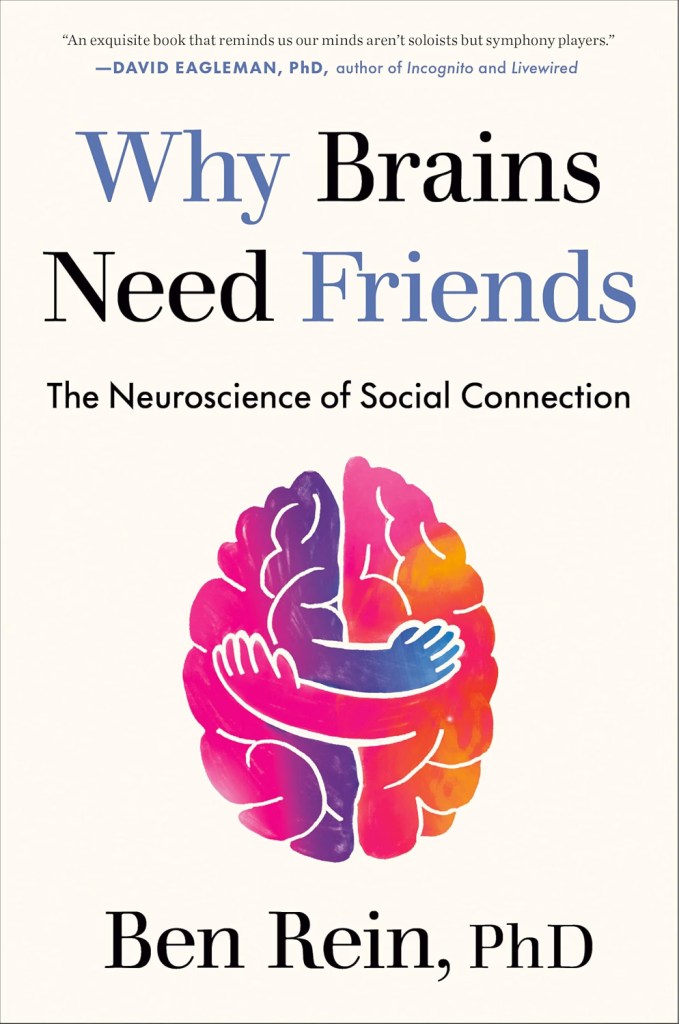
Book covers are shown for identification purposes and remain the property of their respective publishers and authors.
Note: This book review is for informational and educational purposes only. It is not medical advice and should not replace guidance from a qualified healthcare professional. Every brain injury and recovery journey is different.


Do you Love Love YOUR Brain?