
Have you ever walked into a room and suddenly felt like everything was too much?
The lights seem too bright. Background conversations become distracting. Even a simple Zoom meeting feels uncomfortable because there is too much happening around you.
For people living with a brain injury, sensory overload can make everyday situations exhausting. Sounds, lights, conversations, and other sensory input may become difficult to manage all at once.
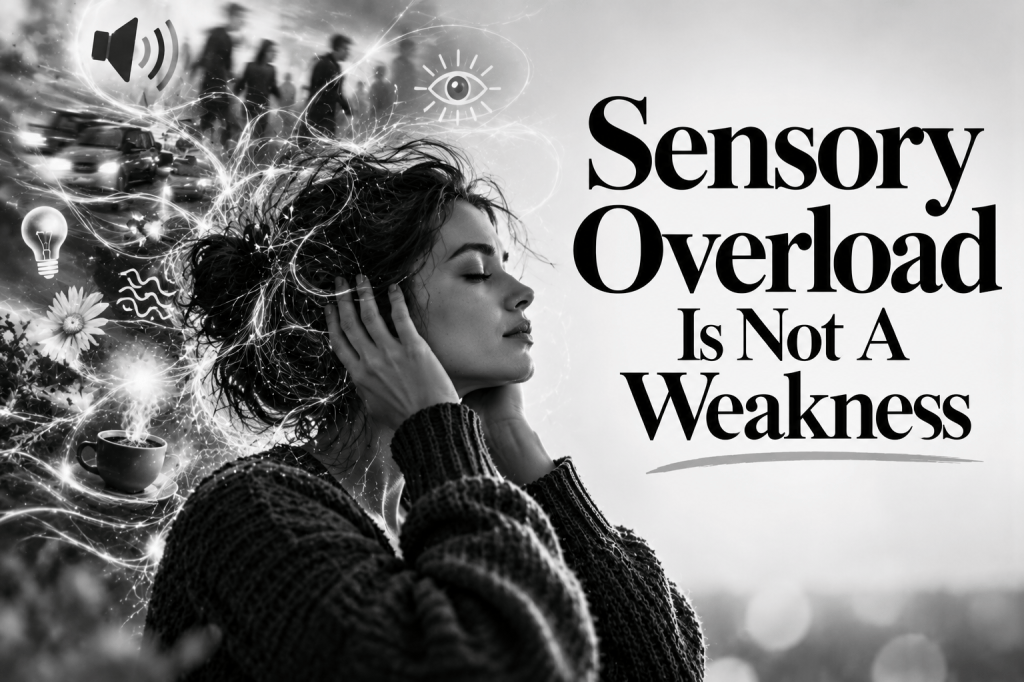
If this happens to you, remember something important: sensory overload is not a personal weakness.
🧠 What Is Sensory Overload?
Sensory overload happens when the amount of sensory information you are experiencing feels like more than you can comfortably manage.
You may be trying to listen to someone speak while bright lights shine around you and background noise continues nearby. Your attention may struggle to keep up with everything happening at the same time.
After a brain injury, some people experience increased sensitivity to light, sound, movement, or busy environments. These experiences vary from person to person.
A situation that feels manageable one day might feel overwhelming on another day, especially when you are tired, stressed, or already dealing with other symptoms.
Recognizing what contributes to your discomfort can help you identify situations where you may need to adjust your surroundings or take a break.
💡 When Lights and Sounds Become Too Much
Imagine trying to participate in a Zoom meeting while bright lights are shining and background noise continues around you.
You want to pay attention, listen, and take part in the conversation. But the combination of lights, sounds, and communication makes the experience uncomfortable.
This can be frustrating, particularly when other people seem unaffected by the same environment.
You might wonder why something so ordinary feels so difficult.
But your experience is real, even when other people cannot see what you are dealing with.
You do not have to wait until you are completely overwhelmed before acknowledging that you need a quieter or more comfortable environment.
💗 Your Brain Is Taking in Too Much at Once
The Love Love Brain workbook includes a reassuring message for sensory overload:
“Your brain is taking in too much at once. This is not a weakness, it’s biology.”
This Love Love Note offers two important reminders.
First, it acknowledges what you are experiencing. You are feeling overloaded, and that discomfort deserves attention.
Second, it reminds you not to turn the experience into a judgment about yourself.
Needing less noise, softer lighting, or a break does not mean you are weak. It means you are recognizing that your current environment is difficult for you to manage.
You deserve to respond to that need with patience rather than criticism.
🌿 Give Yourself Permission to Adjust
When sensory overload begins, try to notice what is making the situation uncomfortable.
Depending on your needs and circumstances, you might try:
🤫 Moving to a quieter space.
💡 Reducing bright lights or screen brightness.
🔇 Turning off unnecessary background sounds.
☕ Taking a short break from a conversation or meeting.
🗣️ Asking someone to speak one at a time.
🛋️ Resting somewhere comfortable before returning to an activity.
You do not need to try every strategy. Start with the change that feels most manageable.
If sensory overload regularly affects your daily activities, discuss it with your healthcare professional or rehabilitation team. They can help you explore possible causes and suitable management strategies.
💗 Love Love Brain Note
If you are experiencing sensory overload, please be gentle with yourself.
You may want to participate in a conversation, attend a meeting, or spend time with people you care about. But sometimes, your environment may become too overwhelming.
It is okay to ask for quieter surroundings. It is okay to take a break. And it is okay to explain that you need a little less stimulation.
You do not have to push through every uncomfortable situation to prove that you are trying hard enough.
Your needs matter. Recognizing your limits is not weakness. It is part of learning how to care for yourself after a brain injury. 💗
🎥 Watch the Video
Listen to Adeline explain sensory overload and the reassuring Love Love Note included in the Love Love Brain workbook.
🛒 Get the Book on Amazon
Love Love Brain may earn a small commission from qualifying purchases made through this link. This does not affect the price you pay.
📱 Follow and Support Love Love Brain
If this message speaks to you, please support Love Love Brain by following us on social media. 💗
Stay connected for more stories, reflections, helpful information, and supportive content about brain injury, recovery, resilience, and everyday life.
Click the buttons below to follow and support us on social media:
Note: Every brain injury is different. This content is for education and support, not medical advice.


Do you Love Love YOUR Brain?