
Have you ever tried to quiet your mind, only to discover that your brain works differently than you expected?
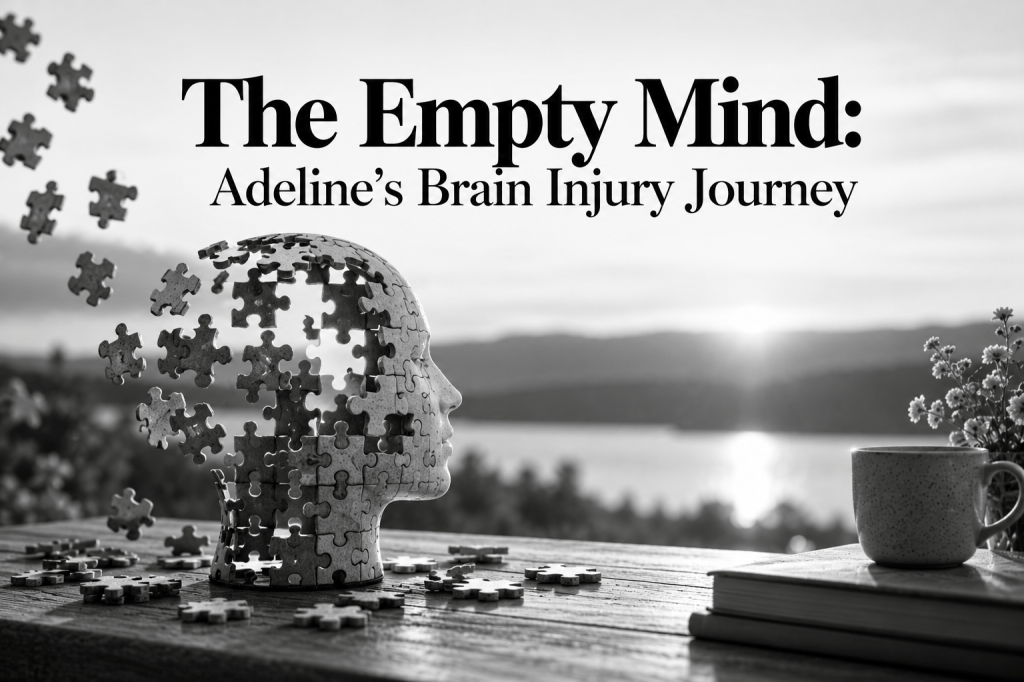
In this video, Adeline shares a personal reflection with Debbie Hampton about visualization, meditation, and what it was like when her brain felt unusually clear after her brain injury.
She describes how her experience changed her understanding of mindfulness, the demands of everyday life, and even the way she views other people’s behavior.
Her story is a reminder that the strategies we use to support ourselves may need to change as our needs change.
🧠 When Visualization Changes
Adeline explains that visualization is important, but she recalls a time when she could not visualize pictures in her mind.
She had spent years trying to meditate and clear her brain. Then, during the previous year and the year before that, she experienced what she describes as having a clear brain.
For her, this was an unexpected experience.
Her story highlights how brain injury can change the way someone experiences thinking and mental imagery. It also reminds us that cognitive experiences are not the same for everyone.
🧘 The Monk Experience
Adeline compares her experience of having a clear mind to what she imagines life might be like in a monastery.
She describes an environment built around safety, kindness, intentional speech, and quiet. In her view, having a clear mind could be helpful in that setting.
But everyday life is different.
The world brings noise, traffic, relationships, responsibilities, and unexpected situations. A mental state that feels peaceful in one environment may be more difficult to navigate in another.
Adeline’s reflection raises an interesting question: What helps us feel calm in one setting, and what do we need when life becomes noisy and complicated?
🌿 Mindfulness Doesn’t Look the Same for Everyone
Adeline shares that mindfulness meditation and visualization were not accessible to her in the way she had hoped.
Instead, she describes being able to use an externally driven approach to pain.
The transcript does not explain exactly what this approach involved, but her experience highlights an important point: a strategy that works for one person may not work the same way for another.
If a particular practice feels difficult after a brain injury, that does not mean you have failed.
It may be worth exploring different approaches with appropriate support and finding what fits your needs and abilities.
💗 A New Understanding of Other People
One of the most meaningful parts of Adeline’s reflection is how her own experience has changed the way she views other people.
She describes asking some people she knows whether they had experienced a significant head injury when they were younger. When they said they had, she felt that this helped her understand some of their behaviors differently.
She also describes feeling more forgiveness toward them.
This does not mean we can determine whether someone has a brain injury by observing their behavior. Many different factors can influence how people think, communicate, and respond.
But Adeline’s experience shows how living through a difficult situation can sometimes help us approach others with greater curiosity and compassion.
We may not know what someone else is dealing with beneath the surface.
🤝 Compassion Without Losing Boundaries
Understanding that another person may be struggling can help us respond with patience.
At the same time, compassion does not require us to accept hurtful behavior or ignore our own needs.
We can recognize that people have different challenges while still maintaining healthy boundaries.
Sometimes, a more compassionate response begins with acknowledging that we do not know the whole story.
💗 Love Love Brain Note
Brain injury can change how you think, visualize, experience your surroundings, and relate to other people.
You may need to experiment with different ways to find calm, manage difficult moments, or make sense of your experiences.
Give yourself permission to discover what works for you now.
And when you encounter someone whose behavior is difficult to understand, remember that there may be more to their story than you can see.
A little more understanding can create room for compassion, for others and for yourself. 💗
🎥 Watch the Video
Watch Adeline share her reflections with Debbie Hampton:
📚 Learn More About Debbie Hampton
Debbie’s Book Title:
How To Use Mindfulness As A Mental Health Tool
Debbie’s Website:
The Best Brain Possible
Book Review:
How To Use Mindfulness As A Mental Health Tool
Get the Book on Amazon:
How To Use Mindfulness As A Mental Health Tool
📱 Follow and Support Love Love Brain
If this message speaks to you, please support Love Love Brain by following us on social media. 💗
Stay connected for more stories, reflections, helpful information, and supportive content about brain injury, recovery, resilience, and everyday life.
Click the buttons below to follow and support us on social media:
Note: Every brain injury is different. This content is for education and support, not medical advice.


Do you Love Love YOUR Brain?