
Have you ever felt like everything around you was too much?
The sounds seem too loud. The lights feel too bright. People are talking, your phone keeps making noise, and even simple things become difficult to manage.
For people living with a brain injury, sensory overload can make everyday situations uncomfortable and exhausting.
When this happens, you may need to step away from the noise, reduce stimulation, and give yourself time to feel more comfortable.
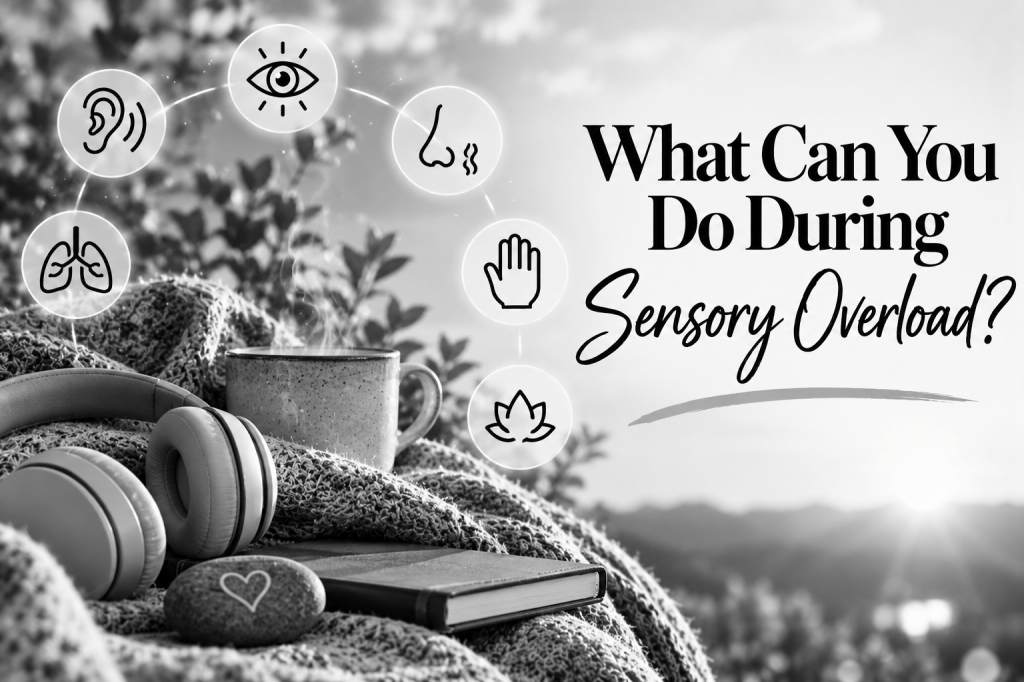
In this post, we’ll explore five strategies Adeline shares for managing sensory overload and protecting your peace.
🔇 1. Reduce Noise
When everything feels too loud, try reducing the sounds around you.
You might move to a quieter room, turn off the television, silence unnecessary notifications, or ask people to speak more quietly.
You do not have to eliminate every sound. Start by identifying which noises are making the situation difficult and reduce them where possible.
If you are in a busy environment, taking a short break somewhere quieter may help you feel more comfortable.
💡 2. Dim the Lights
Bright lighting can feel uncomfortable when you are already experiencing sensory overload.
If possible, dim the lights, turn off unnecessary lamps, or move away from harsh lighting.
You can also reduce your screen brightness if your phone or computer is bothering you.
Pay attention to what feels comfortable for you. Small changes to your environment may make it easier to manage the situation.
😌 3. Close Your Eyes and Lie Still
Sometimes, you may need a break from the information coming in through your senses.
Adeline suggests closing your eyes and lying still when possible.
If you are somewhere safe and comfortable, taking a quiet rest may give you an opportunity to step away from the stimulation around you.
You do not need to force yourself to continue an activity when you are feeling overwhelmed.
If closing your eyes makes you feel dizzy or uncomfortable, keep them open and focus on a calm, familiar object instead.
🌬️ 4. Try Slow, Gentle Breathing
Adeline highlights slow breathing as an important strategy.
In the video, she suggests breathing in for seven counts and breathing out for ten counts.
You can use this as an example, but you do not need to follow those exact counts if they feel uncomfortable.
Try this instead:
🪑 Find a comfortable position.
🌬️ Breathe in gently, without forcing a deep breath.
🍃 Breathe out slowly and comfortably.
💗 Repeat for a few breaths if it feels helpful.
Avoid holding your breath or straining to reach a particular count. If you feel dizzy, breathless, or uncomfortable, return to your normal breathing.
The goal is to give yourself a calm moment, not to create another task you have to get right.
🌊 5. Listen to Neutral Sounds and Protect Your Space
Adeline shares that she enjoys waterfall sounds and light meditation music.
For some people, gentle, predictable sounds can feel more comfortable than conversations, television, or other unpredictable noise. For others, silence may be more helpful.
Notice what works best for you.
Adeline also describes protecting her nervous system by stepping away from people who are too close, turning off sounds, and putting her phone aside.
You can try similar adjustments when you need a break:
🚶 Step away from a crowded or noisy space.
🔇 Turn off unnecessary audio.
📵 Put your phone away for a little while.
🛋️ Choose a quieter place to rest.
🌿 Give yourself a few moments without additional demands.
These small choices can help you create space to notice the present moment and respond to what you need.
🌿 You Are Allowed to Take a Break
When sensory overload happens, you may feel pressure to keep going, especially when other people do not understand what you are experiencing.
But you do not have to push through every uncomfortable situation.
Taking a break does not mean you are giving up. It means you are paying attention to your needs.
If sensory overload happens frequently or interferes with your daily life, consider discussing it with your healthcare professional or rehabilitation team. They can help you explore possible triggers and strategies suited to your circumstances.
💗 Love Love Brain Note
If you are experiencing sensory overload, remember that you do not have to manage everything at once.
Try reducing noise, dimming the lights, resting somewhere comfortable, breathing gently, or stepping away from your phone and other distractions.
You may find that one strategy helps more than another. That is okay. You can experiment with different approaches and keep track of what feels helpful.
Your needs matter. You are allowed to pause, protect your space, and give yourself time to feel more comfortable. 💗
🎥 Watch the Video
Watch Adeline share practical strategies she uses to manage sensory overload.
🛒 Get the Book on Amazon
Love Love Brain may earn a small commission from qualifying purchases made through this link. This does not affect the price you pay.
📱 Follow and Support Love Love Brain
If this message speaks to you, please support Love Love Brain by following us on social media. 💗
Stay connected for more stories, reflections, helpful information, and supportive content about brain injury, recovery, resilience, and everyday life.
Click the buttons below to follow and support us on social media:
Note: Every brain injury is different. This content is for education and support, not medical advice.


Do you Love Love YOUR Brain?