
Recovering from a brain injury can be difficult to understand, especially for people who have never experienced it themselves. Unlike some injuries or illnesses that may have a more clearly defined treatment and recovery process, brain injury recovery can be an ongoing journey with challenges that are not always easy to see.
In this conversation, Adeline and Alex Lombardi discuss the importance of understanding the emotional challenges of brain injury and recognizing that healing does not always follow a simple or predictable path.
💗 Understanding What Others Are Going Through
During their conversation, Adeline reflects on a time when a member of her team shared the mental health challenges she was experiencing.
At the time, Adeline suggested writing a gratitude list and choosing to be happy. She explains that because she had never personally experienced depression, anxiety, or similar emotional struggles, she did not fully understand what the other person was going through.
Looking back, her perspective has changed. Having experienced her own challenges, she now feels a much deeper sense of compassion for people who are struggling.
This reflection reminds us that it can be difficult to understand someone else’s experience when we have never faced something similar ourselves.
Sometimes, the most meaningful support we can offer is patience, compassion, and a willingness to listen instead of assuming we know what someone needs.
🌱 Brain Injury Recovery Is Different
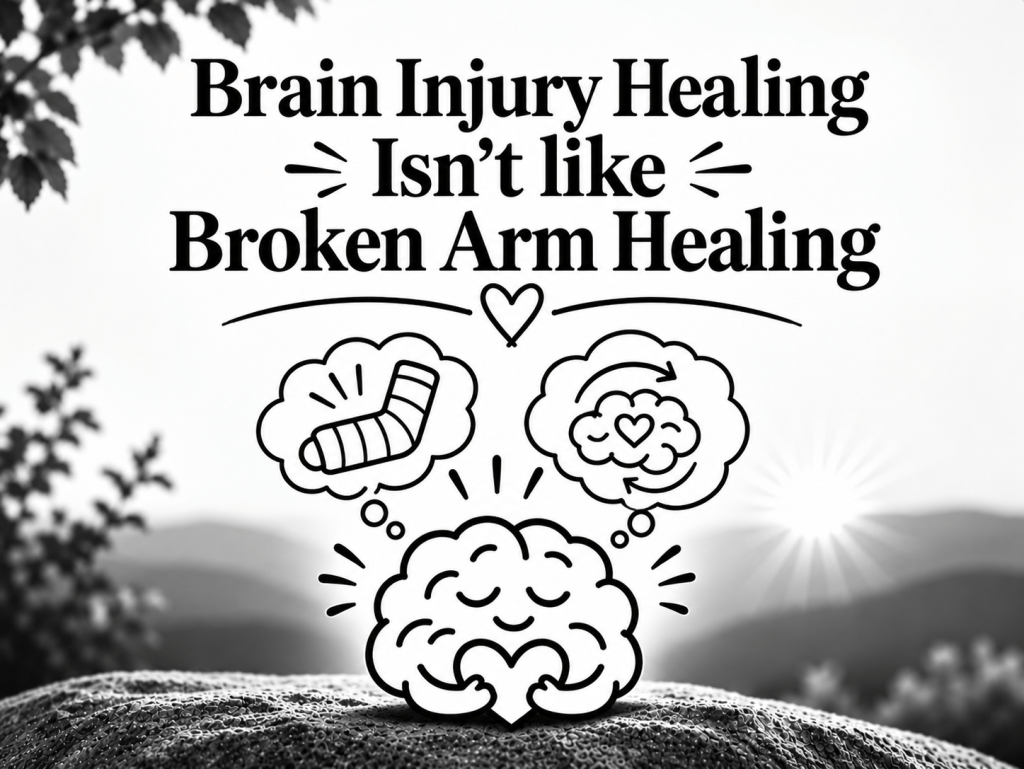
Adeline also makes an important comparison: recovering from a brain injury is not necessarily like healing from a broken arm or completing a defined course of cancer treatment.
With some conditions, people may have a clearer treatment plan or a point when treatment ends. Brain injury recovery, however, can involve ongoing challenges that do not follow such a straightforward timeline.
Progress may look different from one person to another. Some improvements may be noticeable, while other difficulties can continue even when someone appears to be doing better.
This is why understanding and patience are so important. A person may still be working through challenges long after others assume recovery is complete.
🎯 Focus on Small, Manageable Steps
Adeline appreciates the practical approach discussed in Alex’s book, particularly the idea of breaking things down into smaller steps.
She refers to Chapter 8, page 51 of her copy, describing its approach as “micro.” Rather than trying to handle everything at once, the focus is on identifying something manageable that can be done.
For someone navigating life after a brain injury, this approach can make everyday goals feel less overwhelming.
A small step might be completing one task, following a simple routine, or focusing on one activity at a time.
Not every day will look the same, and progress does not have to be measured by how much you accomplish. Sometimes, a small step is enough for that day.
💬 Compassion Matters
Adeline’s reflection highlights how personal experiences can change the way we understand and support others.
Instead of telling someone to simply be happy or think positively, we can acknowledge that their struggles are real. We can listen without judgment and give them space to explain what they are experiencing.
For people living with brain injuries, this kind of understanding can make a meaningful difference in everyday interactions.
💗 Love Love Brain Thoughts
Brain injury recovery is not always predictable, and it does not come with one timeline that applies to everyone.
Some days may bring progress. Other days may require more rest, patience, and support. That does not mean someone is failing or not trying hard enough.
Adeline and Alex’s conversation reminds us of three important things:
💗 Practice compassion. We may not fully understand another person’s challenges, but we can choose to listen and be supportive.
🌱 Respect individual recovery journeys. Everyone’s experience with brain injury is different.
🌟 Celebrate manageable steps. Small actions and small improvements deserve recognition.
You do not have to explain every challenge you face to deserve understanding. And you do not have to accomplish everything at once to make progress.
💬 We’d Love to Hear From You
Have you ever felt that other people did not understand what you were experiencing after a brain injury?
What has helped you take things one small step at a time?
Share your thoughts in the comments. Your experience may help someone else feel understood and less alone. 💗
🎥 Watch the Video
Watch Adeline and Alex Lombardi discuss compassion, the challenges of brain injury recovery, and the importance of breaking things down into manageable steps.
📚 Learn More About Alex Lombardi
Alex’s Book Title:
What You Build From Here
Alex’s Website:
Alex Lombardi Official
Alex’s Instagram:
@alexlombardiofficial
Alex’s Facebook:
Alex Marie Lombardi
Alex’s Podcast:
Explore Enriched with Alex Lombardi on Apple Podcasts.
Book Review:
What You Build From Here
Get the Book on Amazon:
What You Build From Here
Visit Alex’s website to learn more about her work, speaking opportunities, and The Brain Edit™.
If you enjoyed this interview, consider exploring Alex’s book and following her work for more ideas on intentional living, personal development, building sustainable habits, and creating a life aligned with your goals.
Affiliate disclosure: Love Love Brain may earn a commission from qualifying purchases made through the Amazon affiliate link, at no additional cost to you.
📱 Follow and Support Love Love Brain
If this message speaks to you, please support Love Love Brain by following us on social media. 💗
Stay connected for more stories, reflections, helpful information, and supportive content about brain injury, recovery, resilience, and everyday life.
Click the buttons below to follow and support us on social media:
Note: Every brain injury is different. This content shares Adeline’s personal experience and is for education and support, not medical advice.


Do you Love Love YOUR Brain?