
What if understanding ourselves better could help us build healthier relationships with our children, partners, and the people around us?
In this conversation, Adeline and Dr. Beth discuss the ideas behind the Inner Family Zoo and how emotional healing can begin within ourselves.
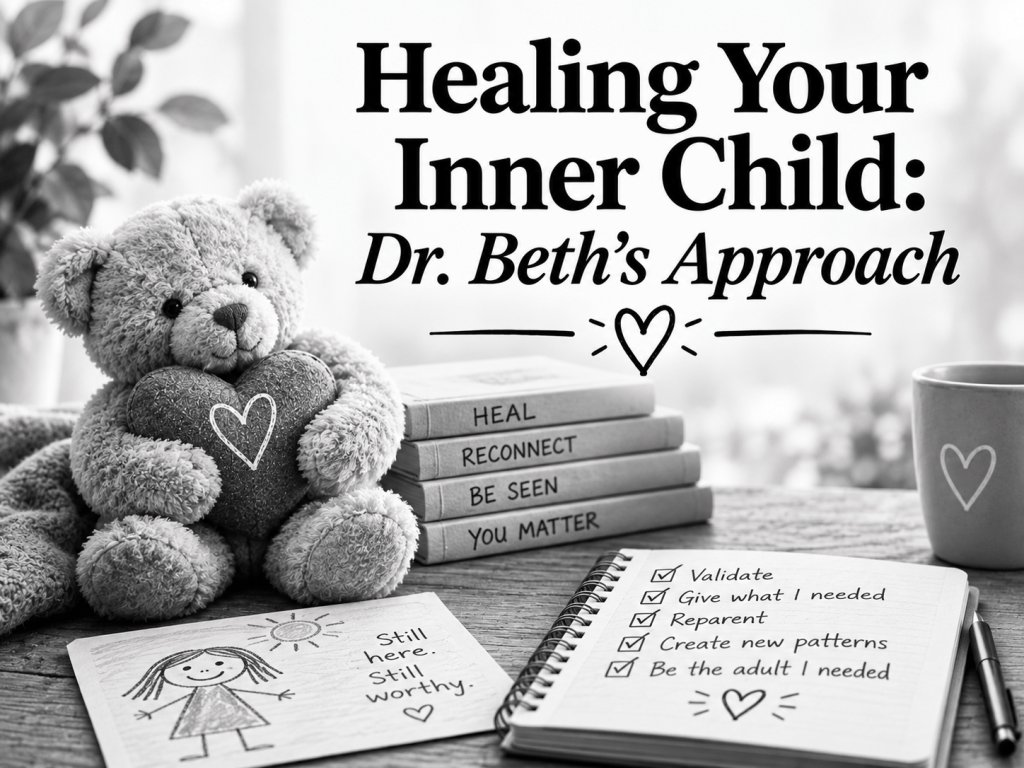
Dr. Beth explains that the same ideas she teaches parents to help them understand their children’s emotions can also be used for personal growth. Instead of focusing on a child’s inner three-year-old, seven-year-old, or teenager, we can learn to recognize these parts within ourselves.
Her goal is to help people understand their emotional patterns so they do not unintentionally pass hurt and unhealthy behaviors on to others.
🧸 Understanding Your Inner Child
Dr. Beth explains that the Inner Family Zoo framework helps us understand three inner parts:
🧸 The inner three-year-old: The vulnerable part that experiences big feelings and needs comfort, safety, and reassurance.
📋 The super seven-year-old: The part that tries to organize, follow rules, do things correctly, and keep everything under control.
🔥 The inner teenager: The protective part that may become defensive, rebellious, or angry when it feels unheard.
Dr. Beth explains that these parts can influence how we respond to difficult situations and interact with other people.
Learning to recognize them can help us understand what is happening emotionally before reacting.
💗 Healing Yourself Before Passing Hurt to Others
Dr. Beth shares that her work is rooted in ideas about secure attachment.
During her doctoral studies, she developed a six-week program designed to help mothers work through emotional challenges during pregnancy. She also created training for parents to understand what to expect during their child’s first three years.
Her vision was to help parents understand their own emotional experiences and reduce the passing of painful patterns from one generation to the next.
She explains that unresolved emotional pain can affect how we treat our children and other people in our lives.
The Inner Family Zoo takes this idea inward. It encourages adults to understand and care for their own younger emotional parts rather than allowing unresolved feelings to affect their relationships.
👨👩👧 Understanding the Patterns We Pass On
Dr. Beth explains that her work with teenagers often involves helping both the teenager and the parent.
She observes that parents may also carry unresolved experiences from their own teenage years. As a result, supporting a teenager can become an opportunity for both generations to understand themselves better.
This is an important part of her message: parents are not only helping their children grow. They may also need to look at their own emotional patterns and experiences.
By becoming more aware of our reactions, we can create opportunities to respond with greater patience, understanding, and compassion.
🌱 Love Love Brain Thoughts
This conversation reminds us that emotional awareness is not only about understanding other people. It is also about understanding ourselves.
The way we respond to stress, frustration, and difficult emotions can affect our relationships with family members, partners, children, and colleagues.
Dr. Beth’s Inner Family Zoo offers a framework for reflecting on those patterns and learning to respond more thoughtfully.
Here are a few reminders inspired by their conversation:
🤝 Understanding yourself is an important part of building healthy relationships.
🌱 Your past experiences may influence how you respond today.
💭 You can learn to recognize your emotional reactions.
🦋 You do not have to repeat every pattern you grew up with.
💗 Self-compassion can help you treat yourself and others with greater understanding.
🌻 Emotional growth is possible at every stage of life.
When we begin to understand and care for the parts of ourselves that are hurting, we can create more space for healthier relationships with others.
💬 We’d Love to Hear From You
Have you ever noticed that your childhood experiences affect how you respond to people today?
Do you think understanding your own emotions can help you build healthier relationships?
Share your thoughts in the comments. Your experience may help someone else feel understood. 💗
🎥 Watch the Video
Watch Adeline and Dr. Beth discuss the Inner Family Zoo, emotional healing, secure attachment, and how understanding ourselves can help us build healthier relationships.
🌐 Connect with Dr. Beth
Learn more about Dr. Beth, her books, coaching, and other work through her website and social media channels.
🌐 Website: drbeth.com
📸 Instagram: @drbethh
👍 Facebook: Dr. Beth Teenologist
▶️ YouTube: @drbethh
📦 Get the book on Amazon: Reclaim Your Sanity
Disclosure: Love Love Brain may earn a commission from qualifying purchases made through the Amazon link, at no additional cost to you.
📱 Follow and Support Love Love Brain
If this message speaks to you, please support Love Love Brain by following us on social media. 💗
Stay connected for more stories, reflections, helpful information, and supportive content about brain injury, recovery, resilience, and everyday life.
Click the buttons below to follow and support us on social media:
Note: This article discusses Dr. Beth’s personal framework for emotional awareness and self-reflection. It is not a diagnostic system or a substitute for individualized medical or mental health care. Every person’s experiences are different.


Do you Love Love YOUR Brain?