
A brain injury can be difficult to understand – especially because many of its effects aren’t visible.
Someone may look completely fine while dealing with memory problems, fatigue, concentration difficulties, pain, anxiety, depression, or changes in mood.
Sometimes, well-intentioned comments can unintentionally make a person with a brain injury feel misunderstood or discouraged.
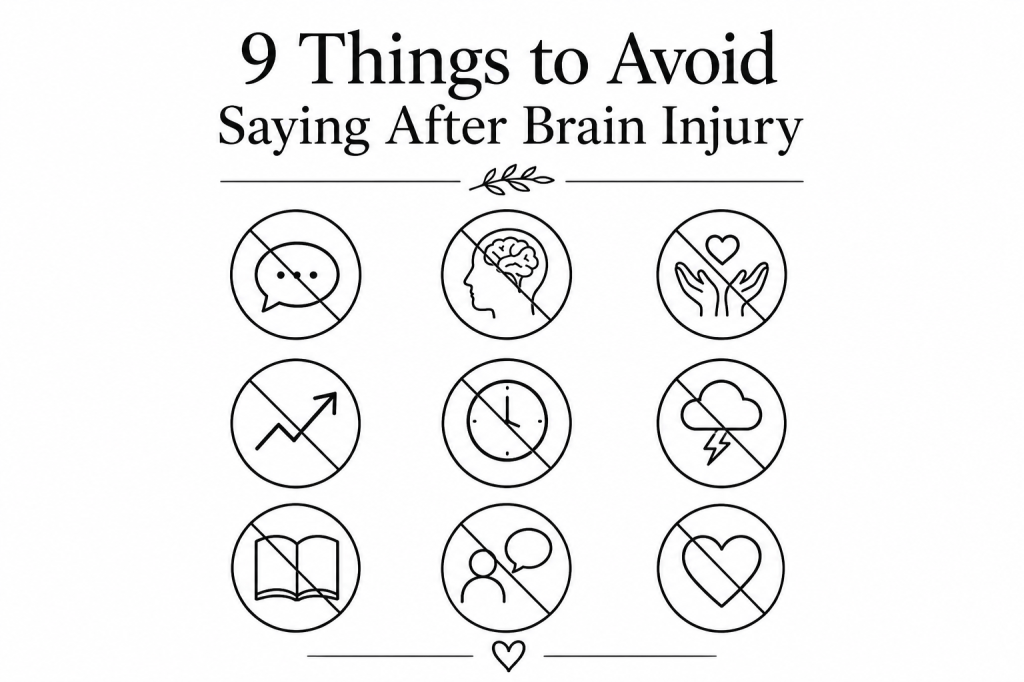
Here are 9 things to avoid saying and more supportive ways to respond.
1. 💭 “You Look Fine to Me.”
A person can look healthy while experiencing significant challenges.
🧠 Memory problems
😴 Fatigue
💭 Difficulty concentrating
🤕 Pain
❤️ Anxiety or depression
Instead, try:
💜 “I may not understand everything you’re experiencing, but I’m here to listen.”
2. 🚫 “You’re Just Not Trying Hard Enough.”
Difficulty getting started or staying motivated isn’t necessarily laziness.
After brain injury, apathy, fatigue, depression, and pain can affect motivation and participation.
Instead, try:
🤝 “What would make this easier for you?”
3. 😠 “You’re Such a Grump!”
Irritability can be a common effect of brain injury and may also be influenced by fatigue, pain, anxiety, depression, or sleep problems.
Instead of labeling the person, try:
💜 “You seem like you’re having a difficult day. Is there something I can do?”
4. 🔄 “How Many Times Do I Have to Tell You?”
Memory difficulties can make it hard to remember information that was just discussed.
Instead of becoming frustrated, try making information easier to remember:
📝 Write it down.
📅 Create a routine.
📋 Use reminders or a visible checklist.
Small changes can reduce frustration for everyone.
5. 😣 “Do You Have Any Idea How Much I Do for You?”
Caregivers can absolutely feel overwhelmed and need support, too.
But expressing that frustration directly to the person with the brain injury may create guilt or shame. The source recommends finding a trusted friend or counselor to talk to when you need to unload your own burden.
Instead, try:
❤️ “I care about you, and I also need some support. Let’s find a way to get help for both of us.”
6. 💊 “Your Problem Is All the Medication You Take.”
Medications can cause side effects, but it’s important not to assume that medication is responsible for every symptom.
Medication changes should be discussed with a healthcare professional rather than stopping or changing medication on your own.
Instead, try:
🩺 “Would it help to talk with your doctor about your symptoms and medications?”
7. 🙋 “Let Me Do That for You.”
Helping can be wonderful – but doing everything for someone can sometimes take away opportunities to practice independence.
Independence and control can be especially important after brain injury. When it’s safe, encouraging someone to do things independently can support confidence and self-esteem.
Instead, try:
💜 “Would you like help, or would you like to try it yourself?”
8. 🌱 “Just Think Positively.”
Recovery isn’t always positive or easy.
Someone may experience frustration, anxiety, depression, or repetitive negative thoughts after brain injury. Simply telling them to “think positive” may not address what they’re actually experiencing.
Instead, try:
🤝 “I’m here with you. What would help right now?”
Sometimes listening is more helpful than trying to fix the situation.
9. ❤️ “You’re Lucky to Be Alive.”
Although this may be intended as encouragement, it can be difficult for someone who is struggling with the effects of their injury.
Instead, recognize their strength and persistence.
Try saying:
💜 “You’ve been through so much, and I’m proud of how hard you’re working through it.”
Acknowledging someone’s experience can be more meaningful than telling them how they should feel about it.
🤝 What Can You Say Instead?
When you’re unsure what to say, keep it simple.
Try:
💜 “I’m here for you.”
👂 “I’m listening.”
🤝 “How can I support you?”
🌱 “Take your time.”
❤️ “I believe you.”
🧠 “Help me understand what you’re experiencing.”
You don’t need to have all the answers.
Sometimes, simply being patient and willing to listen is enough.
✨ Final Thoughts
Brain injury can change the way a person thinks, feels, communicates, and functions – but it doesn’t change their worth.
Before offering advice or making a judgment, pause and remember:
You may not see the injury, but that doesn’t mean it isn’t there.
Choose patience over judgment.
Choose understanding over assumptions.
Choose support over criticism.
💜 A few thoughtful words can make someone’s recovery journey feel a little less lonely.


Do you Love Love YOUR Brain?