
Your surroundings can have a bigger impact on how you feel than you may realize.
The places where you live, work, rest and spend your time can influence your stress levels, energy, mood, focus, and sense of safety.
For someone living with a brain injury, the personal environment can be especially important. Noise, lighting, clutter, crowds and constant stimulation may make everyday activities more difficult.
Creating an environment that supports your needs can be an important part of taking care of yourself.
🏡 Your Environment Is More Than a Place
Your personal environment includes the spaces and people around you.
It can include:
🏠 Your home
💼 Your workplace
🚗 Your transportation
👥 The people you spend time with
🔊 The sounds around you
💡 The lighting in your space
📱 The amount of digital stimulation you receive
All of these can affect how comfortable, focused, and emotionally balanced you feel.
🔊 Noise Can Affect Your Energy
Loud or constant noise can be overwhelming, especially for someone experiencing sensory sensitivity after brain injury.
Things like:
📺 Television playing in the background
🔊 Loud conversations
🚗 Traffic
🎵 Music
📱 Constant notifications
may make it harder to concentrate or relax.
Try creating a quieter space when you need to recharge.
🔇 Turn down unnecessary sounds.
🎧 Use noise-reducing headphones if appropriate.
🚪 Step into a quieter room.
Sometimes, a little less noise can give your brain more room to breathe.
💡 Lighting Matters
Bright or harsh lighting can be uncomfortable for some people.
If certain lighting makes you feel overwhelmed, consider:
🌤️ Using natural light when possible
💡 Reducing harsh overhead lighting
🪟 Adjusting blinds or curtains
🛋️ Creating a softer, comfortable space for rest
Pay attention to what makes your environment feel comfortable for you.
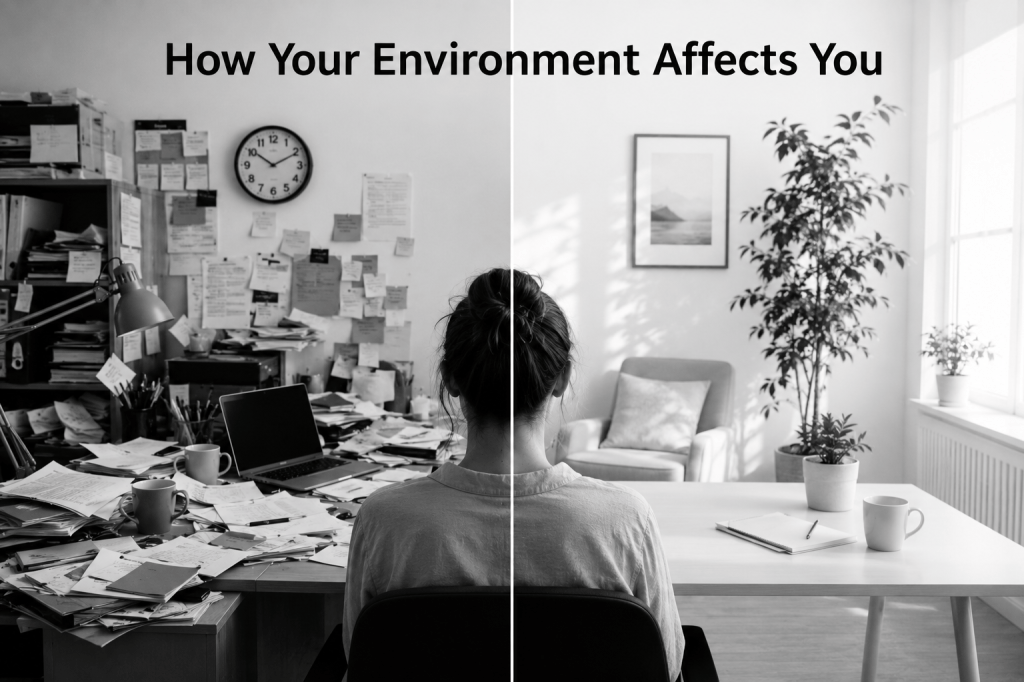
🧹 Clutter Can Add Stress
A crowded or disorganized environment can make it harder to focus.
You don’t need a perfectly organized home.
Instead, try making small changes:
📦 Put away a few things at a time.
📝 Keep important items in predictable places.
🧺 Create simple systems for everyday belongings.
🧹 Focus on one area instead of trying to clean everything at once.
A calmer environment can make daily tasks feel more manageable.
❤️ The People Around You Matter
Your environment isn’t only physical.
The people around you can also influence your wellbeing.
Healthy relationships can provide:
🤝 Support
💜 Understanding
😊 Encouragement
🌱 A sense of connection
On the other hand, constant conflict, criticism, or pressure can increase stress.
It’s okay to create healthy boundaries around relationships that affect your wellbeing.
🧠 Create a Brain-Friendly Space
If you’re living with a brain injury, consider creating a space where your brain can rest.
Your space might include:
🛋️ A comfortable place to sit or rest
🔇 Fewer unnecessary sounds
💡 Comfortable lighting
📋 Simple organization
💧 Water nearby
📱 Fewer distractions
🌿 Something calming, such as a plant or nature view
You don’t have to change everything.
Start with one small adjustment.
🌱 Notice How Your Environment Makes You Feel
Take a moment to check in with yourself.
Ask:
💭 Do I feel calm here?
💭 Is this space too noisy?
💭 Is there too much going on?
💭 Can I concentrate?
💭 Do I feel safe and comfortable?
💭 What could I change to make this space easier for me?
Your answers can help you identify what your brain and body need.
💜 Your Environment Doesn’t Have to Be Perfect
You don’t need to create a perfect home or completely change your surroundings.
Small changes can matter.
🌿 A quiet corner.
🛋️ A comfortable chair.
💡 Softer lighting.
📵 Fewer notifications.
🧹 Less clutter.
⏸️ A place where you can take a break.
These small adjustments can help create an environment that supports your wellbeing.
✨ Final Thoughts
Your environment can influence how you think, feel, rest, and recover.
Pay attention to the spaces and relationships around you.
Notice what gives you energy – and what takes it away.
Then, when possible, make small changes that help you feel safer, calmer, and more comfortable.
💜 Your environment should support you – not constantly overwhelm you.
🌱 Small changes can create a more supportive space for healing.


Do you Love Love YOUR Brain?