
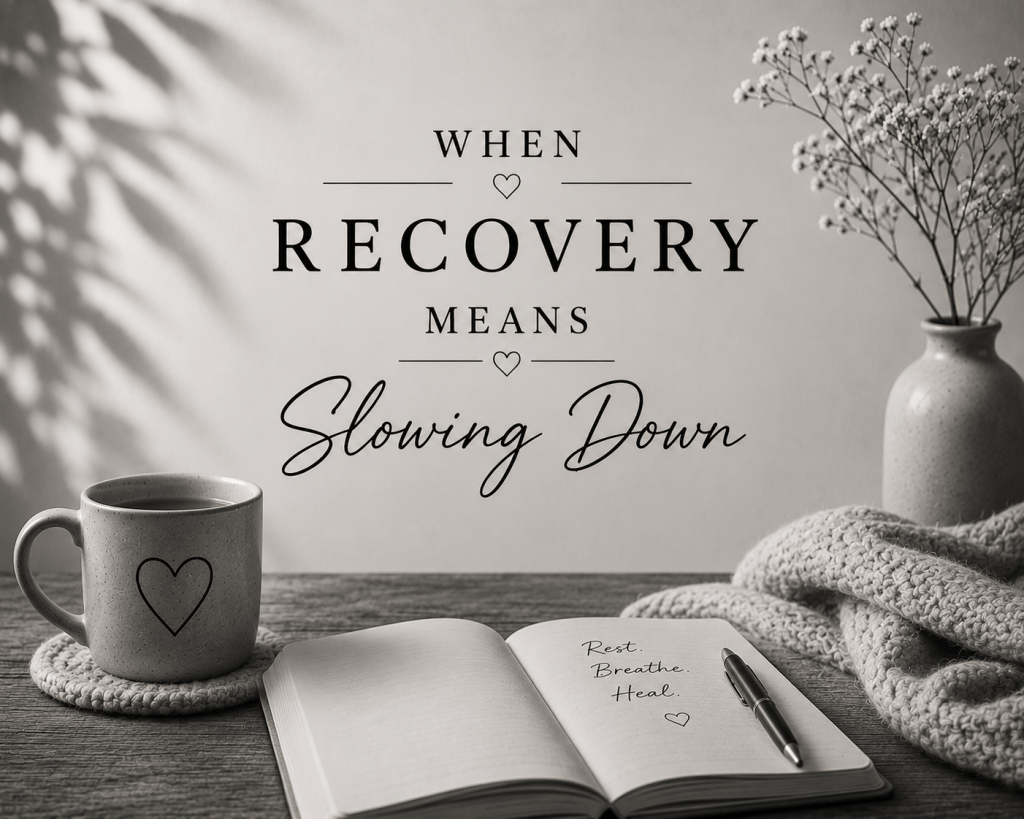
Recovery doesn’t always happen by pushing harder.
After a brain injury you may want to return to your old routine as quickly as possible. You may try to keep working stay active maintain your responsibilities and push through difficult symptoms.
But sometimes pushing through can leave your brain and body even more exhausted.
Recovery can also mean learning when to pause.
It can mean giving yourself permission to rest reduce stimulation step away from screens spend time somewhere quiet and listen to the signals your brain and body are giving you.
Sometimes slowing down is part of moving forward.
🧠 Your Brain May Need Less
Modern life encourages us to move quickly.
There is always something happening.
📱 Another notification
💻 Another task
💬 Another message
📰 Another update
👥 Another conversation
After a brain injury this constant stimulation can become exhausting.
You may discover that your brain feels better with:
🔇 Less noise
📵 Less screen time
💡 Less stimulation
📋 Fewer demands
⏸️ More breaks
🌿 More quiet
Sometimes less really can be more.
😴 Rest Is Part of Recovery
It can be difficult to rest when you feel like you should be doing something.
You may think:
💭 “I should be working.”
💭 “I should be more productive.”
💭 “I should be doing what I used to do.”
But recovery may require something different.
Going to bed earlier taking a quiet break or simply giving yourself time to recover can help you respect what your brain needs.
💜 Rest is not giving up.
📵 Give Your Brain a Break From Screens
Screens can be useful and entertaining.
But they also provide constant stimulation.
Try creating small periods without screens:
📱 Put your phone away.
💻 Step away from your computer.
📺 Turn off the television.
🔕 Silence unnecessary notifications.
Then give your attention to something quieter.
🌿 Sit outside.
🚶 Take a walk.
☕ Enjoy a quiet drink.
🫁 Take a few comfortable breaths.
You don’t have to disconnect from technology completely.
Just give your brain moments to settle.
🚶 Spend Time Outside
Going outside can create a simple change of environment.
You might:
🌳 Sit under a tree
🚶 Take a gentle walk
🌤️ Watch the sky
🐦 Listen to birds
🌿 Notice the world around you
You don’t have to turn it into a workout.
You don’t have to accomplish anything.
Sometimes simply being outside can give your mind a different kind of space.
💭 Give Yourself Space to Think
When life becomes busy it can be easy to distract yourself from difficult thoughts.
You may think about:
😔 What has changed
💭 What you miss
😟 What you’re worried about
🧠 What recovery will look like
Instead of immediately pushing those thoughts away you can try simply noticing them.
Ask yourself:
“What am I feeling right now?”
“What do I need right now?”
You don’t have to solve everything immediately.
Sometimes noticing is enough.
🌱 Recovery Doesn’t Have to Be a Race
You may want to return to your old life as quickly as possible.
That feeling is understandable.
But recovery doesn’t always happen according to the schedule we want.
Some days may be easier.
Some days may be harder.
Some days you may accomplish a lot.
Other days your greatest accomplishment may simply be resting.
💜 Both days matter.
🧠 Listen to Your Brain and Body
Your body may give you signals when you’ve had enough.
You might notice:
🤕 Headaches
😴 Fatigue
💭 Brain fog
😣 Irritability
🔊 Sensory overload
😵 Feeling overwhelmed
Instead of automatically pushing through ask yourself:
“What is my brain asking for right now?”
Maybe the answer is:
⏸️ A break
🔇 Quiet
😴 Sleep
🌿 Fresh air
💜 Less pressure
Listening to these signals can help you become more aware of your needs.
❤️ You Don’t Have to Fight Every Moment
Recovery can be frustrating.
You may wish things were different.
You may miss the person you were before your injury.
You may become frustrated when your brain or body doesn’t cooperate.
You don’t have to pretend that these feelings aren’t real.
But you can practice meeting yourself where you are.
Try telling yourself:
“This is where I am today.”
“I can take this one step at a time.”
“I don’t have to solve everything today.”
Acceptance doesn’t mean giving up.
It can mean recognizing what is happening now and choosing what you can do next.
🌼 Find Your Own Pace
Your recovery doesn’t need to look like anyone else’s.
Maybe your pace is slower.
Maybe you need more breaks.
Maybe you need more quiet.
Maybe you need more time outside.
Maybe you need fewer activities in one day.
That’s okay.
🌱 Your pace is allowed to be your own.
✨ Final Thoughts
Sometimes recovery begins quietly.
It may begin when you stop forcing yourself through every moment and start listening to what your brain and body are asking for.
😴 Sleep when you need to.
📵 Reduce stimulation when you can.
🔇 Create quiet.
🚶 Spend time outside.
💭 Give yourself space to think.
⏸️ Rest before you reach your limit.
💜 Move intentionally instead of constantly rushing.
You don’t have to do more to prove that you’re recovering.
Sometimes the most important step is simply learning when to slow down.
Your brain may not always need more.
Sometimes it needs peace.


Do you Love Love YOUR Brain?