
Sometimes a brain injury changes much more than the brain.
It can change your career.
Your relationships.
Your independence.
Your sense of identity.
Your finances.
And your understanding of what life is supposed to look like.
Lauren’s story is a powerful reminder that brain injury recovery is rarely a straight line. Her journey included a motor vehicle accident, repeated medical challenges, depression, dissociation, financial pressure, uncertainty, and the search for answers.
But it also included connection.
Community.
Horses.
Water therapy.
And, eventually, a reason to keep going.
This is Lauren’s personal brain injury story, shared as part of Brain Injury Awareness Week.
🚗 The Accident
Lauren’s story began after she was struck by a car.
Twenty-four hours after the accident, she was photographed with a concussion and other injuries.
From the outside, someone looking at the photograph might not have known what had happened.
Lauren herself was struggling to fully understand it.
Her body was in shock, and she was relying on Endone, which had been prescribed in the emergency department, as she tried to survive the pain.
After being cleared to leave the emergency department, one thing helped carry her through.
She was determined to attend her childhood friend’s wedding.
At the time, she didn’t know how important that decision would become.
She didn’t know it then, but connection would eventually become central to her recovery.
💼 The Career She Lost
Before her injury, Lauren was a teacher.
A day before one of the photographs in her story, she had taught in a classroom for what would become the last time, possibly forever.
She didn’t simply lose a job.
She lost:
💼 Her career
🤝 A community
⏰ A routine
❤️ A part of her identity
After returning to work following the motor vehicle accident, Lauren was struck in the abdomen by a student.
Combined with her existing brain injury symptoms, the pain triggered a dissociative state.
She began hallucinating and confusing students.
She was eventually admitted to hospital for 10 days following three TIAs.
She spent time in the neurology ward and received a ketamine infusion in an attempt to break the pain cycle.
Her life was changing in ways she could never have anticipated.
💔 Losing Control
A month after the ketamine infusion, Lauren still wasn’t better.
She experienced significant side effects and found herself living in a constant state of hyperarousal.
She continued to dissociate.
She became impulsive.
Slowly, she felt herself losing control over parts of herself she had always taken for granted.
Her:
🧠 Independence
⚖️ Judgment
🛡️ Sense of safety
The more difficult it became to understand what was happening to her, the more isolated she felt.
💰 The Cost of Recovery
Recovery also came with a financial cost.
The medical bills continued to arrive, and the financial pressure became overwhelming.
To afford treatment, Lauren sold her first property.
The sale went through on her 33rd birthday.
It was a bittersweet moment.
At first, selling the property felt like another loss.
But looking back, Lauren came to see it differently.
It became an opportunity to start again.
An opportunity to find a different pathway forward.
💔 The Hardest Year of Her Life
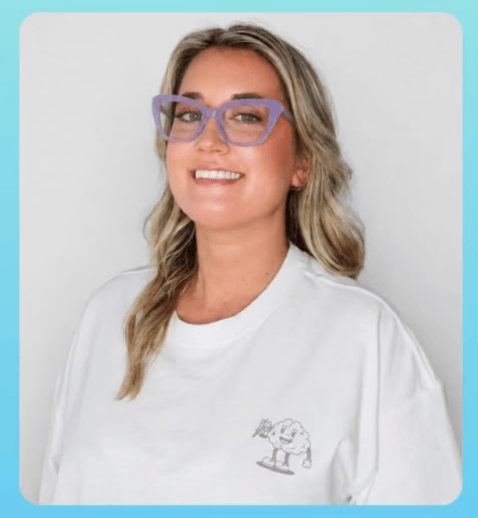
Lauren smiled for the camera.
She tried to celebrate the good things that year had brought.
But underneath the smile was a life she barely recognized.
She was dealing with:
🧠 Brain injury
💔 A relationship breakdown
💼 The end of her career
🤝 The loss of friendships connected to dissociation
🫶 Becoming dependent on others
🏡 Having to move home to recover
She described it as the hardest year of her life.
And yet, there was something that remained.
Her community.
With their support, Lauren was still here.
🐴 The Connection That Changed Everything
Eleven months after her motor vehicle accident, Lauren was diagnosed with FND, a condition she describes as having no known cure.
Around the same time, her dad encouraged her to reach out to her third cousin, Nikita, a high-performing jockey who had also experienced a head injury.
They met for the first time.
Yet somehow, it felt as though they had known each other their whole lives.
They had walked remarkably similar paths, worlds apart, while carrying their own versions of difficult experiences.
Nikita invited Lauren to her home.
There, Lauren was introduced to something she never expected to become so important to her recovery:
🐴 The healing power of horses.
For the first time in a long time, Lauren felt something shift.
🧠 Searching for Answers Again
The journey wasn’t over.
Lauren began experiencing a range of new symptoms, including two different types of seizures.
Suddenly, she was back in hospital.
She underwent:
🏥 CT scans
🧠 MRIs
📊 An EEG
Once again, she was searching for answers.
Were the functional seizures her body’s response to overwhelming physical and emotional stress?
Or had she developed epilepsy because of frontal-lobe damage caused by the motor vehicle accident?
There were still questions.
And there were still uncertainties.
😔 When Her Brain Shut Down
At one point, Lauren described her brain as shifting into a state of hypoarousal, leaving her deeply depressed and emotionally shut down.
She was fighting desperately to feel like herself again.
She felt incredibly numb.
The things that once made her happy no longer did.
But still, she kept pushing.
She kept showing up.
Even when it was hard.
For the first time in her life, she missed events because of the anxiety and depression caused by her brain injury.
That was difficult for her to accept.
She didn’t want to keep letting people down.
So she kept showing up, even when it was incredibly difficult.
🌱 A Reason to Keep Going
Lauren had been working hard to recover, but she was deeply depressed.
She went to a friend’s farm searching for some peace.
Somewhere along those country roads, an idea was born:
She’ll Be Right Support.
After experiencing how isolating brain injury can be, Lauren had come to understand the power of having the right people, the right support, and the right environment around you.
The idea became part of her reason to keep going.
It also became a way for her to give back to the people who had carried her through her own difficult journey.
Sometimes a reason to keep going doesn’t arrive as a huge revelation.
Sometimes it begins with one small idea.
One connection.
One place where you finally feel understood.
🧠 I’m Still Standing
After two years of research, setbacks, and fighting to understand her brain, Lauren could finally feel her hard work beginning to pay off.
She had spent $90,000 on treatment, searching for answers and doing everything she could to get her life back.
Water therapy, which had been part of her life since childhood, became an important part of her recovery.
But Lauren also recognized something beyond treatment.
She recognized the people who never gave up on her.
And she understood that one way to thank them was to keep showing up.
To stay connected.
To choose to keep living, even when depression became louder.
She learned not to take life for granted.
And today, her message is simple:
I’m still here.
And I’m genuinely happy.
❤️ What Lauren’s Story Reminds Us
Lauren’s journey shows that brain injury recovery can involve far more than physical healing.
It can involve losing parts of the life you once knew.
It can involve searching for answers.
It can involve financial sacrifice.
It can involve depression and isolation.
It can involve learning to accept help.
And it can involve discovering completely unexpected pathways forward.
Her story also shows the importance of connection.
A childhood friendship helped her through the immediate aftermath of her accident.
Her family supported her.
A cousin with her own head injury experience helped introduce her to horses.
Her community helped her keep going.
And eventually, her own experience inspired an idea that could help others.
🌻 There Can Be Another Pathway
Recovery doesn’t always look the way we expect.
Sometimes the path changes completely.
A career may end.
A relationship may change.
A familiar routine may disappear.
A new diagnosis may create more questions.
And yet, something new can still emerge.
Lauren’s story is not about pretending that everything was easy.
It wasn’t.
It is about what happened after everything changed.
She kept searching.
She kept connecting.
She kept adapting.
And she kept going.
✨ Final Thoughts
Lauren’s story reminds us that sometimes survival comes before understanding.
Sometimes you have to keep going while you are still searching for answers.
Sometimes recovery takes a different path than the one you imagined.
And sometimes the people, places, and experiences you never expected become part of your healing journey.
A brain injury can change your life.
But it does not mean your story is over.
🌱 There can be another pathway.
❤️ There can be connection.
🐴 There can be unexpected moments of healing.
🤝 There can be people who don’t give up on you.
And sometimes, after everything you’ve been through, you can look back and say:
“I’m still standing.”


Do you Love Love YOUR Brain?