
There are days when I look completely fine.
I can smile.
I can talk.
I can get dressed.
I can show up.
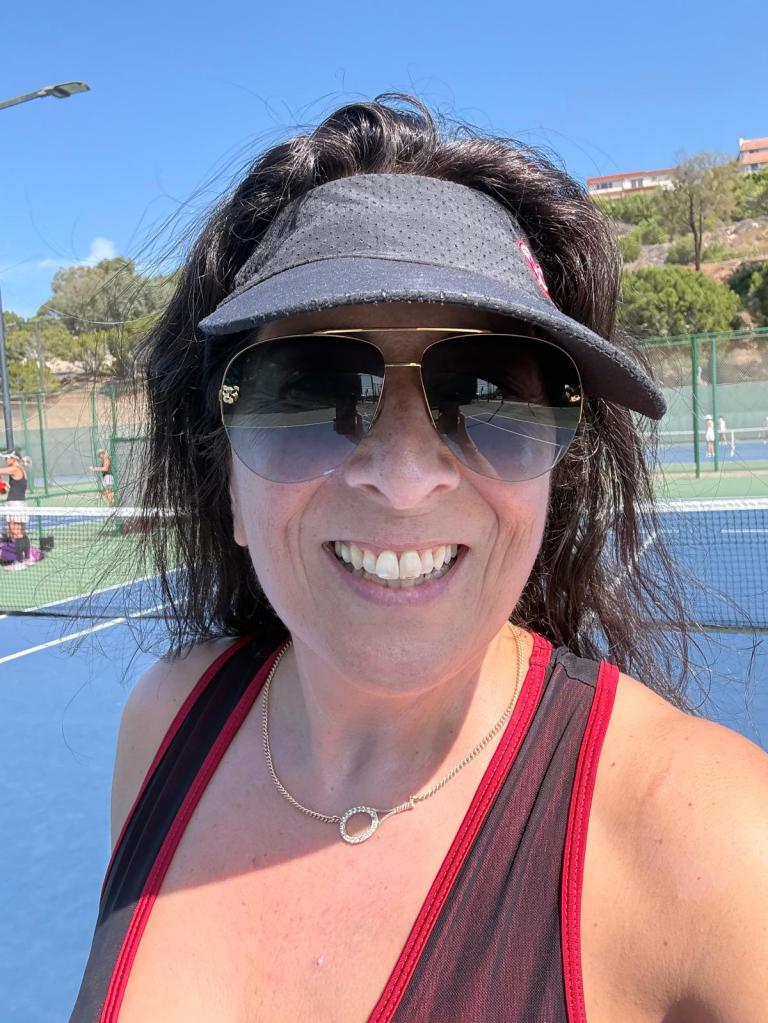
And sometimes, I can even get back on the tennis court.
But what people see on the outside doesn’t always tell the story of what is happening inside my brain.
There are moments when my brain becomes confused.
Moments when I feel scared.
Moments when my emotions seem much younger than I am.
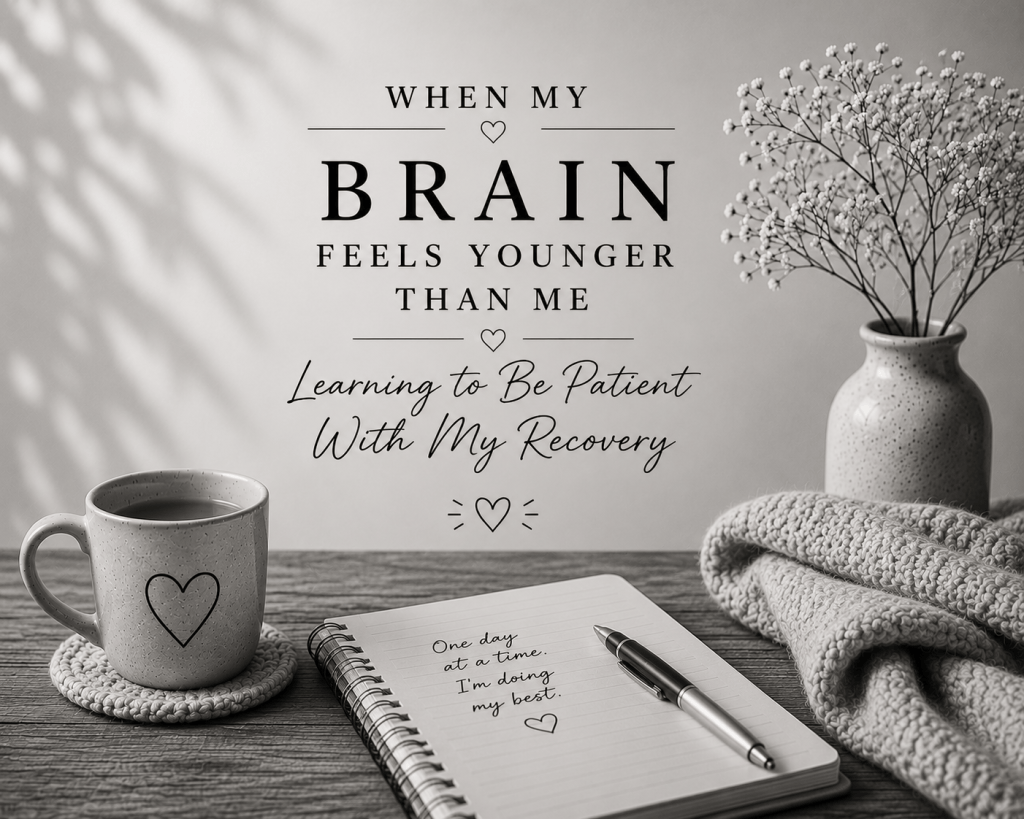
Sometimes, I describe it as feeling like my brain is somewhere between three and five years old – bratty, frightened, confused, and overwhelmed.
And as strange as that may sound, it is my way of explaining something that can be incredibly difficult to put into words.
My body may be capable of doing something.
But that doesn’t always mean my brain feels safe enough to do it.
That difference matters.
🧠 The Struggle Is in My Brain
One of the hardest things about living with a brain injury is that people may assume that if your body can physically do something, you should simply be able to do it.
But the brain is part of everything we do.
It affects how we process information.
How we respond to stress.
How we regulate emotions.
How we feel safe.
How we respond to unexpected situations.
And for me, PTSD adds another layer to that experience.
Sometimes the problem isn’t:
“My body can’t do this.”
It’s:
“My brain isn’t ready for this yet.”
That distinction has taken me a long time to understand.
🎾 Getting Back on the Court Isn’t Always Simple
Tennis has always meant something to me.
So you might think that getting back on the court would simply be about physical ability.
But recovery doesn’t work that way for me.
I may be physically capable of playing.
And yet my brain can still become overwhelmed.
I can become confused.
I can become scared.
I can experience tremors.
I can feel the effects of PTSD.
And suddenly, something I love can feel incredibly difficult.
That can be frustrating.
Because part of me remembers what I used to be able to do.
Part of me wants to simply go back to the way things were.
But my brain has its own timeline.
And I’ve had to learn to respect that.
💔 Sometimes I Don’t Feel Like the Person I Used to Be
Brain injury can create a strange relationship with your former self.
You remember who you were.
You remember what you could do.
You remember how confident you felt.
You remember moving through life without having to think about every little thing.
And then something changes.
Now you may need to think about things that used to happen automatically.
You may need to prepare yourself before going somewhere.
You may need to manage your emotions differently.
You may need support.
You may need to leave early.
You may need to rest.
You may need to try again another day.
That can be painful.
But I’m learning that I don’t have to hate the person I am now just because I miss the person I was before.
🌪️ When My Brain Gets Confused
There are moments when my brain simply gets confused.
And when that happens, I don’t always respond like the adult woman I know myself to be.
I may feel scared.
I may become emotional.
I may become frustrated.
I may want to shut down.
Sometimes I feel like that little scared child inside me is taking over.
For me, that isn’t something to be ashamed of.
It is something I am learning to understand.
Instead of asking:
“What’s wrong with me?”
I’m trying to ask:
“What is my brain trying to tell me?”
Maybe I’m overwhelmed.
Maybe I’m tired.
Maybe I’ve had too much stimulation.
Maybe something triggered my PTSD.
Maybe I need reassurance.
Maybe I need to stop.
Maybe I need someone I trust beside me.
Learning to ask those questions has changed the way I treat myself.
❤️ I Am Learning to Give Myself Compassion
I have always been a fighter.
That part of me is still here.
But being a fighter doesn’t mean I have to be hard on myself.
Sometimes I think the strongest thing I can do is give myself compassion.
Love.
Kindness.
Forgiveness.
Empathy.
Compassion.
These aren’t signs that I’ve become weak.
They are things I need in order to continue healing.
And I need to give them to myself, too.
🫶 I Don’t Need to Be Ashamed of Needing Support
There are people who help me.
There are people who support me.
There are people who understand that what is happening inside my brain isn’t always visible from the outside.
That support matters.
I don’t always find it easy to accept.
But I’ve learned something very important:
Accepting help does not make me less of a fighter.
Sometimes it is exactly what allows me to keep fighting.
I can be strong and still need help.
I can be independent in some areas and dependent in others.
I can be capable and still have difficult days.
Those things can exist together.
🤝 Support Groups Can Help Us Remember We’re Not Alone
One of the things I believe strongly in is the importance of finding people who understand.
Sometimes you don’t need someone to fix you.
You don’t need someone to give you another lecture about what you should be doing.
You just need someone who understands.
Someone who says:
“I know what you mean.”
“I’ve been there.”
“You’re not crazy.”
“You’re not alone.”
Brain injury can be incredibly isolating.
PTSD can be isolating.
Invisible symptoms can be isolating.
But connection can remind us that our experiences are real.
🌱 Recovery Doesn’t Have to Look Perfect
I’ve had to let go of the idea that recovery should be a straight line.
It isn’t.
Some days are better.
Some days are harder.
Some days I feel confident.
Other days I feel scared.
Some days I can do something that I couldn’t do before.
Other days, something I thought I had figured out suddenly feels difficult again.
That doesn’t necessarily mean I’ve gone backward.
It means I’m human.
Recovery can be messy.
Recovery can be unpredictable.
Recovery can be two steps forward and one step back.
And sometimes, recovery means simply hanging in there.
🎾 Sometimes You Have to Get Back on the Court
One of the most important messages I want to share is this:
Sometimes you have to try again.
Not because you have to prove anything to anyone.
Not because you need to perform like you did before.
Not because you need to pretend you’re completely recovered.
But because sometimes the only way to discover what you can do now is to gently give yourself permission to try.
Maybe you’ll play beautifully.
Maybe you won’t.
Maybe you’ll struggle.
Maybe you’ll have tremors.
Maybe you’ll get frustrated.
Maybe you’ll laugh.
Maybe you’ll cry.
Maybe you’ll have to stop.
That’s okay.
The goal isn’t necessarily to play perfectly.
The goal can simply be:
I showed up.
💪 It’s Okay to Play Badly
This has been a hard lesson for me.
I’m used to being a fighter.
I’m used to trying.
I’m used to wanting to do things well.
But recovery asks us to tolerate something uncomfortable:
Being a beginner again.
Sometimes we have to do things badly before they begin feeling familiar again.
Sometimes we have to make mistakes.
Sometimes we have to fail.
Sometimes we have to shake.
Sometimes we have to be uncomfortable.
And sometimes we have to laugh at ourselves.
That doesn’t erase who we were.
It doesn’t erase our abilities.
It simply acknowledges where we are today.
🧠 My Brain Doesn’t Need Punishment. It Needs Understanding.
When my brain becomes confused or overwhelmed, criticizing myself doesn’t make things better.
Calling myself weak doesn’t help.
Comparing myself to who I was before doesn’t help.
Pretending everything is fine doesn’t help.
What helps is understanding.
“My brain is struggling right now.”
“I need to slow down.”
“I need support.”
“This is difficult, but I’m okay.”
Those words are much kinder.
And sometimes kindness is exactly what my brain needs.
🌻 Progress Can Look Different Than We Expect
We often imagine recovery as a dramatic transformation.
One day we’re struggling.
The next day we’re suddenly “better.”
But that’s rarely how it feels.
Sometimes progress looks like getting through a difficult moment without giving up.
Sometimes it looks like recognizing a trigger.
Sometimes it looks like asking for help sooner.
Sometimes it looks like returning to an activity you love.
Sometimes it looks like being able to laugh after something goes wrong.
Sometimes it looks like realizing:
“I can try again.”
Those moments matter.
🦋 I Am Still Me
My brain injury changed many things.
PTSD changed many things.
My recovery changed many things.
But they did not erase me.
I am still here.
I still have dreams.
I still have things I love.
I still want to laugh.
I still want to play.
I still want to connect with people.
I still want to experience life.
Maybe I have to do some of those things differently now.
That’s okay.
Different doesn’t mean gone.
Different doesn’t mean broken.
Different doesn’t mean less.
💗 Love Love Brain Thoughts
I want other survivors to know something I am still learning myself:
You don’t have to be the person you were before your injury to be worthy of the life you have now.
Your brain may confuse you.
Your emotions may surprise you.
Your body may respond differently.
You may have PTSD.
You may have symptoms other people cannot see.
You may need help.
You may have days when you feel like a completely different version of yourself.
None of that means you have failed.
And if you are trying to return to something you love, remember that you don’t have to return as the exact person you were before.
You can return as the person you are becoming.
You may play differently.
You may move differently.
You may need breaks.
You may need someone beside you.
You may not perform the way you once did.
And you can still be proud that you showed up.
So if you’re struggling today, hang in there.
Be patient with your brain.
Give yourself kindness.
Give yourself forgiveness.
Ask for support when you need it.
And remember:
You don’t have to be perfect to make progress.
Sometimes progress is simply getting back on the court.
Sometimes it’s trying again.
Sometimes it’s failing and coming back tomorrow.
Sometimes it’s saying:
“I’m still here.”
And sometimes, that’s enough.
Keep going.
It’s going to get better. 💗
💬 We’d Love to Hear From You
Has your brain injury ever made something you physically could do feel emotionally or mentally impossible?
Have you had to learn how to be patient with a part of yourself that changed after your injury?
What helps you keep going on the difficult days?
Share your experience in the comments.
Your story may be exactly what another survivor needs to hear today.


Do you Love Love YOUR Brain?