
Human beings need connection.
We need people who listen.
People who understand.
People who make us feel seen.
But connection isn’t always easy.
Communication can become especially challenging after brain injury.
You may need more time to process information.
You may become overwhelmed in group conversations.
You may struggle to find the right words.
You may become anxious about social situations.
People Skills: Master the Art of Connection, Unlock Every Door to Success by JiHao Xingmeng, translated by Wang Xingmeng, focuses on interpersonal communication, emotional intelligence, relationship-building, confidence, active listening, body language, empathy, conflict management, and social interaction. The listed 2026 edition is 153 pages and is published by Science Culture Publishing House.
🤝 Connection Is Part of Being Human
Brain injury can sometimes make people withdraw.
Not because they don’t want connection.
But because connection can become exhausting.
A conversation may require more concentration.
A crowded room may feel overwhelming.
Following several people at once may be difficult.
And social mistakes may feel more painful than they once did.
💬 Listening Is a Powerful Skill
Communication isn’t only about talking.
It is also about listening.
Giving someone your attention.
Asking questions.
Showing interest.
Letting people finish.
Trying to understand before responding.
These simple behaviors can strengthen relationships.
🧠 Social Confidence Can Be Rebuilt
Maybe you used to feel comfortable walking into a room full of strangers.
Maybe now you feel nervous.
Maybe you used to speak without thinking about it.
Now you carefully choose your words.
That doesn’t mean your confidence is gone forever.
It may simply need to be rebuilt.
One interaction at a time.
❤️ You Don’t Have to Impress Everyone
Connection isn’t about making everyone like you.
It is about finding people with whom you can be genuine.
You don’t have to perform.
You don’t have to pretend you’re having a good day when you’re not.
You don’t have to hide your needs.
The right people can learn how to meet you where you are.
🌱 Communication Is Also Self-Advocacy
People skills can be especially valuable when they help us communicate our needs.
You can say:
“I need a quieter environment.”
“Please slow down.”
“I need a moment to process that.”
“I didn’t understand. Can you repeat it?”
“I’m becoming overwhelmed and need a break.”
These are communication skills too.
🕊️ Relationships Need Patience
Strong relationships aren’t built through perfect conversations.
They are built through repeated moments of understanding.
Listening.
Repairing misunderstandings.
Apologizing when necessary.
Setting boundaries.
Showing up.
Giving one another room to be human.
🌻 You Still Have Something to Contribute
Brain injury may change your communication style.
It doesn’t erase your experiences.
It doesn’t erase your personality.
It doesn’t erase your wisdom.
And it doesn’t erase your need for connection.
Your voice still matters.
💗 Love Love Brain Thoughts
Sometimes we think we need to become better communicators before we deserve connection.
But you don’t need perfect communication to be worthy of friendship, love, community, or respect.
You can communicate differently.
You can take your time.
You can ask for clarification.
You can use written communication when speaking is difficult.
You can find people who understand.
Connection doesn’t require perfection.
It requires patience, authenticity, and a willingness to meet one another where we are.
💬 We’d Love to Hear From You
Has your social confidence changed since your brain injury?
What helps you feel comfortable communicating with others?
What do you wish people understood about your communication needs?
Share your experience in the comments.
📖 Where to Find the Book
The listed 2026 edition of People Skills is published by Science Culture Publishing House. Available bibliographic descriptions identify JiHao Xingmeng as author and Wang Xingmeng as translator, with topics including active listening, empathy, body language, conflict management, and relationship-building.
🛒 Get the Book on Amazon
Love Love Brain may earn a small commission from qualifying purchases made through this link. This does not affect the price you pay.
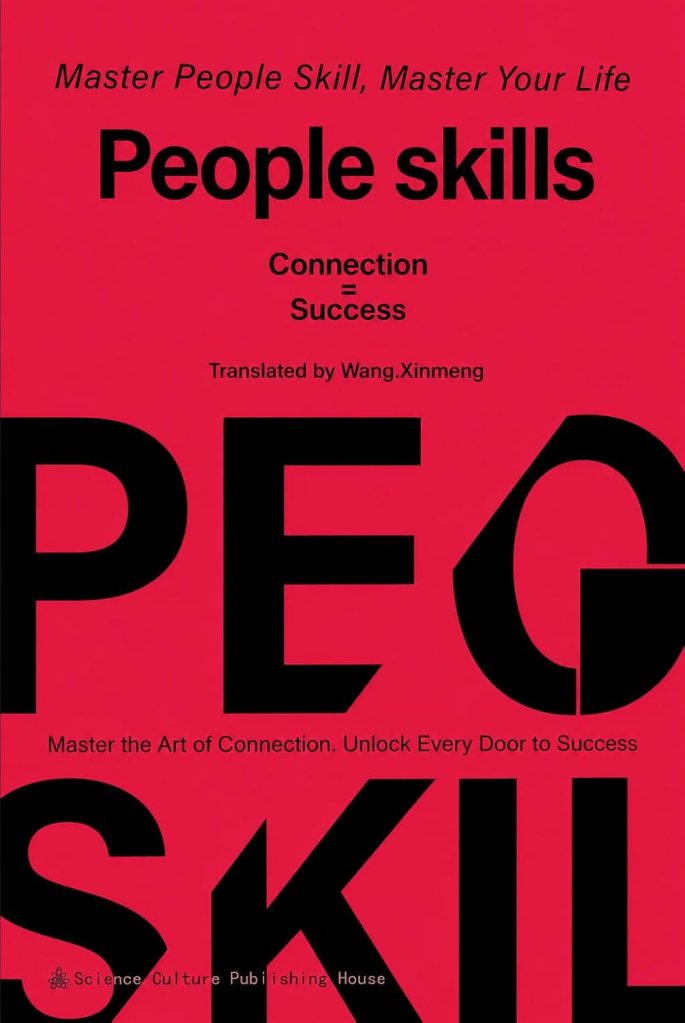
Book cover belongs to the publisher and is displayed for identification and review purposes.
Note: This book review is for educational and reflective purposes only and is not medical advice.


Do you Love Love YOUR Brain?