
What if happiness isn’t something we have to wait for?
What if happiness isn’t dependent on becoming the person we used to be?
What if we can begin creating a meaningful life from exactly where we are?
The Courage to Be Happy by Ichiro Kishimi and Fumitake Koga continues the ideas introduced in The Courage to Be Disliked. Through a dialogue between a philosopher and a young man, the authors explore Adlerian psychology, self-reliance, relationships, community, love, and the courage to continue choosing a meaningful life. The publisher describes this book as a kind of “compass” for putting Adlerian ideas into practice.
For someone living with a brain injury, some of these ideas can feel especially meaningful.
Because recovery can sometimes make us believe that happiness has to wait until everything is fixed.
But life doesn’t always work that way.
🌱 Happiness Doesn’t Have to Wait
After brain injury, we may think:
I’ll be happy when my symptoms improve.
I’ll be happy when I can work again.
I’ll be happy when I feel like myself again.
I’ll be happy when people understand me.
Waiting for everything to become perfect can keep happiness permanently somewhere in the future.
But maybe happiness can also exist in small moments today.
A peaceful morning.
A good conversation.
A laugh.
A favorite song.
A moment without pain.
A person who understands.
A small accomplishment.
🧠 You Are More Than What Happened to You
An injury can become a powerful part of our story.
But it doesn’t have to become the entire story.
You are still a person with interests.
Values.
Relationships.
Dreams.
Preferences.
Memories.
And possibilities.
Your life may have changed.
But your ability to create meaning has not disappeared.
❤️ Choosing Connection
One of the important ideas in Adlerian psychology is the importance of community feeling and contribution. The book explores how happiness is connected not only to ourselves but also to how we relate to other people.
After brain injury, connection can become complicated.
You may withdraw.
You may feel misunderstood.
You may become exhausted by social situations.
But meaningful connection can still matter.
Sometimes one safe person is enough.
💭 Happiness Can Be a Practice
Happiness doesn’t necessarily mean feeling happy every minute.
It means creating space for meaning even when life is difficult.
You can be grieving and still laugh.
You can be frustrated and still be grateful.
You can have pain and still experience love.
You can have difficult days and still believe tomorrow may be different.
🦋 You Are Still Moving Forward
Recovery may not look like a straight line.
Some days you move forward.
Some days you rest.
Some days you feel strong.
Some days you simply survive.
All of those days are part of your story.
💗 Love Love Brain Thoughts
Maybe courage isn’t only the courage to recover.
Maybe it’s also the courage to live while recovering.
To find joy while things are imperfect.
To love while carrying pain.
To build relationships while learning new boundaries.
To keep choosing life even when life looks different than expected.
You don’t have to wait until you’re completely healed to experience moments of happiness.
💬 We’d Love to Hear From You
What is one small thing that brings you happiness right now?
Has brain injury changed the way you think about happiness?
Share your experience in the comments.
📖 Where to Find the Book
If you’d like to learn more about The Courage to Be Happy by Ichiro Kishimi and Fumitake Koga, you can look for it through major book retailers. The book is a follow-up to The Courage to Be Disliked and explores how to put Adlerian ideas into everyday life.
🛒 Get the Book on Amazon
Love Love Brain may earn a small commission from qualifying purchases made through this link. This does not affect the price you pay.
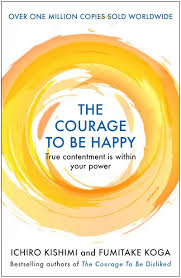
Book cover belongs to the publisher and is displayed for identification and review purposes.
Note: This book review is for educational and reflective purposes only and is not medical advice.


Do you Love Love YOUR Brain?