
What if there isn’t one “normal” way for a brain to work?
What if your brain’s differences aren’t simply weaknesses or problems – but part of what makes you uniquely you?
The Neuroscience of You by Chantel Prat, PhD explores the fascinating differences between individual brains and how those differences influence the way we think, feel, behave, communicate, and experience the world. Prat encourages readers to move beyond the idea of an average brain and develop a better understanding of their own individual brain.
For people living with brain injury, this perspective can be especially meaningful.
A brain injury can make us painfully aware that our brain does not always work the way we expect it to.
But understanding that every brain is different can help us approach ourselves with more curiosity and less judgment.
🧠 Every Brain Is Different
We often compare ourselves to other people.
Why can they remember that?
Why can they concentrate?
Why can they handle noise?
Why can they multitask?
Why does something seem easy for them but exhausting for me?
But there is no single brain that works exactly like another.
Our brains influence how we process information, respond to our surroundings, interact with other people, and make sense of our experiences.
After brain injury, these differences may become even more noticeable.
Learning about the brain can help us replace:
“What’s wrong with me?”
with:
“How does my brain work now?”
💭 Understanding Yourself Instead of Judging Yourself
Sometimes we become our own harshest critics.
We may call ourselves lazy when we’re actually exhausted.
We may call ourselves forgetful when our memory is struggling.
We may call ourselves antisocial when our brain is overwhelmed by stimulation.
We may call ourselves difficult when we are simply trying to protect ourselves from overload.
Understanding the brain gives us another way to look at these experiences.
Instead of immediately judging the behavior, we can become curious about what is happening underneath it.
💔 When Your Brain Changes
A brain injury can change the way you experience the world.
Sounds may feel louder.
Conversations may require more effort.
Memory may become unreliable.
Multitasking may become overwhelming.
Emotions may feel stronger.
Fatigue may arrive unexpectedly.
These changes can affect our confidence and identity.
But they do not make us less worthy.
They remind us that the brain is complex – and that recovery requires patience.
🌱 Learning Your Own Brain
One of the most useful ideas to take from this book is the value of understanding individual differences.
For a brain injury survivor, that can become a personal project:
What helps my brain focus?
What causes overload?
When do I have the most energy?
What helps me recover?
What environments make me feel safe?
What kind of communication works best for me?
These questions can help us create a life that works with our brain rather than constantly fighting against it.
❤️ Love Love Brain Thoughts
Your brain may have changed.
Your abilities may have changed.
Your needs may have changed.
But you are still you.
Understanding your brain isn’t about finding everything that is wrong.
It is about discovering what your brain needs.
Your brain is not a failure because it works differently.
Sometimes understanding is the beginning of compassion.
💬 We’d Love to Hear From You
What is one thing you’ve learned about your brain since your injury?
What helps your brain feel safe, calm, or focused?
Share your experience in the comments.
📖 Where to Find the Book
If you’d like to learn more about The Neuroscience of You by Chantel Prat, PhD, you can look for the book through major book retailers.
🛒 Get the Book on Amazon
Love Love Brain may earn a small commission from qualifying purchases made through this link. This does not affect the price you pay.
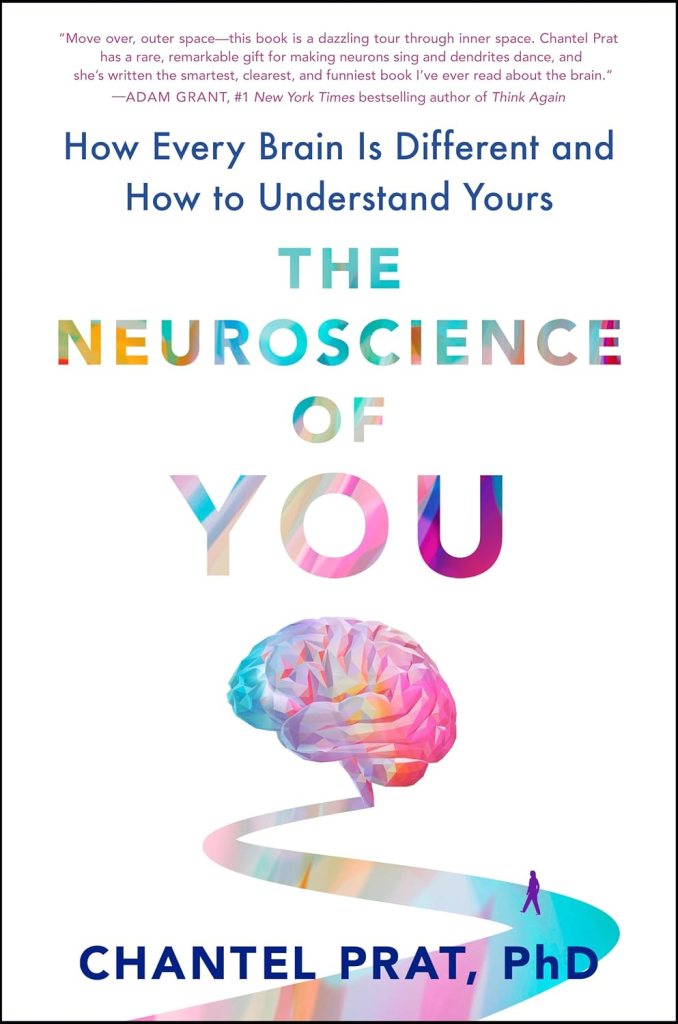
Book cover belongs to the publisher and is displayed for identification and review purposes.
Note: This book review is for educational and reflective purposes only and is not medical advice.


Do you Love Love YOUR Brain?