
Sometimes the hardest part of a difficult conversation isn’t knowing what you feel.
It’s knowing how to say it.
How do you set a boundary without starting an argument?
How do you disagree without becoming defensive?
How do you speak up without making the other person shut down?
How do you communicate what you need when emotions are high?
The Next Conversation by Jefferson Fisher offers practical strategies and phrases for communicating with greater clarity, confidence, and effectiveness. Fisher is a trial lawyer and communication educator whose approach focuses on helping people argue less and talk more. The book was published by Penguin Random House on March 18, 2025 and is 304 pages in hardcover.
💬 Words Matter
The same message can be communicated in very different ways.
One approach creates defensiveness.
Another creates conversation.
Learning how to communicate clearly can change relationships.
And after brain injury, communication may require even more intentionality.
🧠 Brain Injury Can Change Communication
Some survivors experience difficulty finding words.
Others become overwhelmed during long conversations.
Some need more time to process information.
Others may have less tolerance for conflict or overstimulation.
These changes can affect relationships.
Learning how to communicate needs clearly can help.
🛑 You Can Set Boundaries Without Being Cruel
A boundary doesn’t have to be an attack.
You can say:
“I’m not comfortable with that.”
“I need some time before we continue this conversation.”
“Please speak to me respectfully.”
“I understand your perspective, but I see it differently.”
Boundaries can protect relationships rather than destroy them.
❤️ Arguing Less Doesn’t Mean Staying Silent
Sometimes people confuse peace with avoiding difficult conversations.
But avoiding every disagreement isn’t necessarily healthy.
You can speak up.
You can disagree.
You can protect yourself.
You can communicate your needs.
The goal is learning how to do those things without unnecessarily escalating the situation.
🌱 Clarity Can Reduce Confusion
Clear communication can be especially important when your brain is already working hard.
Instead of giving a long explanation, sometimes a simple statement is enough.
“I need a break.”
“I didn’t understand.”
“Please repeat that.”
“I need more time.”
🤝 Relationships Are Built One Conversation at a Time
A relationship isn’t changed by one perfect conversation.
It is shaped by thousands of small interactions.
How we speak.
How we listen.
How we repair misunderstandings.
How we handle conflict.
How we apologize.
How we set boundaries.
💭 Your Next Conversation Doesn’t Have to Be Like the Last One
Maybe the last conversation didn’t go well.
Maybe you said something you regret.
Maybe someone hurt you.
Maybe you weren’t able to communicate what you needed.
That doesn’t mean the next conversation has to follow the same pattern.
You can try again.
💗 Love Love Brain Thoughts
Communication is part of recovery too.
Learning to tell people what your brain needs can make life easier.
You can say:
“I need quiet.”
“I’m overwhelmed.”
“Please slow down.”
“I need to rest.”
“I want to continue this conversation, but not right now.”
You don’t need perfect words.
You need words that are honest.
Your voice matters.
💬 We’d Love to Hear From You
Has brain injury changed the way you communicate?
What conversation do you wish you could have handled differently?
What communication skill has helped you the most?
📖 Where to Find the Book
The Next Conversation was published by Penguin Random House on March 18, 2025. The hardcover edition is 304 pages. Fisher’s official website describes the book as offering actionable strategies and phrases for conversations and negotiations.
🛒 Get the Book on Amazon
Love Love Brain may earn a small commission from qualifying purchases made through this link. This does not affect the price you pay.
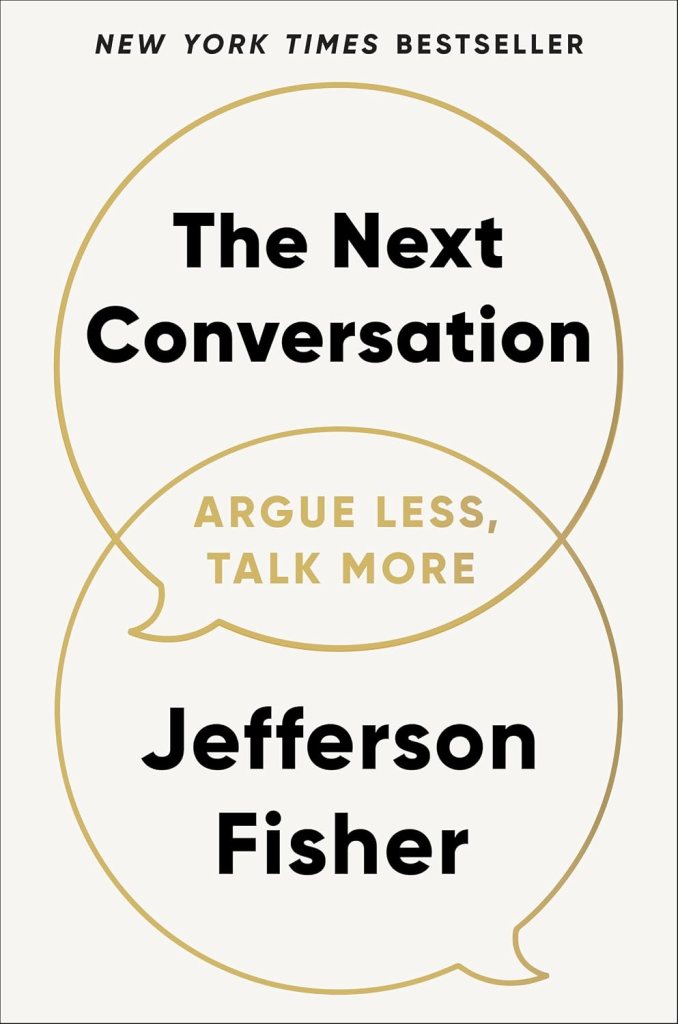
Book cover belongs to the publisher and is displayed for identification and review purposes.
Note: This book review is for educational and reflective purposes only and is not medical advice.


Do you Love Love YOUR Brain?