
When many people hear the word yoga, they think of stretching, exercise, and physical movement.
But yoga has a much deeper history.
The ancient Yoga Sutras of Patanjali explores the mind, meditation, self-knowledge, stillness, and the search for a deeper understanding of ourselves.
In this edition, Alistair Shearer provides the introduction and translation of Patanjali’s ancient teachings. The book was published by Harmony in 2002 and is 144 pages.
At the heart of these teachings are questions that people have been asking for centuries:
Who am I?
Where am I going?
What is the purpose of life?
🧘 Yoga Is More Than Exercise
Yoga is often presented as a physical practice.
Stretching.
Balance.
Strength.
Breathing.
But Patanjali’s teachings approach yoga differently.
Yoga is presented as a path toward understanding and settling the mind.
The Yoga Sutras explores how the mind works and how cultivating greater stillness can lead toward self-knowledge.
For readers interested in mindfulness, this offers a very different way of understanding yoga.
🧠 When the Mind Feels Overwhelmed
Our minds can become busy.
Thoughts about yesterday.
Worries about tomorrow.
Memories.
Plans.
Fear.
Frustration.
Expectations.
For someone living with brain injury, mental overload can sometimes be especially challenging.
Concentration may require more effort.
Too much information may become overwhelming.
Rest may become necessary more often.
The Yoga Sutras invites us to pay attention to the activity of the mind and explore the possibility of becoming less controlled by its constant movement.
💭 Learning to Observe Your Thoughts
A thought can feel like a fact.
“I’m not making progress.”
“I should be doing more.”
“My life will never be the same.”
“I can’t handle this.”
During difficult moments, these thoughts can become overwhelming.
Mindfulness encourages us to notice what is happening inside the mind.
Not necessarily to fight the thought.
Not necessarily to pretend the thought isn’t there.
But to observe it.
To create a little space.
And sometimes that space can change how we respond.
⏸️ The Value of Stillness
The Yoga Sutras places great importance on settling the mind into stillness. Shearer’s translation presents yoga as the settling of the mind into silence.
Stillness does not necessarily mean that every thought disappears.
It can mean creating moments when we are not constantly reacting to every thought.
A quiet room.
A few slow breaths.
Sitting outside.
Taking a break from screens.
Listening to calming music.
Allowing yourself to rest.
These moments may seem small.
But small moments of stillness can become meaningful parts of a daily routine.
🌱 Recovery Is More Than What Others Can See
Brain injury recovery is often measured through visible changes.
Walking.
Speaking.
Returning to work.
Completing daily tasks.
But there is another part of recovery that is much harder to measure.
Identity.
Confidence.
Purpose.
Emotional adjustment.
Learning who you are after something has changed.
An injury can create questions that do not have easy answers.
Who am I now?
What does my future look like?
What still matters to me?
💡 Asking New Questions
Sometimes recovery makes us focus on the question:
“How do I get back to the person I was?”
But another question can be just as important:
“Who am I becoming?”
The Yoga Sutras encourages reflection on identity, purpose, and the nature of the mind.
For someone navigating a major life change, these ideas may provide an opportunity to look beyond what has been lost and consider what can still be discovered.
🌿 Finding Peace in the Present
We sometimes imagine that peace will arrive when everything is fixed.
When recovery is complete.
When our health improves.
When our responsibilities become easier.
When life finally feels normal again.
But life rarely works that way.
There may always be something to worry about.
Something to solve.
Something to improve.
Learning to create moments of peace before everything is perfect can be valuable.
🌻 Taking It One Moment at a Time
The Yoga Sutras is a philosophical and spiritual text.
It is not necessarily a book to rush through.
Some passages may make immediate sense.
Others may require reflection.
You may read something today and understand it differently six months from now.
That is okay.
Sometimes a book does not need to give us an immediate answer.
Sometimes it simply gives us a question worth carrying with us.
❤️ A Different Way of Looking at Yourself
After a brain injury, it can be easy to focus on what has changed.
What you cannot do.
What takes longer.
What feels harder.
What you wish you could go back to.
But your symptoms are not the entirety of who you are.
There is still curiosity.
There are still relationships.
There are still values.
There are still possibilities.
There is still a person behind the diagnosis.
💗 Love Love Brain Thoughts
The Yoga Sutras of Patanjali offers a chance to explore yoga beyond physical exercise and into the areas of meditation, self-knowledge, and inner awareness.
Shearer’s edition presents Patanjali’s teachings in a modern English translation while preserving the text’s focus on the mind, stillness, and the search for self-knowledge.
This is not a brain injury treatment guide.
It does not replace medical care, rehabilitation, or professional support.
Instead, its potential value for our community lies in its invitation to slow down and reflect.
After brain injury, so much attention can be placed on doing.
Doing exercises.
Going to appointments.
Remembering.
Practicing.
Recovering.
Sometimes we also need permission to simply be.
To pause.
To breathe.
To notice.
To reflect.
To ask ourselves what matters now.
At Love Love Brain, we believe recovery can involve more than rebuilding abilities.
It can also involve rebuilding our relationship with ourselves.
Sometimes moving forward begins with becoming still enough to notice where you are. 🌻
💬 We’d Love to Hear From You
Do you practice yoga, meditation, or mindfulness?
What helps you calm your mind when you feel overwhelmed?
Has brain injury changed the way you think about yourself or your future?
What helps you find moments of peace?
Share your experience in the comments.
Your story may help another survivor discover a new way of looking within.
📖 Where to Find the Book
If you’d like to learn more about The Yoga Sutras of Patanjali by Patanjali, translated and introduced by Alistair Shearer, the 2002 Harmony edition is available through Penguin Random House and other booksellers.
🛒 Get the Book on Amazon
Love Love Brain may earn a small commission from qualifying purchases made through this link. This does not affect the price you pay.
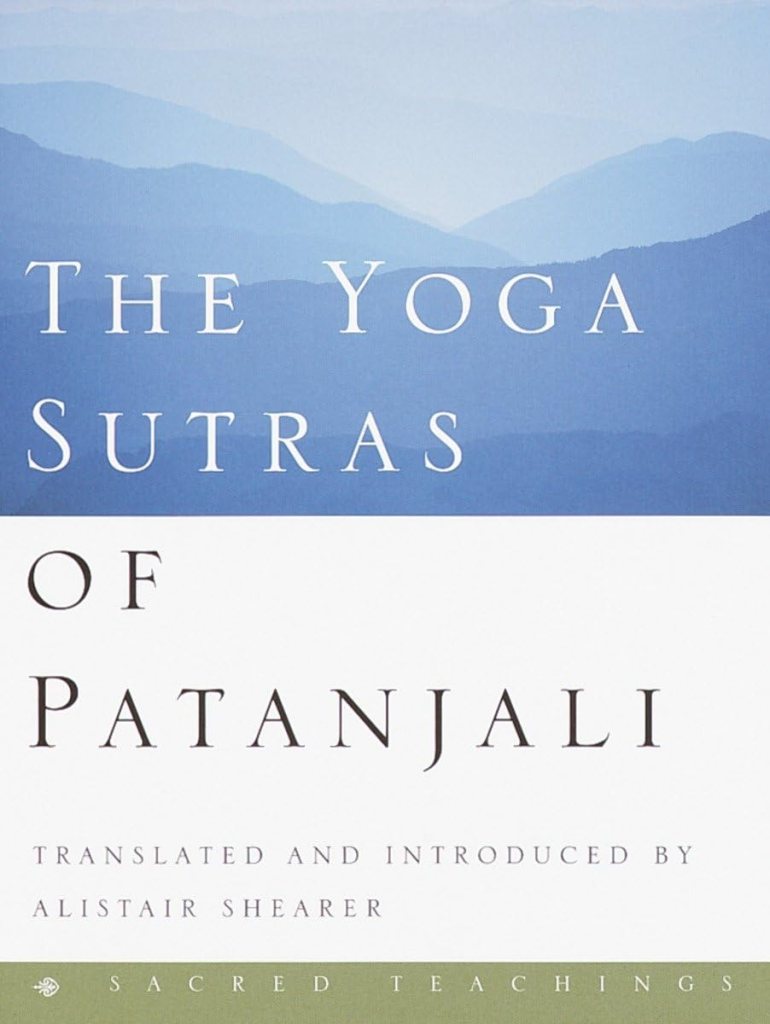
Book cover belongs to the publisher and is displayed for identification and review purposes.


Do you Love Love YOUR Brain?