
Brain injury can be incredibly isolating.
Sometimes, the hardest part isn’t only what happened to your brain.
It’s what happens to your relationships afterward.
People may not understand why you communicate differently.
They may not understand why you need more time.
They may not understand why you cancel plans.
They may not understand why you are exhausted after something that seems simple.
And little by little, you may begin pulling away.
🤝 The Connection Gauge
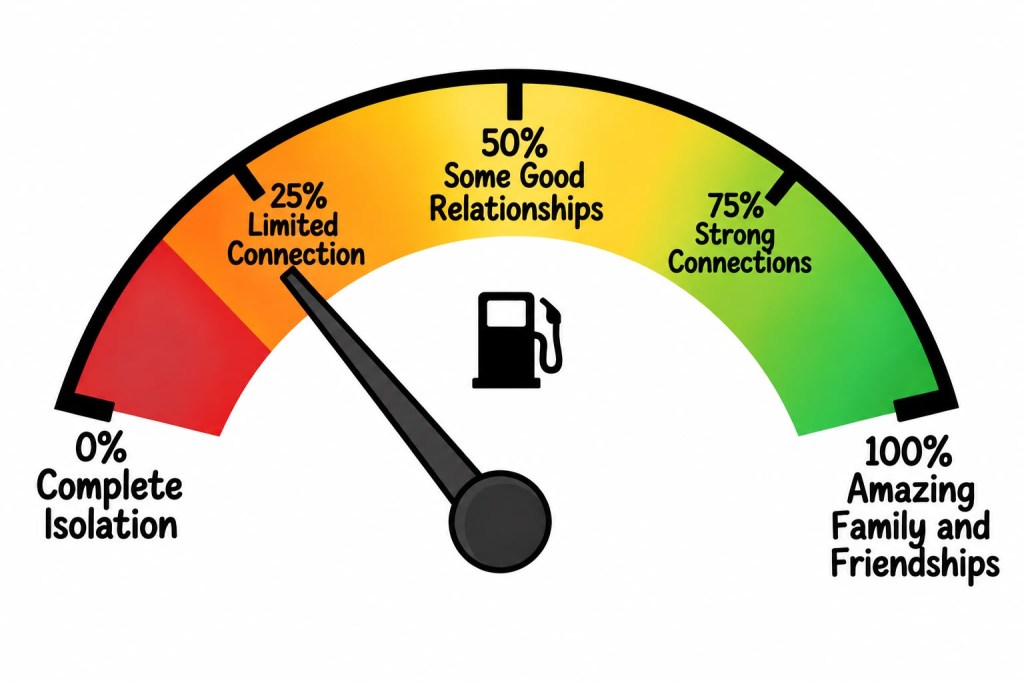
The illustration shows a gauge moving from complete isolation to amazing family and friendships.
Somewhere in the middle is limited connection.
And honestly, many brain injury survivors may recognize that middle space.
You may still have people in your life.
But you may not feel truly connected to them.
You may feel alone even when someone is sitting right beside you.
Being surrounded by people and feeling connected are not always the same thing.
🧠 Brain Injury Can Change Relationships
Before your injury, you may have been the person who called everyone.
The person who organized family gatherings.
The person who remembered birthdays.
The person who always showed up.
Then your brain injury happened.
Now, conversations may take more energy.
Noise may overwhelm you.
Your emotions may feel harder to manage.
You may forget what someone just told you.
You may need to leave early.
You may not have the energy to respond to messages.
None of this means you stopped caring.
Sometimes you are simply trying to survive with the energy and abilities you have.
💗 Connection Does Not Have to Be Perfect
A strong relationship doesn’t require you to be available all the time.
Sometimes connection can look very simple.
A five-minute phone call.
A text message.
Sitting quietly with someone.
Sharing a cup of coffee.
Watching a favorite show together.
Having someone check in without expecting anything in return.
These small moments matter.
You don’t have to have a huge social life to have meaningful connection.
One safe person can make a tremendous difference.
🌱 Ask for the Kind of Connection You Need
After brain injury, you may need to communicate your needs differently.
You might say:
“I want to spend time with you, but I don’t have much energy today.”
“Can we keep things quiet?”
“I need a little more time to process what you’re saying.”
“I can’t stay long, but I’d still like to see you.”
“Can you check in with me tomorrow?”
These aren’t unreasonable requests.
They are ways of helping other people understand how to connect with you.
🛑 Don’t Confuse Isolation With Protection
Sometimes we withdraw because we are exhausted.
Sometimes we withdraw because we are afraid of being misunderstood.
Sometimes we withdraw because relationships have become difficult.
And sometimes, we withdraw because it feels easier than explaining ourselves.
Taking time alone can be healthy.
But complete isolation can leave us without the support we need.
If you notice yourself disappearing from everyone, consider whether there is one safe person you could reach out to.
You don’t have to explain everything.
You could simply say:
“I’m having a hard day. Can you stay connected with me?”
🤍 Find Your Safe People
Not everyone will understand your brain injury.
That can hurt.
But it doesn’t mean nobody will understand.
Look for people who:
👂 Listen without judging.
🛑 Respect your limits.
⏳ Give you time to respond.
🤍 Don’t make you feel guilty for needing help.
🌦️ Accept that your abilities can change from day to day.
🌱 Celebrate your progress without comparing you to someone else.
🫶 Allow you to be yourself.
Your people should not require you to pretend you’re okay.
✨ Move the Needle Slowly
You don’t have to go from 25% connection to 100% overnight.
Maybe today you send one message.
Maybe tomorrow you make a phone call.
Maybe next week you meet someone for coffee.
Small steps count.
The goal isn’t to become the person you were before your injury.
The goal is to build meaningful connections with the person you are now.
💗 Connection Is Part of Healing
Recovery isn’t only about physical strength or cognitive skills.
Being understood matters.
Being heard matters.
Having someone beside you matters.
Laughing with someone matters.
Knowing that you don’t have to face everything alone matters.
If your relationship gauge feels stuck at 25%, don’t judge yourself.
Start small.
Find one safe person.
Send one message.
Make one connection.
You don’t have to do recovery completely alone.
And if you’re the family member or friend of someone with a brain injury, remember this:
Sometimes your presence is more valuable than your words.
You don’t have to fix everything.
Sometimes just staying connected is enough.
💗 Love Love Brain Note
Every brain injury is different. The ideas in this post are for educational and supportive purposes only and are not medical advice or a substitute for individualized care from qualified healthcare professionals. If you are experiencing new, severe, worsening, or concerning symptoms, seek appropriate medical care.


Do you Love Love YOUR Brain?