
Have you ever felt overwhelmed by anxiety, uncomfortable memories, or thoughts that are difficult to quiet?
Sometimes, your mind becomes so focused on what happened in the past or what might happen in the future that it becomes difficult to feel present.
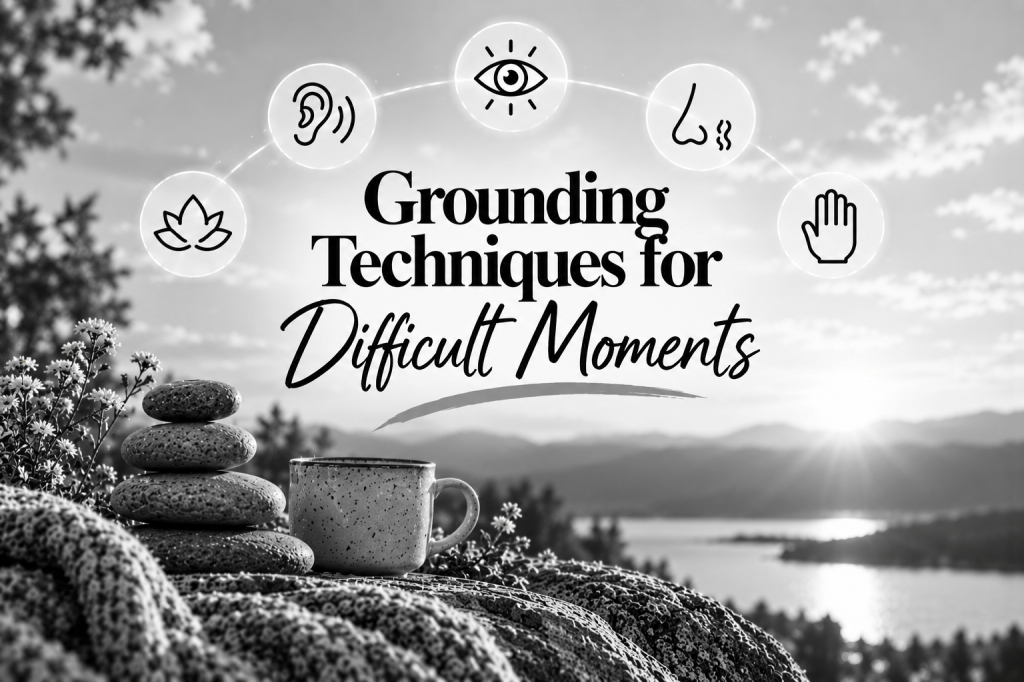
Grounding techniques can help you gently shift your attention toward what is happening around you right now. They use your senses, body awareness, and simple mental activities to help you reconnect with the present moment.
These techniques are not about forcing yourself to ignore your feelings. They offer practical ways to respond when you need a moment to pause, refocus, and feel more connected to your surroundings.
Here are four grounding techniques you can try.
👀 1. Try the 5-4-3-2-1 Technique
This exercise uses your five senses to help you notice details in your environment.
Take your time with each step. You do not need to rush or find anything special.
Look around and identify:
👀 5 things you can see. Notice the color of a wall, the shape of a lamp, or the way light falls on a table.
✋ 4 things you can feel. Notice your clothing, the chair beneath you, your feet on the floor, or the texture of an object.
👂 3 things you can hear. Listen for a clock ticking, birds outside, or a familiar sound nearby.
👃 2 things you can smell. Notice the scent of soap, fresh air, coffee, or a nearby flower.
👅 1 thing you can taste. Notice the taste in your mouth or take a small sip of water and pay attention to its taste.
You can adapt this exercise to suit your surroundings and abilities. If a particular sense is uncomfortable or unavailable, focus on the others instead.
The goal is to notice what is happening around you, one detail at a time.
🧠 2. Use Categories to Refocus Your Mind
When uncomfortable thoughts keep returning, a simple naming activity may give your attention something else to focus on.
Choose a category and name as many items as you can remember.
For example:
🐶 Animals: Dog, cat, elephant, rabbit, dolphin.
🍎 Fruits and vegetables: Apple, banana, carrot, mango, cucumber.
🎨 Colors: Red, green, yellow, purple, orange.
🌎 Countries: Canada, Japan, France, Brazil, Australia.
🎬 Movies or television shows: Name titles you remember.
🏆 Sports teams: Think of teams you know.
You can make the activity more challenging by naming items in alphabetical order. For example, you might name an apple, then a banana, then a carrot.
Choose a category that feels familiar and enjoyable. If remembering names becomes frustrating, switch to an easier category.
This is not a test of your memory. It is simply an opportunity to direct your attention toward a manageable task.
🌿 3. Reconnect With Your Body
When you feel anxious or overwhelmed, you may become so focused on your thoughts that you pay less attention to your physical surroundings.
A gentle body-awareness exercise can help you notice physical sensations and reconnect with the present.
Try these steps if they are comfortable and safe for you:
- 🌬️ Take five gentle breaths. Breathe in through your nose and breathe out slowly through your mouth. Do not force deep breaths or hold your breath.
- 🦶 Notice your feet. If comfortable, place both feet on the floor and gently wiggle your toes. Notice the feeling of your feet touching the ground.
- 👣 Move your feet gently. If appropriate for your mobility, press your feet lightly against the floor and notice the contact.
- ✊ Clench and release your hands. Make gentle fists, then relax your hands. Repeat a few times if comfortable.
- 🤲 Press your palms together. Notice the sensation in your hands and arms, then release the pressure.
- 👐 Rub your palms together. Pay attention to the warmth and the sensation of your hands moving.
- 🙆 Stretch gently. If comfortable, raise your arms overhead for a few seconds, then relax them at your sides.
- 😌 Pause and notice. Take a few natural breaths and pay attention to how your body feels.
You do not need to complete every step. Choose movements that suit your abilities, and skip anything that causes pain, dizziness, or discomfort.
If focusing on your body makes you feel more distressed, you can instead look around the room and name a few objects you see.
💭 4. Try a Simple Mental Exercise
Grounding does not always require movement or a quiet environment. Some mental exercises can be done while sitting, waiting, or taking a break.
Here are a few ideas:
👀 Name the objects around you. Look around and identify familiar items.
🪜 Describe a familiar activity. Think through the steps of preparing a meal, tying your shoes, or completing another task you know well.
🔢 Count backward. Try counting from 100 backward by sevens, or choose a simpler counting pattern if that feels easier.
🔍 Describe an object. Pick something nearby and notice its color, shape, size, texture, and other details.
🧑🤝🧑 Recall familiar information. Think of the names of people you know or activities they enjoy.
🔤 Spell a word backward. Choose a short, familiar word and try spelling it from the last letter to the first.
🏡 Picture a familiar place. If visualization feels comfortable for you, imagine the layout of your home or another familiar location.
Some exercises require more concentration than others. If you have memory difficulties, aphasia, or cognitive fatigue after a brain injury, choose an activity that feels manageable. You can simplify it or stop whenever you need to.
The purpose is not to challenge yourself until you feel frustrated. It is to give your attention a gentle, practical focus.
💗 How to Choose the Right Grounding Technique
Not every grounding technique works for everyone.
You might find that noticing objects helps you feel more present. Someone else may prefer listening to familiar sounds or feeling their feet against the floor.
You can experiment with different techniques when you feel relatively calm. Notice which ones feel comfortable, which ones are easy to remember, and which ones you would like to try during a difficult moment.
If you live with a brain injury, consider writing down your preferred techniques while you are feeling well. You can keep your notes somewhere easy to find and ask a trusted person to help if needed.
You can also discuss grounding strategies with a qualified mental health professional or rehabilitation provider, especially if certain exercises increase your distress.
Remember, grounding is a coping tool, not a replacement for professional support when you need it.
🌱 You Do Not Have to Feel Better Immediately
Sometimes, a grounding exercise may help you feel more connected to the present. Other times, you may still feel anxious or uncomfortable afterward.
That does not mean you have failed.
You can stop, try a different technique, or reach out to someone you trust. You do not need to force yourself to feel calm or complete every exercise.
If you are experiencing flashbacks, severe anxiety, or distress that keeps interfering with your daily life, consider seeking support from a qualified mental health professional.
You deserve help that meets your needs.
💗 Love Love Brain Note
When life feels overwhelming, you do not have to figure everything out at once.
Try noticing five things around you. Feel your feet resting on the floor. Name a few familiar objects. Take a comfortable breath and give yourself a moment to pause.
Choose what feels right for you, and remember that it is okay to stop if an exercise makes you uncomfortable.
You do not have to control every thought to take one small step toward the present moment. 💗
📱 Follow and Support Love Love Brain
If this message speaks to you, please support Love Love Brain by following us on social media. 💗
Stay connected for more stories, reflections, helpful information, and supportive content about brain injury, recovery, resilience, and everyday life.
Click the buttons below to follow and support us on social media:
Note: Every brain injury is different. This content is for education and support, not medical advice.


Do you Love Love YOUR Brain?