
❤️ Lessons in resilience, healing, and hope for the brain injury community
We know Sylvester Stallone as Rocky and Rambo, characters who seem almost impossible to defeat. But behind the muscles, fame, and success is a man who has spent much of his life struggling with rejection, emotional pain, anxiety, and regret.
In a deeply personal interview with The New York Times, Stallone opens up about these struggles and the lessons behind his memoir, The Steps.
His story offers powerful inspiration for people living with traumatic brain injuries (TBI), PTSD, and other life-changing challenges.
🧠 1. Your Challenges Do Not Define Your Worth
Stallone experienced facial paralysis from a birth injury, which affected his speech. Growing up, people mocked the way he spoke.
He was repeatedly rejected as an actor because of his appearance and voice.
Yet those same characteristics became part of his unforgettable identity.
❤️ Lesson for TBI survivors: Difficulty speaking, remembering, processing information, or expressing yourself does not diminish your intelligence or your worth.
You are still you, even when your abilities change.
💔 2. Being Tough Doesn’t Mean You Aren’t Hurting
Stallone describes growing up with abuse, abandonment, and very little affection.
He learned to survive by becoming fiercely competitive and emotionally guarded.
But later in life, he recognized that toughness had also prevented him from experiencing love and connection.
❤️ Lesson for TBI survivors: You don’t have to pretend everything is fine.
Crying, asking for help, accepting support, and acknowledging your limitations are also forms of strength.
Healing doesn’t require becoming invincible.
🌪️ 3. Emotional Struggles Can Exist Behind a Strong Exterior
Despite his public image, Stallone reveals that he has experienced intense anxiety and panic attacks, sometimes needing to escape crowded rooms.
He also acknowledges how unresolved childhood experiences influenced his anger and relationships.
❤️ Lesson for TBI survivors: Emotional regulation can be especially challenging after a brain injury.
Anxiety, frustration, fear, and emotional overwhelm do not make you weak.
Recognizing these feelings and learning healthier ways to respond can be part of recovery.
🎨 4. Find Something That Gives Your Life Meaning
Before becoming famous, Stallone spent countless hours studying movies, writing scripts, visiting museums, and learning about art.
Creativity gave him direction when the rest of his life felt uncertain.
He eventually created Rocky, a character who represented the compassionate, resilient person he wanted to become.
❤️ Lesson for TBI survivors: When your old life is no longer possible, discovering new interests can help you reconnect with purpose.
Art, music, writing, gardening, sports, or simply connecting with others can bring meaning to your days.
Your purpose doesn’t have to be a career or a major accomplishment.
Sometimes, finding joy in one small activity is enough.
🥊 5. Starting Over Is Not Failure
Stallone experienced tremendous success, followed by years of rejection.
In his 60s, Hollywood executives told him his career was finished.
Instead of accepting their judgment, he returned to writing and created Rocky Balboa, one of the accomplishments he says makes him proudest.
❤️ Lesson for TBI survivors: Recovery rarely follows a straight line.
Some days you improve. Other days you struggle with things you could do yesterday.
Starting over doesn’t mean you’ve lost everything.
It means you’re finding a different way forward.
And sometimes moving forward means resting, changing your goals, or accepting help.
🫂 6. Relationships Matter More Than Achievements
One of Stallone’s greatest regrets is how much time he spent chasing success while neglecting the people he loved.
Now, later in life, he recognizes the importance of family, connection, and being emotionally present.
❤️ Lesson for TBI survivors: Losing independence or a career can make us question our value.
But our worth is not measured by productivity, income, or accomplishments.
Being loved, sharing kindness, and connecting with another human being are meaningful achievements, too.
🌅 7. You Can Learn to Live Beyond Regret
Perhaps Stallone’s most moving realization is that he cannot change his childhood, his mistakes, or the years he lost chasing approval.
He can only choose how to live today.
He speaks about accepting his parents for who they were, acknowledging his regrets, and cherishing the time he has left.
❤️ Lesson for TBI survivors: Many of us grieve the people we were before our injuries.
We miss our independence, our relationships, our careers, and the ease with which we once lived.
Acceptance does not mean pretending those losses don’t hurt.
It means allowing ourselves to experience moments of happiness alongside the grief.
❤️ The Greatest Lesson: You Are More Than What Happened to You
Stallone’s story isn’t simply about perseverance.
It’s about discovering that success cannot erase emotional wounds, physical strength cannot prevent suffering, and toughness alone cannot create happiness.
Although Stallone’s experiences are different from living with a traumatic brain injury, his reflections remind us that vulnerability and strength can exist together.
For those of us rebuilding our lives after TBI, perhaps the goal isn’t to become the person we were before.
Perhaps it’s to discover what matters most to us now.
 You don’t have to win every fight. You don’t have to climb every staircase. Some days, simply taking one step is enough.
And that step deserves to be celebrated.
 About the Book
The Steps by Sylvester Stallone
In this memoir, Stallone reflects on his difficult childhood, rejection, extraordinary career, relationships, physical struggles, and the emotional lessons he has learned along the way.
His story offers a reminder that even people who appear incredibly strong can carry invisible wounds.
Inspired by Sylvester Stallone’s interview with Lulu Garcia-Navarro for The New York Times’ The Interview. The connections to TBI recovery are our reflections, not medical advice or claims that Stallone has TBI.
💗 Love Love Brain Thoughts
Sylvester Stallone’s story reminds us that strength is not about pretending we never hurt. It is about learning from our experiences, accepting our imperfections, and finding ways to keep moving forward.
For those of us living with a traumatic brain injury, life may look very different from what we imagined. We may grieve who we were before our injury while learning to appreciate who we are becoming.
You do not have to prove your strength by doing everything alone. Asking for help, resting when you need to, and celebrating small victories are also signs of strength.
Your life still has meaning. Your story is still being written. And even when progress feels slow, you deserve compassion, connection, and hope. 💗
💬 We’d Love to Hear From You
What has helped you keep going during a difficult chapter of your life?
Have you discovered a new purpose, learned to ask for help, or found strength in a small everyday victory?
We’d love to hear your story in the comments. Your experience may remind someone else that they are not alone.
📖 Where to Find the Book
The Steps by Sylvester Stallone
In this memoir, Stallone reflects on his life, childhood, career, relationships, setbacks, and the lessons he has learned along the way.
If you would like to explore his story further, look for The Steps through your preferred bookstore or library.
🛒 Get the Book on Amazon
Please confirm the correct edition before purchasing.
Love Love Brain may earn a small commission from qualifying purchases made through our Amazon affiliate links. This comes at no additional cost to you and helps support our work.
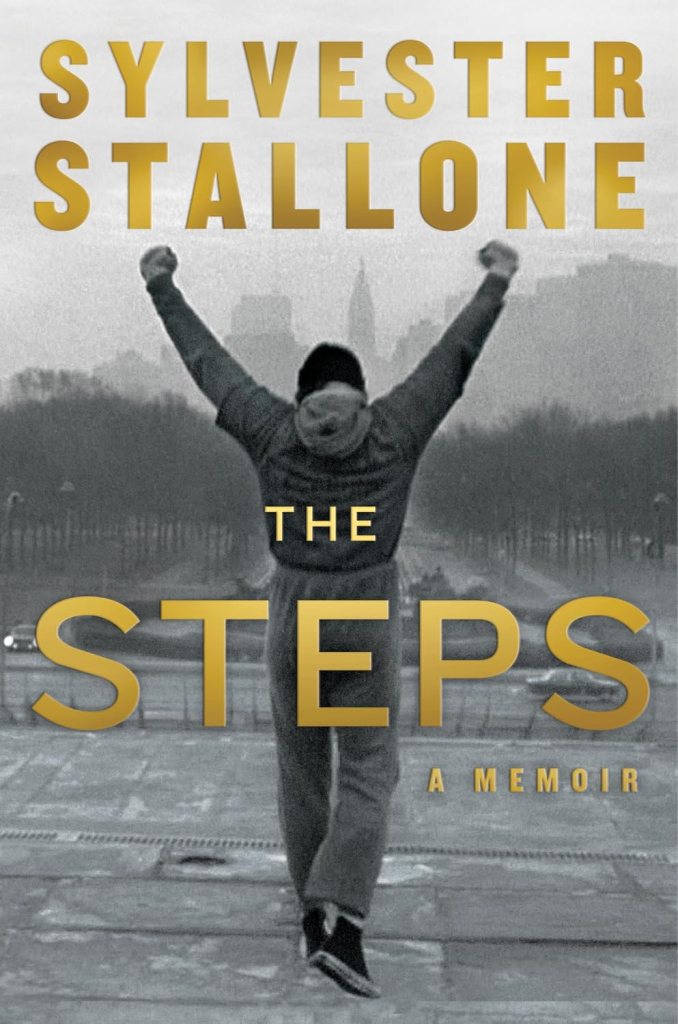
Book covers are shown for identification purposes and remain the property of their respective publishers and authors.
Note: This book review is for informational and educational purposes only. It is not medical advice and should not replace guidance from a qualified healthcare professional. Every brain injury and recovery journey is different.


Do you Love Love YOUR Brain?