
Living with a traumatic brain injury (TBI) often means living with a different amount of energy than before your injury.
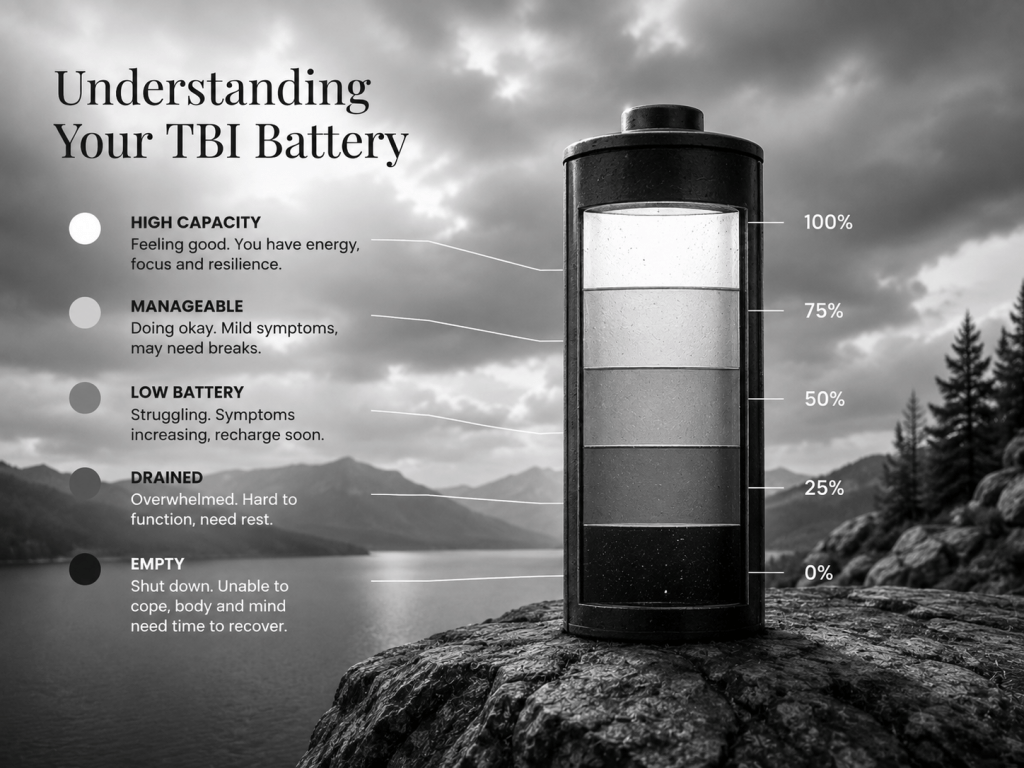
Many survivors describe their energy like a battery. Every day, you wake up with a certain amount of energy, and every activity – physical, mental, or emotional – uses part of that battery.
Learning how to manage your “battery” can help reduce fatigue, prevent symptom flare-ups, and support your recovery.
🔋 Your Battery Is Different Now
After a brain injury, your battery may not hold the same amount of energy it once did.
Tasks that used to feel easy may now require much more effort.
For example:
🛁 Getting ready in the morning
🚗 Driving
💻 Working
🛒 Grocery shopping
💬 Having conversations
📱 Using your phone or computer
These activities all use energy – even if they don’t seem physically demanding.
⚡ What Drains Your Battery?
Many things can use up your brain’s energy.
Common energy drains include:
😴 Poor sleep
😣 Stress
💭 Concentrating for long periods
🔊 Loud or busy environments
📱 Too much screen time
🚶 Physical activity
💬 Long conversations
📝 Multitasking
The more energy you spend without taking breaks, the faster your battery may run out.
🔄 Recharge Your Battery
Just like a phone battery, your brain needs time to recharge.
Healthy ways to restore your energy include:
😴 Getting enough sleep
💧 Drinking plenty of water
🥗 Eating nutritious meals
🧘 Taking quiet breaks
🌿 Spending time in a calm environment
🚶 Gentle movement, if recommended by your healthcare provider
Short breaks throughout the day can help you avoid becoming completely exhausted.
🌱 Spend Your Energy Wisely
You may not be able to do everything in one day – and that’s okay.
Try to:
✔️ Prioritize the most important tasks.
✔️ Break large activities into smaller steps.
✔️ Alternate busy tasks with restful ones.
✔️ Schedule demanding activities when you have the most energy.
Managing your energy is just as important as managing your time.
❤️ Listen to Your Battery
Your body often lets you know when your battery is getting low.
Watch for signs like:
🤕 Headaches
😵 Dizziness
💭 Brain fog
😴 Fatigue
😣 Feeling overwhelmed
😠 Irritability
These signals are reminders to slow down and recharge before your symptoms become worse.
💜 It’s Okay to Rest
Rest is not a sign of weakness.
It’s part of healing.
Giving yourself permission to pause can help you accomplish more in the long run and protect your brain from becoming overloaded.
Remember:
Rest today can help you feel stronger tomorrow.
✨ Final Thoughts
Your brain injury may have changed how much energy you have, but it hasn’t changed your value.
Learning to understand your “TBI battery” can help you make choices that support your health, reduce fatigue, and improve your quality of life.
Be kind to yourself.
Recharge when you need to.
Every well-timed rest is an important part of your recovery.


Do you Love Love YOUR Brain?