
Our bodies and emotions are closely connected.
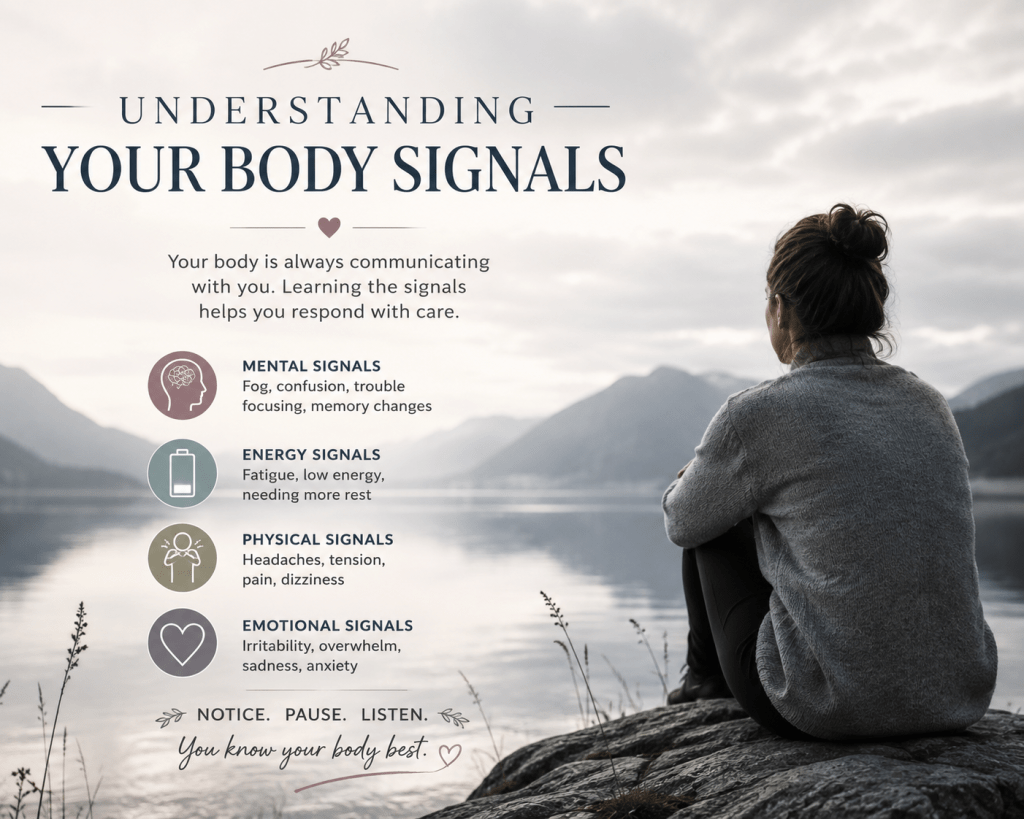
Sometimes, an emotion may show up as a physical sensation before we even realize what we’re feeling. Learning to notice these signals can help us better understand ourselves and communicate what we need.
After a brain injury, concussion, or stroke, recognizing emotions and body sensations may feel more difficult. Taking time to pause and notice what is happening can be a helpful part of recovery.
🧠 What Are Body Sensations?
A body sensation is something you physically notice in your body.
You might experience:
💓 A racing heart
😮💨 Changes in breathing
💪 Muscle tension
🤕 Head pressure or a headache
🤲 Tingling or shaking
🔥 Feeling warm
❄️ Feeling cold
😴 Feeling suddenly tired
These sensations can happen for many reasons, including emotions, physical activity, stress, or other health factors.
💭 Connecting Sensations With Emotions
Sometimes our physical sensations can give us clues about our emotions.
For example:
😟 Worry or anxiety → racing heart, tense muscles, rapid breathing
😠 Anger → tight muscles, feeling hot, clenched jaw
😔 Sadness → heaviness, low energy, feeling tired
😣 Frustration → muscle tension, restlessness, headache
😌 Calm → relaxed muscles, slower breathing, feeling comfortable
😊 Happiness → relaxed body, smiling, increased energy
These connections aren’t the same for everyone. Your body may communicate emotions differently.
🛑 Pause and Notice
When you notice a physical sensation, take a moment to pause.
Ask yourself:
💭 What am I feeling in my body?
💭 What emotion might I be experiencing?
💭 What happened just before I noticed it?
💭 What do I need right now?
You don’t have to identify the emotion perfectly.
Simply noticing is a good place to start.
🌱 Build Your Emotional Awareness
Learning to connect emotions with physical sensations takes practice.
Try keeping a simple journal:
💭 Emotion: What am I feeling?
🧠 Sensation: What do I notice in my body?
📍 Situation: What was happening?
❤️ Need: What might help me right now?
Over time, you may begin to recognize patterns.
🤝 Give Yourself Time
After a brain injury, identifying or expressing emotions may sometimes feel confusing.
You don’t have to figure everything out immediately.
Give yourself permission to pause, take a break, and ask someone you trust for support.
Learning about your emotions is part of learning about yourself.
✨ Final Thoughts
Your body can provide important clues about what you’re experiencing.
By slowing down and paying attention to physical sensations, you may become better at recognizing and expressing your emotions.
💜 Pause.
🧠 Notice.
💭 Name what you’re feeling.
🌱 Give yourself what you need.
Every moment of self-awareness is another step toward understanding yourself and supporting your recovery.


Do you Love Love YOUR Brain?