
What happens when a brain injury changes the way you think, feel, move, work, and live?
For survivors and caregivers, finding reliable information can be overwhelming.
Concussion, Traumatic Brain Injury, mTBI: Ultimate Rehabilitation Guide: Your Holistic Manual for Traumatic Brain Injury Rehabilitation and Care by Leon Edward and Anum Khan is designed as a practical resource for people navigating concussion, mild traumatic brain injury, and traumatic brain injury.
The book covers topics ranging from brain injury mechanics and symptoms to diagnosis, treatment, rehabilitation, recovery, caregiving, and caregiver fatigue.
🧠 Understanding What Happened
A brain injury can be confusing.
You may look fine from the outside while experiencing symptoms that other people cannot see.
You may struggle with:
💭 Memory
🧠 Concentration
😴 Fatigue
💬 Communication
😣 Headaches
🌪️ Dizziness
❤️ Emotional changes
Understanding what is happening can help survivors and families feel less lost.
💔 “But You Look Fine”
One of the difficult realities of concussion and TBI is that symptoms aren’t always visible.
Someone can walk normally and still struggle with severe fatigue.
Someone can speak normally and still have difficulty processing information.
Someone can appear calm while their brain is overwhelmed.
The book’s focus on symptoms, diagnosis, and recovery can help readers recognize that brain injury is much more complicated than what can be seen from the outside.
🌱 Recovery Is a Process
Recovery doesn’t necessarily happen in a straight line.
There may be good days.
Then difficult days.
A small improvement.
Then a setback.
That can be emotionally exhausting.
A rehabilitation approach can help survivors think about recovery in terms of manageable goals rather than expecting everything to return at once.
🤝 Caregivers Need Support Too
The book also addresses caregiving at home and caretaker fatigue.
This is important because caregivers can become exhausted while trying to support someone else.
They may be managing:
Appointments.
Medication.
Transportation.
Household responsibilities.
Emotional support.
Financial concerns.
And their own lives.
Caregiver wellbeing deserves attention too.
🎯 Setting Realistic Goals
Recovery can become overwhelming when the goal is simply:
“Get back to normal.”
A more manageable approach is to break recovery into smaller goals.
What can I work on today?
What does my body need?
What does my brain need?
What is one thing I can practice?
Small progress is still progress.
❤️ Brain Injury Is More Than a Diagnosis
A diagnosis gives us a name for an injury.
But it doesn’t describe the entire person.
A survivor is still a spouse.
A parent.
A friend.
A professional.
An artist.
An athlete.
A dreamer.
A human being.
Recovery should make room for the whole person.
💗 Love Love Brain Thoughts
This book can serve as a useful starting point for understanding the many layers of TBI rehabilitation and care.
But perhaps one of the most important reminders is this:
You don’t have to understand everything at once.
Brain injury is complicated.
Recovery can be complicated.
Take it one piece at a time.
Learn.
Ask questions.
Find qualified professionals.
Build your support system.
And give yourself permission to move at a pace that respects your brain.
💬 We’d Love to Hear From You
What was the most difficult thing to understand after your brain injury?
What information do you wish someone had explained to you sooner?
What helped you feel more prepared during recovery?
Share your experience in the comments.
📖 Where to Find the Book
Concussion, Traumatic Brain Injury, mTBI: Ultimate Rehabilitation Guide is available through book retailers.
🛒 Get the Book on Amazon
Love Love Brain may earn a small commission from qualifying purchases made through this link. This does not affect the price you pay.
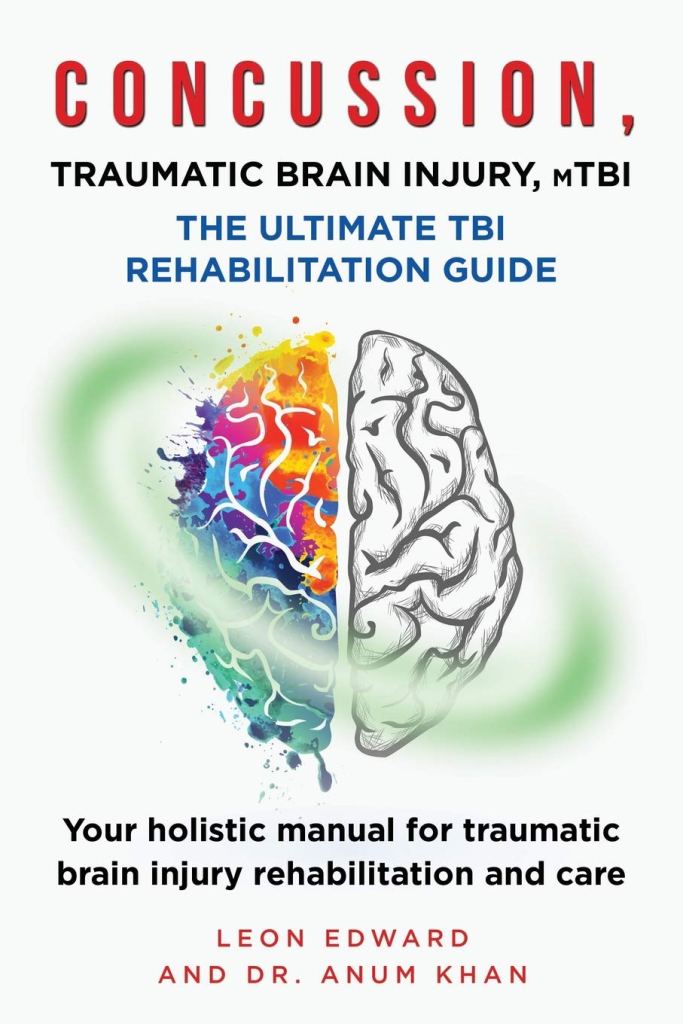
Book cover belongs to the publisher and is displayed for identification and review purposes.
Note: This review is for educational purposes only and is not medical advice. Rehabilitation should be individualized and guided by qualified healthcare professionals.


Do you Love Love YOUR Brain?