
Happiness can sometimes feel like something that simply happens to us.
We have a good day.
Something wonderful happens.
We feel connected.
We accomplish something.
We laugh.
And we feel good.
But what if happiness can also be influenced by the habits we practice?
Habits of a Happy Brain by Loretta Graziano Breuning, PhD explores the roles of dopamine, serotonin, oxytocin, and endorphin in human behavior and offers exercises designed to help readers develop habits that support positive experiences. The original edition presents a 45-day approach to building new habits.
🧠 Your Brain Learns Through Repetition
Our brains learn from repeated experiences.
A behavior becomes familiar.
A response becomes automatic.
A routine becomes easier.
That can be useful when we intentionally build habits that support us.
🌱 Happiness Isn’t About Being Happy All the Time
This distinction matters.
A happy brain doesn’t mean a life without sadness.
We will still experience:
Grief.
Frustration.
Fear.
Anger.
Disappointment.
Especially after brain injury.
The goal isn’t to eliminate difficult emotions.
It is to create more opportunities for positive experiences while learning how to navigate difficult ones.
✨ Small Moments of Reward
Sometimes we overlook small things because they don’t seem important enough.
Finishing a task.
Talking to someone we love.
Going outside.
Listening to music.
Moving our bodies.
Laughing.
Creating something.
These experiences can become meaningful parts of our daily routines.
🧩 Building New Habits Takes Practice
Breuning’s book provides exercises and a structured approach for developing new habits related to the brain’s reward systems.
That can be encouraging for anyone who feels like positive change has to happen all at once.
It doesn’t.
One habit.
One day.
One small repetition.
💗 After Brain Injury, Joy May Look Different
Sometimes we expect joy to feel exactly the way it did before injury.
But our lives may have changed.
Maybe we find joy in quieter things now.
A peaceful morning.
A familiar song.
A comfortable room.
A short walk.
A conversation with someone we trust.
A day with less fatigue.
A small accomplishment.
These moments count.
❤️ Connection Matters
Human beings are social.
Relationships can provide comfort, encouragement, laughter, and belonging.
After brain injury, social situations can sometimes become difficult.
But connection doesn’t have to mean large gatherings.
It can be one person.
One conversation.
One meaningful message.
🌻 Create More Moments Worth Noticing
We don’t have to wait for a perfect day.
We can begin noticing what already feels good.
What made me smile today?
Who made me feel supported?
What activity gave me energy?
What helped me feel calm?
Noticing these moments can help us become more aware of what supports our wellbeing.
💗 Love Love Brain Thoughts
Habits of a Happy Brain reminds us that happiness isn’t necessarily one giant destination.
It can be built through small experiences.
Small habits.
Small moments of connection.
After brain injury, those moments may become even more precious.
You don’t have to force yourself to be positive.
You don’t have to pretend you’re okay.
You can simply look for one small thing that feels good today.
One smile.
One connection.
One moment of peace.
Sometimes that is enough to begin.
💬 We’d Love to Hear From You
What is one small thing that reliably makes you smile?
What habit helps your mood?
What brings you a sense of connection or peace?
📖 Where to Find the Book
Habits of a Happy Brain was published by Adams Media in 2015. The original edition is listed at approximately 238 pages and includes exercises centered around dopamine, serotonin, oxytocin, and endorphin. An updated and expanded edition is also available.
🛒 Get the Book on Amazon
Love Love Brain may earn a small commission from qualifying purchases made through this link. This does not affect the price you pay.
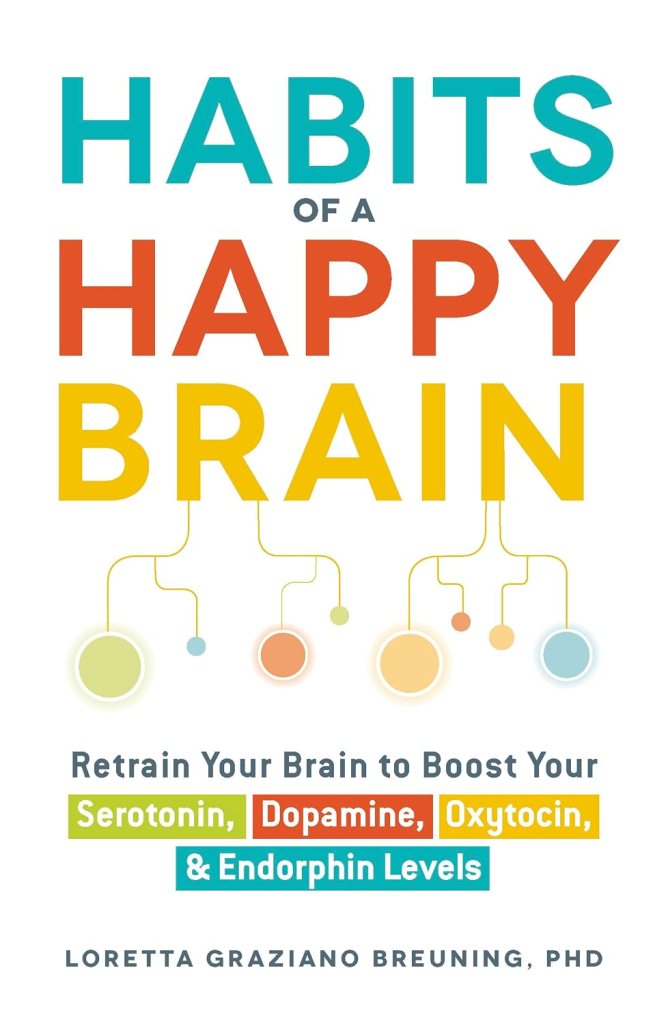
Book cover belongs to the publisher and is displayed for identification and review purposes.
Note: This book review is for educational and reflective purposes only and is not medical advice.


Do you Love Love YOUR Brain?