
What if taking care of your body could also help take care of your brain?
What if movement could affect memory?
What if exercise could influence mood?
What if small lifestyle changes could make a difference in the way we experience everyday life?
Healthy Brain, Happy Life by Dr. Wendy Suzuki with Billie Fitzpatrick combines neuroscience, memoir, and practical “Brain Hacks” designed to help readers understand the relationship between physical activity, learning, memory, attention, mood, and brain health.
🧠 Your Brain and Body Are Connected
It’s easy to think of the brain and body as separate.
But they aren’t.
What happens in the body can affect the brain.
Movement can influence brain function.
Stress can affect how we feel and think.
Sleep affects our ability to function.
Our everyday habits matter.
🚶 Movement Can Be Brain Support
Suzuki draws on her neuroscience research and personal experience to explore how exercise can affect the brain.
Her work highlights aerobic exercise, brain plasticity, memory, attention, and mood.
For someone living with brain injury, this can inspire an important question:
“What kind of movement is appropriate and sustainable for me?”
That question should always be individualized, especially after injury.
🌱 Small Changes Can Matter
You don’t have to completely redesign your life overnight.
Maybe you begin with a short walk.
Maybe you add gentle movement.
Maybe you spend a few minutes doing something mentally stimulating.
Maybe you improve your sleep routine.
Maybe you find a form of exercise you genuinely enjoy.
Small changes can become habits.
🧩 Brain Hacks
One feature of the book is its practical “Brain Hacks.”
These short activities are intended to help readers engage with their brains through movement, mindfulness, learning, creativity, and sensory experiences.
The idea is appealing because it makes brain health feel less abstract.
Instead of simply reading about the brain, you can experiment with small actions.
💭 Learning Can Continue
One of the hopeful messages connected to neuroplasticity is that the brain can adapt.
Learning doesn’t necessarily stop because you’ve experienced an injury.
You may need more time.
You may need repetition.
You may need different strategies.
But your brain remains capable of change.
❤️ Exercise Isn’t Only About Appearance
Sometimes exercise is presented entirely as a way to change the body.
But movement can also be about:
Energy.
Mood.
Memory.
Stress management.
Confidence.
Connection.
Quality of life.
That can be a much more compassionate reason to move.
🛑 Listen to Your Body
For brain injury survivors, this is particularly important.
More exercise isn’t automatically better.
Your healthcare team can help determine what activity is appropriate for your specific situation.
The goal is not to push through symptoms.
The goal is to find sustainable ways to support your health.
💗 Love Love Brain Thoughts
Healthy Brain, Happy Life offers an encouraging reminder that brain health isn’t something we only think about when something goes wrong.
It is something we can nurture through our everyday choices.
Movement.
Rest.
Learning.
Connection.
Mindfulness.
Curiosity.
And joy.
After brain injury, we may have to adapt these practices to our current abilities.
That’s okay.
You don’t have to do everything.
You can start with one small thing that supports your brain and your life.
💬 We’d Love to Hear From You
What kind of movement makes you feel good?
What small habit helps your brain feel more supported?
What is one “brain-friendly” activity you enjoy?
Share your experience in the comments.
📖 Where to Find the Book
The book is officially published as Healthy Brain, Happy Life: A Personal Program to Activate Your Brain and Do Everything Better. It was published by Dey Street Books in 2015 and is listed at approximately 288 pages in the hardcover edition. Wendy Suzuki’s official website also features material on exercise, memory, and brain health.
🛒 Get the Book on Amazon
Love Love Brain may earn a small commission from qualifying purchases made through this link. This does not affect the price you pay.
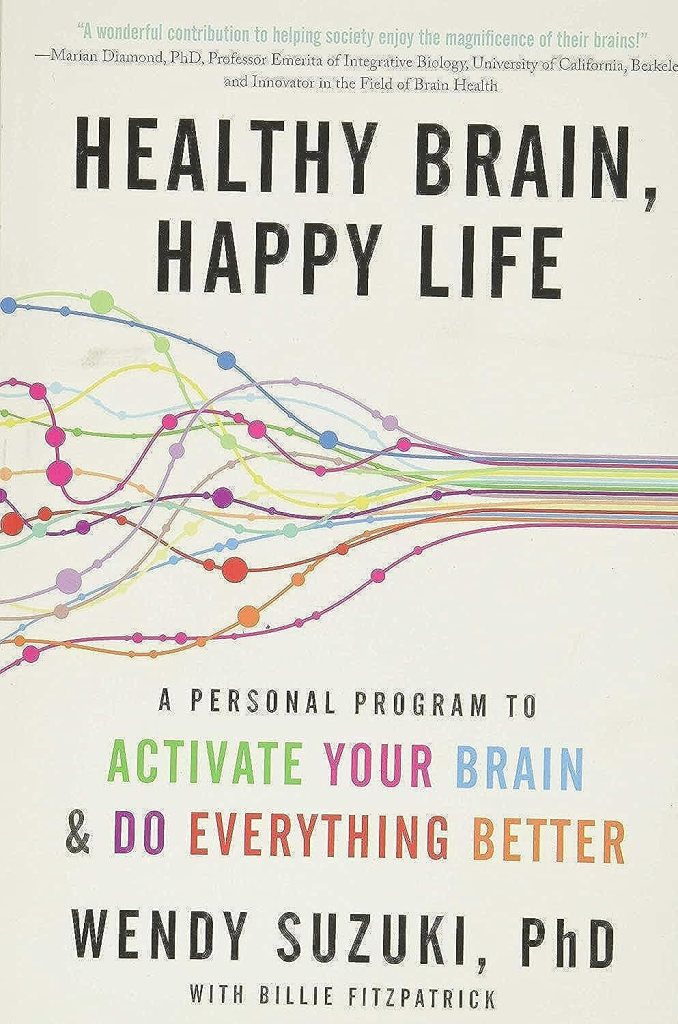
Book cover belongs to the publisher and is displayed for identification and review purposes.
Note: This book review is for educational and reflective purposes only and is not medical advice.


Do you Love Love YOUR Brain?