
What if the challenges we experience in life are not simply obstacles, but opportunities to better understand ourselves?
What if living a meaningful life begins with becoming more aligned with our deepest values, our relationships, and our connection to something greater than ourselves?
Living Aligned by Rabbi Baruch Gartner explores these questions through teachings rooted in Kabbalistic tradition and Chassidic works, presented in straightforward and accessible language. The book is designed to help readers move away from unproductive patterns and toward greater vitality, connection, compassion, and joy.
For someone living with a brain injury, some of these ideas can offer a gentle perspective on navigating change, finding meaning, and creating a life that feels purposeful even when the path looks different than expected.
📖 When Life Doesn’t Go According to Plan
Life rarely follows the path we imagine.
A brain injury can make this especially clear.
Plans may change.
Abilities may change.
Relationships may change.
Work may change.
The future may suddenly feel uncertain.
Living Aligned approaches life’s difficulties as part of an ongoing process of growth and connection. Rabbi Gartner describes challenges, fears, anxiety, and even accidents as experiences that can potentially lead us toward greater clarity and understanding.
For a brain injury survivor, this perspective can invite a different question:
“What can I learn from where I am now?”
🌱 Finding Your Direction
The book describes life as a journey that requires good navigation.
That idea can feel especially meaningful after brain injury.
When the life you knew changes, it can feel as though your internal map has disappeared.
You may wonder:
Where am I going now?
What matters to me now?
Who am I becoming?
Living Aligned encourages readers to become more intentional about the direction of their lives and to reconnect with their deepest values.
Recovery may not give you the same destination you originally planned.
But you can still find your direction.
🧠 Getting to Know Yourself
One of the concepts included in the Living Aligned framework is “Getting to Know You.”
This can be a meaningful idea after brain injury.
Sometimes recovery involves discovering that the person you are now has different needs from the person you were before.
Maybe you need more rest.
Maybe you value relationships differently.
Maybe you have developed a stronger appreciation for quiet moments.
Maybe your priorities have changed.
Getting to know yourself again can be part of healing.
💔 When Difficulties Change Us
A brain injury can bring experiences that nobody would have chosen.
There can be grief.
Frustration.
Fear.
Anger.
Uncertainty.
Loss.
The teachings presented in Living Aligned encourage readers to look at life’s difficulties as part of a larger process of personal and spiritual growth.
This doesn’t mean that suffering is easy.
It doesn’t mean that a person should pretend their pain doesn’t exist.
It means we can eventually ask whether something meaningful can emerge from an experience that changed us.
❤️ Connection Matters
Connection is one of the central ideas in Living Aligned.
The book describes a life of greater compassion and connection and explores the importance of relationships with other people and with the Divine.
For brain injury survivors, connection can be especially important.
A person may feel isolated after losing work, independence, friendships, or familiar routines.
Sometimes healing begins with simply knowing:
“Someone sees me.”
“Someone understands.”
“I still belong somewhere.”
🤝 Relationships Can Be Part of Healing
Brain injury can change relationships.
Partners may have to adjust.
Families may take on new responsibilities.
Friendships may change.
Communication may become more difficult.
Living Aligned places significant emphasis on compassion, relationships, and connection. Rabbi Gartner’s work also extends into relationship coaching and helping couples align their lives.
For survivors and caregivers, this can be a reminder that healing isn’t only an individual experience.
The relationships around us matter too.
🌿 Moving Away From Unhelpful Patterns
The book encourages readers to recognize patterns that may be unhealthy or unproductive and to move toward greater awareness and alignment.
After brain injury, it can be easy to fall into patterns such as:
“I can’t do anything anymore.”
“I’m a burden.”
“My life is over.”
“I’ll never be myself again.”
These thoughts can feel incredibly real.
But becoming aware of them can be the first step toward responding differently.
Instead of asking only:
“What’s wrong with me?”
we can begin asking:
“What do I need?”
“What matters to me?”
“What is one thing I can do today?”
💭 The Ego and the Authentic Self
The Living Aligned framework also explores the idea of the E.G.O., presented as “Edge God Out,” and encourages readers to look beyond self-focused patterns toward a deeper sense of connection.
This can invite reflection on the difference between the identity we feel pressured to maintain and the deeper person we are.
After a brain injury, this distinction can become especially meaningful.
Maybe you were defined by your career.
Your productivity.
Your independence.
Your achievements.
When those things change, you may wonder whether you have lost yourself.
But your worth doesn’t have to depend on what you can accomplish.
You are still a whole person.
🌻 Finding Meaning in a Changed Life
Sometimes the biggest challenge after brain injury isn’t simply learning to do something differently.
It’s learning how to find meaning in a life that looks different.
Living Aligned encourages readers to pursue a life of vitality, connection, compassion, and joy.
For a survivor, that might mean discovering new sources of meaning.
A new hobby.
A new friendship.
Helping another survivor.
Spending time with family.
Writing.
Creating.
Volunteering.
Resting without guilt.
There isn’t one definition of a meaningful life.
🌱 Learning to See Possibility
The book’s spiritual framework encourages readers to look beyond immediate circumstances and consider the larger journey.
For someone recovering from brain injury, this can be a gentle reminder not to define the entire future by today’s difficulties.
You may not know what comes next.
You don’t have to.
You can simply take the next step.
Then another.
And another.
💗 Love Love Brain Thoughts
Living Aligned offers a perspective that can be meaningful during times of major change.
A brain injury can make you feel as though your life has gone off course.
You may wonder where you belong now.
You may wonder what your purpose is.
You may wonder whether the person you were is still inside you.
Perhaps the goal isn’t always to return to the exact life you had before.
Perhaps part of the journey is discovering what alignment means now.
What matters to you?
Who do you want beside you?
What kind of relationships do you want to build?
What gives you a sense of purpose?
What brings you closer to compassion, connection, and peace?
At Love Love Brain, we believe that healing can include these deeper questions too.
Your life may have taken an unexpected turn.
That doesn’t mean you have lost your direction.
Sometimes we simply need to create a new map.
And sometimes, the journey teaches us things we never would have discovered on the road we originally planned.
💬 We’d Love to Hear From You
Has your brain injury changed what matters most to you?
Have your priorities or relationships changed since your injury?
What helps you feel connected to your purpose?
What does living a meaningful life look like for you now?
Share your experience in the comments.
Your story may be exactly what another survivor or caregiver needs to hear today.
📖 Where to Find the Book
If you’d like to learn more about Living Aligned by Rabbi Baruch Gartner, you can explore the book and Rabbi Gartner’s work through his official website. The book is available in hardcover and Kindle editions.
🛒 Get the Book on Amazon
Love Love Brain may earn a small commission from qualifying purchases made through this link. This does not affect the price you pay.
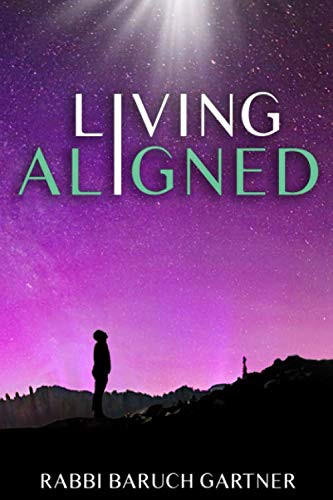
Book cover belongs to the publisher and is displayed for identification and review purposes.
Note: This review discusses the book from a personal and reflective perspective. Its spiritual teachings are presented as the author’s framework and are not intended as medical advice or a substitute for professional care.


Do you Love Love YOUR Brain?