
What if business could be more than making money?
What if the way we earn, negotiate, pay, sell, serve, and make decisions could also become part of our spiritual life?
The Palace of Holy Wealth: Business For Believers by Rabbi Baruch Gartner explores the relationship between business, Torah, faith, integrity, and spiritual purpose.
Rabbi Gartner’s teachings challenge the idea that spirituality belongs only in the synagogue or during formal Torah study. His Palace of Holy Wealth teachings explore how everyday commerce can also become an expression of faith and spiritual awareness. His related teachings draw on sources including the Baal Shem Tov, Rebbe Nachman, and Choshen Mishpat.
For anyone who works, owns a business, manages money, or simply wants to bring greater purpose into their professional life, these ideas offer an opportunity to look at wealth from a different perspective.
💰 What Does Holy Wealth Mean?
The word “wealth” can immediately make us think about money.
But the concept of Holy Wealth presented in Rabbi Gartner’s teachings goes beyond financial success.
It asks us to consider:
How do we earn our money?
How do we treat the people we work with?
How do we handle responsibility?
What values guide our decisions?
Can our livelihood become part of our spiritual purpose?
The goal isn’t simply to accumulate wealth.
It is to understand wealth, work, and business through a deeper spiritual lens.
📖 Business Is More Than Business
One of the central ideas in the Palace of Holy Wealth teachings is that business itself can be connected to Torah.
Rabbi Gartner discusses the Baal Shem Tov’s insight that if studying a business transaction in the Mishnah is Torah, then conducting business properly can also become an expression of Torah.
This creates an interesting shift in perspective.
Your office can become a place where your values are practiced.
A negotiation can become an opportunity for integrity.
A transaction can become an opportunity to practice honesty.
A business relationship can become an opportunity to treat another person with dignity.
Work doesn’t have to be separated completely from spiritual life.
🤝 Doing Business With Emunah
Faith, or Emunah, is an important theme in Rabbi Gartner’s teachings.
One discussion within the Palace of Holy Wealth series focuses on the question of whether a person conducted business with Emunah.
This invites us to look at business ethics differently.
Are we honest?
Do we keep our word?
Do we treat people fairly?
Do we make decisions based only on profit, or do our values matter too?
These questions can turn ordinary business decisions into opportunities for self-reflection.
⚖️ The Torah of Holy Business
The teachings also explore Choshen Mishpat, the section of Jewish law dealing with monetary and civil matters.
Rabbi Gartner presents Choshen Mishpat as a guide for bringing Torah into real-world commerce.
That means Torah isn’t only something studied in a classroom.
It can enter the marketplace.
The contract.
The transaction.
The negotiation.
The payment.
The business decision.
The way we treat another person.
The spiritual challenge is to carry our values into those everyday moments.
❤️ The Soul Behind the Salary
Another teaching in the series focuses on the mitzvah of paying a worker on time.
This is more than simply being a responsible employer.
It becomes a question of how we treat another person’s livelihood and dignity.
Money affects people.
A paycheck may represent someone’s ability to feed their family, pay their bills, care for their children, and live with dignity.
How we handle another person’s earnings therefore carries moral and spiritual weight.
Rabbi Gartner’s discussion describes timely payment as a mitzvah with profound spiritual significance.
🌱 Wealth and Responsibility
The idea of Holy Wealth also changes the way we think about success.
Success isn’t necessarily about having the biggest business.
It isn’t simply about earning more than someone else.
It can also involve responsibility.
How are you using what you have?
How are you treating the people around you?
Are you creating something valuable?
Are you contributing to other people’s lives?
Are you conducting your work with integrity?
Wealth can become an opportunity for responsibility rather than simply accumulation.
💭 When Work Becomes Part of Your Purpose
Many people separate their lives into categories.
Work.
Family.
Religion.
Personal life.
Spirituality.
But the Palace of Holy Wealth teachings encourage a more integrated perspective.
What if these parts of life don’t have to compete with one another?
What if your work can reflect your values?
What if earning a living can also be an expression of responsibility?
What if your professional relationships can become opportunities to practice kindness and integrity?
This idea can make ordinary work feel more meaningful.
🧠 Business Requires Self-Awareness
Business can bring out many emotions.
Fear.
Competition.
Ambition.
Anger.
Frustration.
Greed.
Pride.
Anxiety.
These emotions can influence our decisions if we aren’t paying attention.
Rabbi Gartner’s teachings encourage a person to look inward and examine what is happening beneath the surface.
Before making a decision, we can ask:
What is motivating me?
Am I acting from fear or faith?
Am I treating this person with respect?
Is this decision aligned with my values?
These questions can help turn business into an opportunity for personal growth.
🌻 Holy Wealth and Relationships
Money can affect relationships.
Business partnerships can become difficult.
Employees and employers can misunderstand one another.
Clients can become frustrated.
Family members can disagree about finances.
That is why integrity and communication matter.
The Palace of Holy Wealth perspective encourages us to remember that there are people behind every transaction.
A customer isn’t simply a sale.
An employee isn’t simply labor.
A business partner isn’t simply a contract.
Every financial relationship involves human beings.
🕊️ Trusting God While Doing Your Part
Faith doesn’t mean avoiding effort.
Building a business still requires planning.
Learning.
Discipline.
Hard work.
Responsibility.
But faith can influence how we approach those efforts.
We can work hard while recognizing that we cannot control every outcome.
We can plan while remaining open to uncertainty.
We can pursue success without allowing success to become our entire identity.
This balance between effort and faith is an important part of the spiritual approach explored in these teachings.
🌱 A Different Definition of Success
Perhaps one of the biggest questions raised by The Palace of Holy Wealth is:
What does it actually mean to be successful?
Is success simply having more?
Or can success also mean:
❤️ Treating people well
🤝 Keeping your word
⚖️ Acting honestly
🙏 Maintaining faith
💼 Doing meaningful work
🌻 Supporting others
🏡 Providing for your family
✨ Using your resources responsibly
When success includes character, wealth can become part of a much larger purpose.
💗 Love Love Brain Thoughts
The Palace of Holy Wealth offers a powerful reminder that what we do every day can reflect what we believe.
Work doesn’t have to be completely separate from spirituality.
Business doesn’t have to be completely separate from values.
Money doesn’t have to be the measure of our worth.
For anyone navigating a major life change, including brain injury, these ideas can also encourage us to rethink what success means.
Maybe success isn’t always about returning to the career we had before.
Maybe it can mean finding meaningful work that fits our abilities now.
Maybe it means contributing in a different way.
Maybe it means helping someone else.
Maybe it means building something slowly.
Maybe it means simply living according to our values.
Your circumstances may change.
Your career may change.
Your income may change.
But your values can continue to guide you.
Work can have meaning.
Wealth can carry responsibility.
Success can include service.
And the way we treat people along the way may be just as important as what we accomplish.
💬 We’d Love to Hear From You
What does meaningful work mean to you?
Has your definition of success changed throughout your life?
Do you believe your work can be connected to your values or spiritual purpose?
Share your thoughts in the comments.
Your perspective may inspire someone else to look at their own work in a new way.
📖 Where to Find the Book
If you’d like to learn more about The Palace of Holy Wealth: Business For Believers and Rabbi Baruch Gartner’s teachings on business, Torah, faith, and holy wealth, you can explore his work and related teachings online. The Living Aligned Podcast also features a series of episodes exploring the Palace of Holy Wealth framework.
🛒 Get the Book on Amazon
Love Love Brain may earn a small commission from qualifying purchases made through this link. This does not affect the price you pay.
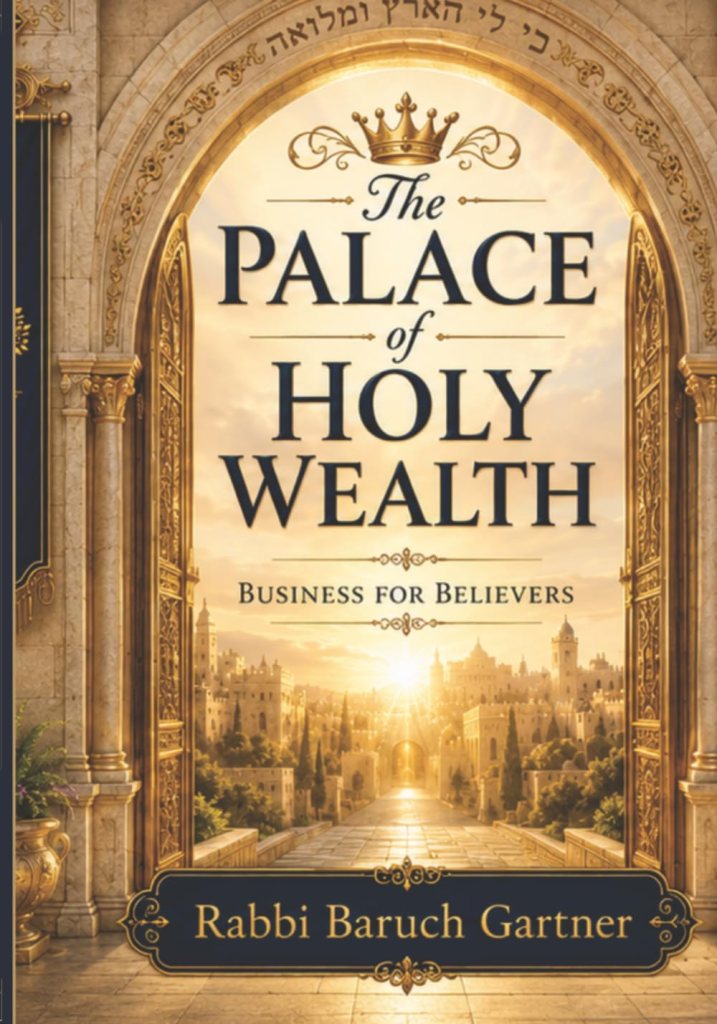
Book cover belongs to the publisher and is displayed for identification and review purposes.
Note: This review presents the book’s spiritual and philosophical ideas for reflection. It is not financial, legal, or professional business advice.


Do you Love Love YOUR Brain?