
What if you are not the voice inside your head?
What if you are the person who is observing that voice?
The Untethered Soul by Michael A. Singer explores consciousness, inner dialogue, emotional patterns, mindfulness, and the possibility of experiencing greater inner freedom. The book asks readers to examine who they really are beyond their thoughts, memories, roles, and experiences.
For someone living with brain injury, this exploration of thoughts and identity can feel especially meaningful.
🧠 Who Am I?
After brain injury, one of the deepest questions can become:
“Who am I now?”
Maybe your abilities changed.
Maybe your career changed.
Maybe your relationships changed.
Maybe your personality or emotional responses changed.
It can be easy to believe that these changes mean you have lost yourself.
Singer invites readers to explore whether the self is actually limited to these experiences.
💭 The Voice Inside Your Head
We all have an inner narrator.
It comments.
It worries.
It remembers.
It predicts.
It criticizes.
Sometimes it never stops.
Singer encourages readers to notice this internal voice rather than automatically identifying with it. The book’s central exploration is the distinction between consciousness and the thoughts and emotions that consciousness observes.
This can be a powerful practice.
Instead of:
“I am anxious.”
You might notice:
“I am experiencing anxiety.”
There is a little more space between you and the feeling.
🌱 You Can Observe the Thought
A difficult thought can feel completely real.
“I’m never going to get better.”
“I’m a burden.”
“My life is over.”
But if you can observe the thought, you can begin to recognize that the thought is something happening within your awareness.
You don’t necessarily have to follow it.
You can notice it.
Then return to the present.
❤️ Opening Instead of Closing
Singer also explores the tendency to close ourselves off when something painful happens.
We get hurt.
We become afraid.
We protect ourselves.
Sometimes those protective patterns remain long after the original event.
For brain injury survivors, emotional protection can become complicated.
You may avoid situations because you’re afraid of being overwhelmed.
You may withdraw because communicating feels exhausting.
You may stop trying because disappointment hurts.
Healing doesn’t mean forcing yourself into situations you’re not ready for.
It can mean gradually learning when it is safe to open again.
🌿 Letting Go
One of the book’s recurring themes is learning to let go of the thoughts, emotions, and experiences we hold onto.
Letting go doesn’t mean pretending something didn’t happen.
It doesn’t mean forgetting.
It means releasing the grip that the experience has on you.
You can acknowledge what happened without allowing it to become your entire identity.
💗 Love Love Brain Thoughts
The Untethered Soul offers a beautiful question for anyone going through a major life change:
Who am I underneath everything that has happened to me?
Your injury is part of your story.
It isn’t the entirety of your story.
Your thoughts are part of your experience.
They aren’t necessarily the definition of who you are.
You can notice.
You can breathe.
You can let go.
You can continue becoming.
You are still here.
And there is still a part of you that can observe, learn, love, and grow.
💬 We’d Love to Hear From You
Do you ever notice the voice inside your head becoming especially loud?
What helps you step back from negative thoughts?
Have you learned anything new about yourself since your brain injury?
Share your experience in the comments.
Your story may help another survivor feel less alone.
📖 Where to Find the Book
The Untethered Soul is available through major book retailers, including the publisher, New Harbinger Publications.
🛒 Get the Book on Amazon
Love Love Brain may earn a small commission from qualifying purchases made through this link. This does not affect the price you pay.
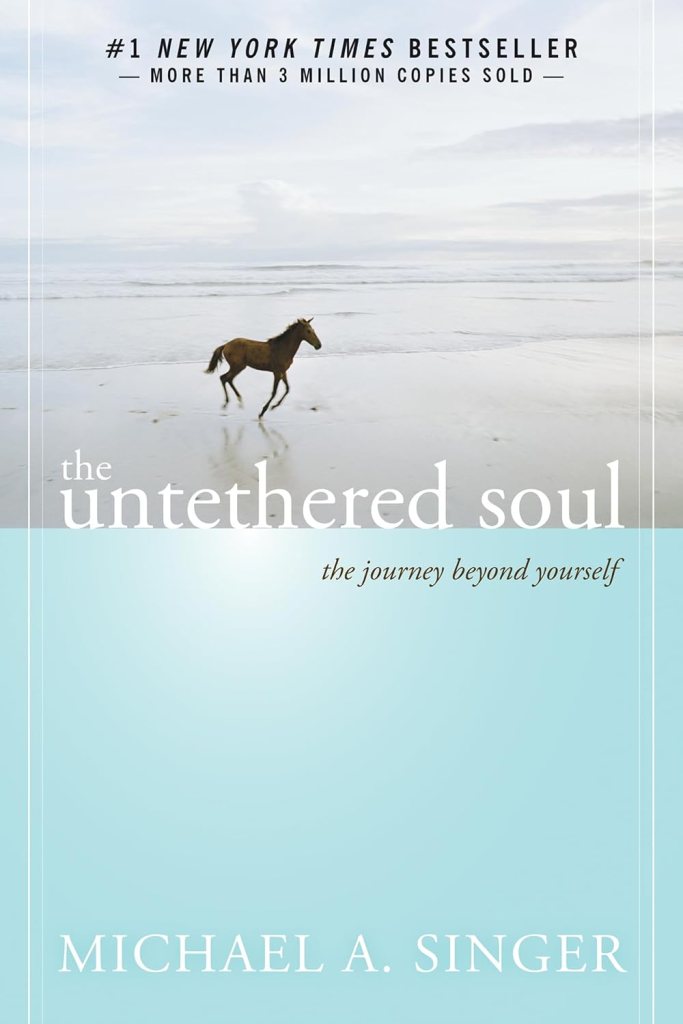
Book cover belongs to the publisher and is displayed for identification and review purposes.


Do you Love Love YOUR Brain?