
What if healing doesn’t begin with fighting ourselves?
What if it begins with accepting where we are?
Radical Acceptance by Tara Brach, PhD explores how fear, shame, self-judgment, and the belief that something is wrong with us can keep us trapped in suffering. Brach combines Buddhist teachings, mindfulness, psychology, and personal stories to explore a more compassionate relationship with ourselves.
For people living with brain injury, the idea of acceptance can be powerful.
💔 When We Fight Ourselves
After an injury, we may spend a lot of time thinking:
Why am I like this?
Why can’t I do what I used to do?
Why hasn’t this healed yet?
Why can’t I just be normal?
Those questions can create another layer of suffering on top of the original injury.
🧠 Acceptance Is Not Giving Up
Acceptance does not mean saying:
“I don’t want to get better.”
It means acknowledging:
“This is where I am right now.”
From there, we can decide what comes next.
🌱 Meeting Yourself Where You Are
Maybe today you are exhausted.
Maybe you’re frustrated.
Maybe you’re having a difficult symptom day.
Maybe you’re grieving.
Instead of fighting yourself for feeling that way, you can simply notice:
“This is hard today.”
That acknowledgment can create space for compassion.
❤️ You Don’t Have to Earn Compassion
Many survivors are incredibly hard on themselves.
We think we should be doing more.
Recovering faster.
Trying harder.
Being more positive.
But compassion isn’t something you earn by performing recovery perfectly.
You deserve it now.
🧘 Coming Back to the Present
Mindfulness can help us notice what is happening without immediately judging it.
Notice the breath.
Notice the body.
Notice the emotion.
Notice the thought.
Then gently return to the present.
🌸 Making Room for Grief
Acceptance includes making room for grief.
You may miss your old life.
Your old body.
Your old abilities.
Your old routines.
Your old identity.
You don’t have to pretend those losses don’t matter.
You can grieve them while continuing to build something new.
🦋 A Different Way Forward
Sometimes healing doesn’t mean becoming the person you were.
It means becoming someone who can hold both the past and the present.
Someone who remembers what was lost.
And still sees what remains.
💗 Love Love Brain Thoughts
Maybe acceptance isn’t saying:
“I love everything that happened to me.”
Maybe it is simply saying:
“I will stop fighting myself for being where I am.”
That can be the beginning of something beautiful.
You are allowed to meet yourself with compassion.
💬 We’d Love to Hear From You
What does self-acceptance look like for you?
Have you learned to be gentler with yourself during recovery?
Share your experience in the comments.
📖 Where to Find the Book
If you’d like to learn more about Radical Acceptance by Tara Brach, PhD, you can look for the book through major book retailers.
🛒 Get the Book on Amazon
Love Love Brain may earn a small commission from qualifying purchases made through this link. This does not affect the price you pay.
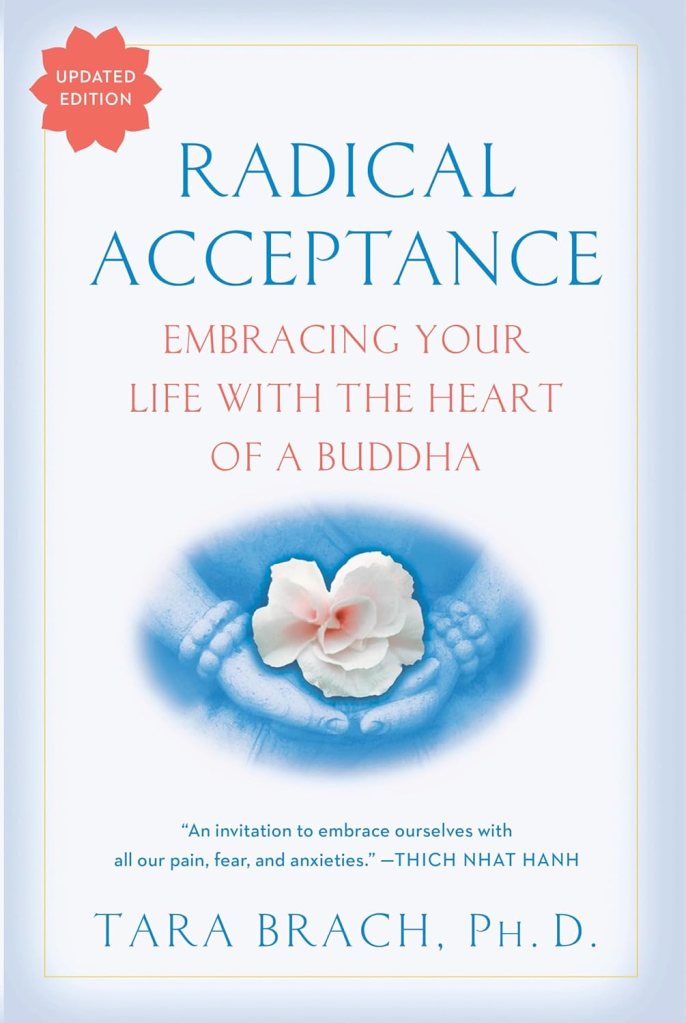
Book cover belongs to the publisher and is displayed for identification and review purposes.
Note: This book review is for educational and reflective purposes only and is not medical advice.


Do you Love Love YOUR Brain?