
Sometimes we spend years wondering why we react the way we do.
Why we become overwhelmed so quickly.
Why we have such a hard time trusting people.
Why we automatically try to make everyone happy.
Why we shut down when things become too much.
For someone who has experienced trauma, those questions can become even stronger.
“Why am I like this?”
“Why can’t I just relax?”
“Why do I feel unsafe when nothing is actually happening?”
“Can I ever feel different?”
In Complex PTSD: From Surviving to Thriving, Pete Walker explores the lasting effects of childhood trauma and the process of recovering from Complex PTSD.
Walker writes from his perspective as a psychotherapist and as someone who has experienced Complex PTSD himself. The book is designed as a practical guide for understanding trauma responses and identifying the tasks involved in recovery.
And at its heart is an important message:
You are not bad, broken, or alone because you developed ways to survive what happened to you.
❤️ Understanding Your Survival Responses
When something feels threatening, our bodies can respond automatically.
Fight.
Flight.
Freeze.
Fawn.
One person may become angry.
Another may run away or avoid the situation.
Someone else may shut down completely.
Another person may immediately try to make everyone else happy.
These responses can become deeply ingrained.
Sometimes they continue long after the original danger is gone.
Understanding them can help us look at ourselves with a little more compassion.
🚨 When Your Body Thinks You Are Still in Danger
Trauma can leave the nervous system on high alert.
You may constantly watch people’s expressions.
You may expect something to go wrong.
You may have difficulty relaxing.
You may feel uncomfortable when things are calm because you are waiting for the next problem.
Your body may react before your mind has had time to understand what is happening.
That does not mean you are weak.
It may mean your system learned to protect you.
💭 Emotional Flashbacks
Walker discusses the experience of emotional flashbacks.
An emotional flashback may not look like a traditional memory.
You may not see an image from the past.
Instead, you may suddenly feel terrified.
Ashamed.
Helpless.
Rejected.
Abandoned.
The emotion can feel enormous compared with what is happening in the present.
Learning to recognize this can create a little space.
Instead of immediately thinking:
“What is wrong with me?”
You may begin asking:
“What am I feeling right now?”
That question can be a beginning.
🪞 The Inner Critic
Walker also explores the inner critic.
That voice can be incredibly harsh.
“You should be doing more.”
“You are too sensitive.”
“You are failing.”
“Everyone else can handle this.”
“You should be over it by now.”
After brain injury, that voice can become especially painful.
You may already be struggling with changes in memory.
Changes in concentration.
Changes in energy.
Changes in emotional regulation.
And then your inner critic tells you that you should somehow be doing better.
But struggling does not mean you are failing.
🧠 Trauma and Brain Injury
Trauma and brain injury are not the same thing.
But there can be areas where the experiences overlap.
Both can affect emotions, stress, sleep, concentration, and everyday functioning.
Someone living with a brain injury may also have a history of trauma.
And someone with trauma may experience new challenges after a brain injury.
When these experiences exist together, it can sometimes be difficult to understand exactly what is causing a particular reaction.
That is why professional support can be important.
A qualified healthcare professional can help you understand your individual symptoms and needs.
This book can provide ideas for reflection and understanding, but it should not be used to diagnose yourself.
💔 There Can Be Grief in Healing
Healing is not always about feeling better.
Sometimes healing means finally allowing yourself to grieve.
You may grieve the childhood you deserved.
The relationships that were not safe.
The years spent simply trying to survive.
After brain injury, there may be another layer of grief.
You may grieve the person you were before.
Your independence.
Your career.
Your routines.
Your relationships.
The future you imagined.
You are allowed to grieve those things.
You do not have to pretend they did not matter.
🌱 Learning New Ways to Respond
Recovery can involve learning to recognize your patterns.
Maybe you notice when you are becoming overwhelmed.
Maybe you recognize when you are automatically trying to please someone.
Maybe you notice when your inner critic becomes especially loud.
Maybe you learn to pause before saying yes.
Maybe you learn that a boundary is not an act of rejection.
It is an act of self-protection.
These changes take time.
You do not have to figure everything out at once.
❤️ You Are More Than Your Trauma
Trauma may be part of your story.
But it does not have to become your entire identity.
You are not your fear.
You are not your anger.
You are not your avoidance.
You are not your survival response.
And if you live with brain injury, you are not your symptoms.
There is still a whole person underneath everything you have experienced.
🤍 Self-Compassion Is Not Self-Indulgence
Sometimes people worry that being compassionate toward themselves means making excuses.
It does not.
You can take responsibility for your actions while still understanding why certain patterns developed.
You can work on changing something without hating yourself for having struggled with it.
You can acknowledge your limitations without deciding that you are incapable.
Recovery does not have to be built on shame.
🌻 You Deserve to Feel Safe
One of the most meaningful ideas in trauma recovery is the possibility of learning what safety feels like.
Not perfect safety.
Not a life where nothing difficult ever happens.
But the ability to recognize when you are safe enough to breathe.
Safe enough to rest.
Safe enough to say no.
Safe enough to ask for help.
Safe enough to be yourself.
That can take time.
And that is okay.
💗 Love Love Brain Thoughts
Complex PTSD: From Surviving to Thriving offers a compassionate way to understand patterns that can otherwise feel confusing or shameful.
For Love Love Brain, one of the most meaningful messages is that understanding yourself can be the beginning of change.
After brain injury, you may already spend a lot of time asking:
“Why can’t I do this anymore?”
“Why am I so tired?”
“Why do I become overwhelmed?”
“Why do I need so much help?”
There may not always be one simple answer.
But blaming yourself rarely makes recovery easier.
Try curiosity instead.
Notice your patterns.
Listen to your body.
Give yourself permission to pause.
Ask for support.
And remember that survival strategies are not character flaws.
They were ways of getting through something.
With the right support, you can learn new ways of responding.
You do not have to become the person you were before.
You can become someone who feels safer, understands themselves more deeply, and treats themselves with greater kindness.
💬 We’d Love to Hear From You
Have you ever recognized a survival response in yourself?
Have you struggled with a harsh inner critic during recovery?
What helps you feel safe, supported, and understood?
Share your experience in the comments.
Your story may help someone else realize that they are not alone.
📖 Where to Find the Book
Complex PTSD: From Surviving to Thriving by Pete Walker is available in paperback, e-book, and audiobook formats. Walker describes the book as a practical, accessible guide for understanding Complex PTSD and the recovery process.
🛒 Get the Book on Amazon
Love Love Brain may earn a small commission from qualifying purchases through our affiliate links. This does not affect the price you pay.
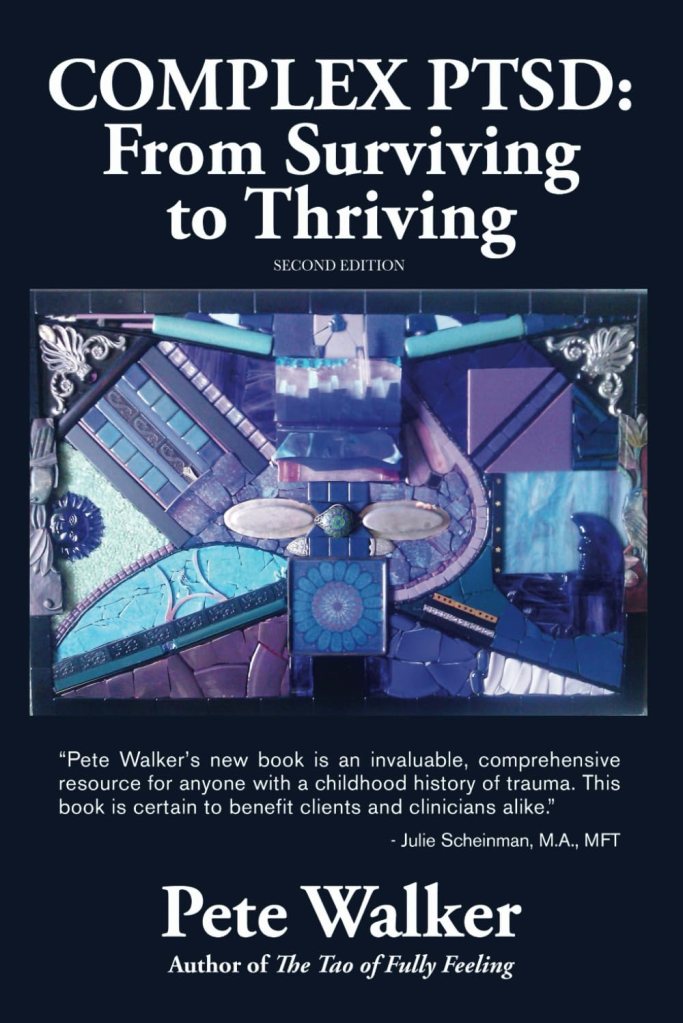
Book cover belongs to the publisher and is displayed for identification and review purposes.
Note: This book review is for informational and educational purposes only. It is not medical advice and should not replace guidance from a qualified healthcare professional. Every brain injury and recovery journey is different.


Do you Love Love YOUR Brain?