
Sometimes we spend so much time looking outside ourselves for answers.
For someone to tell us what to do.
For someone to tell us that we are enough.
For someone to tell us that we are going to be okay.
After a life-changing experience, those questions can become even stronger.
“Who am I now?”
“Can I trust myself?”
“Do I still have a future?”
“Can I learn to love the person I have become?”
In The Power Is Within You, Louise Hay explores self-love, inner wisdom, personal responsibility, change, emotions, creativity, and the process of releasing old beliefs.
Originally published in 1991, the book is described by Hay House as a step-by-step exploration of loving yourself and discovering your inner power. Its chapters include listening to your inner voice, releasing emotional barriers, loving yourself, accepting change, expressing creativity, and letting go of the past.
The book is rooted in Hay’s spiritual and self-help philosophy.
And at its heart is a simple message:
You have more inner strength than you may realize.
❤️ Learning to Love Yourself
Self-love can sound like a simple idea.
But it can be surprisingly difficult.
Especially when your life has changed.
You may criticize yourself for what you can no longer do.
You may compare yourself with your old self.
You may feel guilty about needing help.
You may believe that you should be doing more.
Hay encourages readers to develop a more loving relationship with themselves.
That does not mean believing that everything is perfect.
It means learning to treat yourself with kindness.
💭 The Voice Inside Your Head
We all have an inner voice.
Sometimes it is encouraging.
Sometimes it is harsh.
After brain injury, that inner voice can become especially critical.
“I’m not good enough anymore.”
“I’m a burden.”
“I should be better by now.”
“Everyone else is moving forward.”
What if you began noticing that voice?
What if you questioned some of the things it says?
What if you spoke to yourself the way you would speak to someone you love?
🧩 Old Beliefs Can Stay With Us
Hay explores the idea of identifying and changing old mental patterns and beliefs.
Some beliefs begin long before a brain injury.
Maybe you learned that asking for help means weakness.
Maybe you learned that productivity determines your worth.
Maybe you learned that mistakes are unacceptable.
Maybe you learned that you have to take care of everyone else first.
A life-changing event can expose these beliefs.
And sometimes recovery gives you an opportunity to question them.
💔 Making Room for Your Feelings
You may have been taught to hide difficult emotions.
“Don’t cry.”
“Be strong.”
“Move on.”
“Think positive.”
But emotions do not disappear simply because we ignore them.
Hay encourages readers to acknowledge and express their feelings rather than continually pushing them away.
After brain injury, this can be meaningful.
You are allowed to be sad.
You are allowed to be angry.
You are allowed to grieve.
You are allowed to have complicated feelings.
Feeling something does not make you weak.
🌧️ Moving Beyond the Pain
Some experiences cannot be undone.
The accident happened.
The diagnosis happened.
The injury happened.
Something changed.
You may wish it had never happened.
That wish is understandable.
But eventually, you may begin asking a different question:
“How do I live with what happened?”
That does not mean the event was okay.
It means you are beginning to think about your life beyond it.
🌱 Change Can Be Frightening
Hay discusses change and transition as part of the process of personal growth.
But change is not always something we choose.
Brain injury can force change upon you.
Your work may change.
Your relationships may change.
Your abilities may change.
Your routines may change.
Even your definition of independence may change.
It is okay to grieve those changes.
It is also okay to discover something new within them.
🧠 You Are More Than What Your Brain Can Do
Brain injury can make you measure yourself by ability.
How fast can I work?
How much can I remember?
How long can I concentrate?
How independent am I?
How productive am I?
But your value cannot be measured by a checklist of abilities.
You are still you.
Your personality.
Your memories.
Your relationships.
Your creativity.
Your humor.
Your values.
Your capacity to love.
These things matter too.
🤍 Asking for Help Does Not Take Away Your Power
Sometimes independence becomes something we feel we must prove.
We try to do everything ourselves.
We refuse help.
We push through exhaustion.
We pretend we are okay.
But accepting help can also be a form of strength.
You can be capable and still need assistance.
You can be independent and still need support.
You can be strong and still have difficult days.
Support does not erase your power.
🎨 There Is Still Room for Creativity
Hay includes creativity among the areas through which people can express themselves and connect with their inner wisdom.
Creativity does not have to mean painting a masterpiece.
It can be writing.
Music.
Gardening.
Cooking.
Photography.
Crafts.
Dancing.
Making something with your hands.
Finding new ways to solve everyday problems.
After brain injury, creativity can also become a way of adapting.
“How can I do this differently?”
That is creativity too.
🌻 Your Life Can Change Without Losing Its Meaning
Sometimes we think a meaningful life has to look a certain way.
A career.
A busy schedule.
Financial success.
Independence.
Constant productivity.
But brain injury can change those expectations.
Maybe meaning now comes from relationships.
Helping someone else.
A creative activity.
A quiet morning.
Being present with family.
Learning something new.
Taking care of yourself.
Meaning can change.
And that does not make it less meaningful.
💡 The Power of Choice
Hay’s philosophy places importance on personal responsibility and the ability to make choices about how we respond to life.
After brain injury, this idea needs to be handled carefully.
You did not choose your injury.
You did not choose every symptom.
You cannot simply think your way out of neurological difficulties.
But there may still be choices available to you.
You can choose to ask for help.
You can choose to rest.
You can choose to speak kindly to yourself.
You can choose to set boundaries.
You can choose what kind of support you want.
Not everything is within your control.
But some things are.
⚠️ Self-Love Is Not Blaming Yourself for Illness
This distinction is especially important.
Some mind-body philosophies can be misunderstood as suggesting that people are responsible for creating their illnesses.
That can lead to guilt.
Brain injury is not your fault.
You do not need to believe that you caused your injury through your thoughts or emotions.
Self-love should never become self-blame.
Instead, it can mean offering yourself compassion while you deal with circumstances you did not choose.
🌻 Letting Go of Who You Thought You Had to Be
Sometimes we do not need to let go of who we are.
We need to let go of who we thought we had to be.
The perfect worker.
The person who never needs help.
The person who always says yes.
The person who never gets tired.
The person who always has everything under control.
Maybe recovery gives you permission to become more honest about what you actually need.
💗 Love Love Brain Thoughts
The Power Is Within You explores Louise Hay’s philosophy of self-love, inner wisdom, emotional expression, personal growth, change, creativity, and releasing old beliefs.
For Love Love Brain, the message of self-love can be especially meaningful after brain injury.
Because recovery can make you question your worth.
You may look at what you cannot do anymore.
You may compare yourself with the person you were before.
You may feel embarrassed when you need help.
You may wonder whether you are still capable.
You are.
Not because you can do everything you used to do.
But because your worth was never dependent on your productivity.
You are allowed to become someone different.
You are allowed to have limitations.
You are allowed to rest.
You are allowed to ask for help.
You are allowed to change your goals.
And you are allowed to love yourself while you are still figuring everything out.
We also believe it is important to separate self-love from medical claims.
A positive mindset can support emotional well-being.
But it cannot replace appropriate medical treatment for a brain injury.
You did not cause your injury by thinking the wrong thoughts.
You deserve compassion, not blame.
And perhaps the most important question is not:
“How can I become the person I was before?”
But:
“How can I learn to love and care for the person I am now?”
💬 We’d Love to Hear From You
Has a brain injury changed the way you think about yourself?
Have you struggled with self-criticism during recovery?
What helps you remember your worth when you are having a difficult day?
Is there something about yourself that you are learning to accept?
Share your experience in the comments.
Your story may help someone else practice a little more self-compassion.
📖 Where to Find the Book
The Power Is Within You by Louise Hay was first published in 1991. The current Hay House paperback edition is listed at 256 pages. The book focuses on self-love, inner wisdom, emotional expression, change, creativity, and letting go of the past.
🛒 Get the Book on Amazon
Love Love Brain may earn a small commission from qualifying purchases made through this link. This does not affect the price you pay.
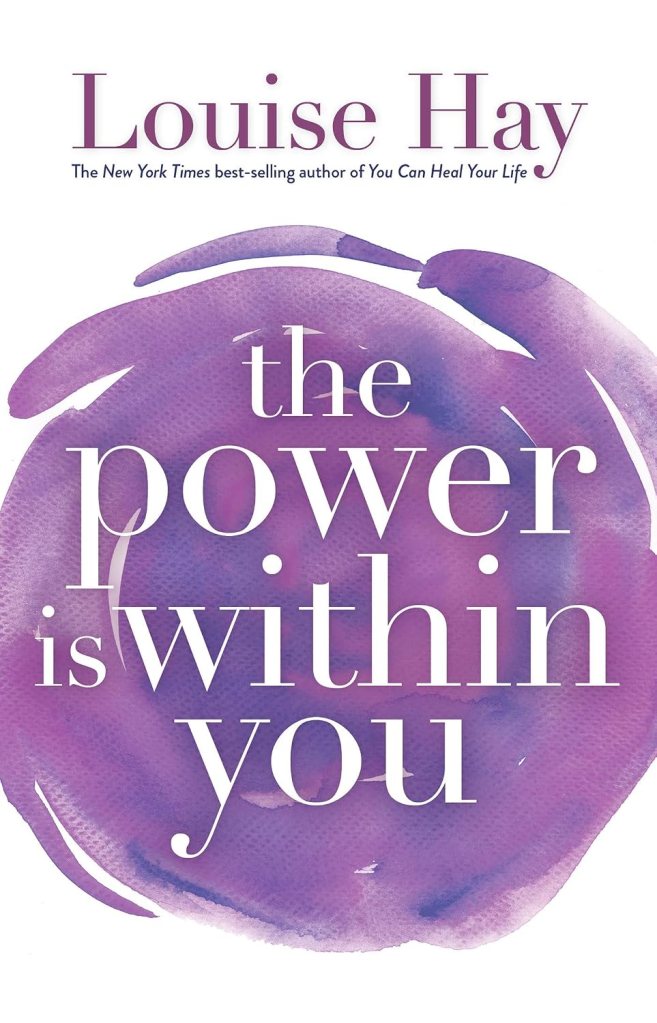
Book cover belongs to the publisher and is displayed for identification and review purposes.
Note: This book review is for informational and educational purposes only. It is not medical advice and should not replace guidance from a qualified healthcare professional. Every brain injury and recovery journey is different.


Do you Love Love YOUR Brain?