
Sometimes we think of the brain as the place where our thoughts happen.
We think.
We remember.
We make decisions.
We recognize the people and places around us.
But what about the feeling of being ourselves?
What does it mean to be aware of what is happening inside us and around us?
And how much of who we are is connected to the body we live in?
After a brain injury, these questions can become much more personal.
You may notice changes in memory, attention, emotions, movement, or the way you experience the world.
You may even find yourself wondering:
“Why does everything feel different now?”
“Why do I feel like a different person?”
“Why can something that used to feel automatic suddenly require so much effort?”
“Where does the feeling of ‘me’ come from?”
In The Feeling of What Happens: Body and Emotion in the Making of Consciousness, neuroscientist Antonio R. Damasio explores some of the biggest questions about consciousness, emotion, the body, and our sense of self.
This is not a book specifically about brain injury.
But it can give us a fascinating way to think about something that many brain injury survivors experience:
The brain does not exist separately from the rest of us.
🧠 What Does It Mean to Be Conscious?
We often take consciousness for granted.
We wake up.
We know where we are.
We recognize ourselves in the mirror.
We remember pieces of yesterday.
We notice what is happening around us.
It can all seem effortless.
Damasio asks us to slow down and look more closely at this experience.
What makes us aware?
What makes us feel that we are the person experiencing the moment?
And how does the brain create that sense of being present in the world?
These are complicated questions.
But they become especially interesting when something changes the way the brain works.
❤️ The Body Is Part of the Story
One of the important ideas in Damasio’s work is that consciousness is not simply about the brain thinking.
The body matters too.
Our brains are constantly receiving information about what is happening inside us and around us.
Our heartbeat.
Our breathing.
Our physical sensations.
Our emotional responses.
Our reactions to the environment.
All of these experiences become part of the complicated process through which we experience ourselves and the world.
For someone living with brain injury, this can be an especially meaningful idea.
You may notice your body differently now.
You may become aware of fatigue sooner.
You may notice when your senses are overwhelmed.
You may feel stress in your body before you can explain what is happening.
These experiences are not imaginary.
Your body is communicating with you.
🌊 When the World Feels Different
After brain injury, familiar experiences can sometimes become unfamiliar.
A busy room may suddenly feel overwhelming.
A conversation may require more concentration than it once did.
A familiar task may feel completely different.
Even emotions can sometimes feel harder to understand or regulate.
This can be unsettling.
You might wonder why something that used to be easy now feels difficult.
You might even question whether you are still the same person.
Damasio’s exploration of consciousness gives us another way to think about this.
Our experience of ourselves is connected to our ongoing interaction with our bodies, brains, memories, emotions, and surroundings.
When something changes, our experience can change too.
That does not mean you have disappeared.
It means you are experiencing life through a brain and body that have been changed.
💭 Feelings Are Part of Being Human
Sometimes we are taught to think of feelings as something separate from thinking.
Logic goes here.
Emotion goes there.
But our experiences are not always so neatly divided.
Damasio’s work places emotion and feeling much closer to the story of consciousness.
That can be an important reminder.
Your emotions are not simply interruptions.
They are part of your experience of being alive.
And learning to notice them can sometimes help you better understand what your body and brain are experiencing.
🧩 Who Am I Now?
Brain injury can bring questions about identity.
Before your injury, you may have had a very clear idea of who you were.
Your job.
Your routines.
Your relationships.
Your abilities.
Your independence.
Then something happens.
And suddenly some of those things change.
You may still be the same person.
But the way you experience yourself may be different.
That difference can be difficult to explain to other people.
Sometimes it can even be difficult to explain to yourself.
Damasio’s discussion of consciousness and the construction of the self gives us a reminder that our sense of identity is deeply connected to our ongoing experiences.
Understanding that can make room for a different question:
Not just, “Who was I before?”
But also:
“Who am I becoming now?”
💔 There Can Be Grief in Change
When the way you experience yourself changes, there can be grief.
You may grieve abilities you once took for granted.
You may grieve your old routines.
You may grieve the person you thought you would become.
You may even grieve the feeling of certainty you once had about your future.
That grief does not mean you are ungrateful for the progress you have made.
Two things can be true at the same time.
You can be grateful for what you still have.
And you can miss what you lost.
🌱 Learning to Notice Yourself
Sometimes recovery begins with noticing.
Noticing when you are tired.
Noticing when your senses are overwhelmed.
Noticing when you need quiet.
Noticing when an emotion is becoming stronger.
Noticing when your body needs rest.
Noticing what helps you feel grounded.
These observations may seem small.
But they can help you become more familiar with the person you are now.
You do not have to understand everything at once.
Sometimes awareness begins with simply asking:
“What am I experiencing right now?”
🕊️ You Are More Than What Changed
A brain injury can change abilities.
It can change routines.
It can change relationships.
It can change the way you move through the world.
But it does not reduce your entire identity to those changes.
You are not your memory problems.
You are not your fatigue.
You are not your cognitive challenges.
You are not the symptoms other people can see.
And you are not the symptoms they cannot see.
There is still a whole person experiencing all of this.
💗 Love Love Brain Thoughts
We love that The Feeling of What Happens invites us to look at consciousness in a much bigger way.
For the Love Love Brain community, the most interesting part may not be trying to solve the mystery of consciousness. It may be the reminder that our experience of ourselves involves the brain, body, emotions, and the world around us. That feels especially meaningful after brain injury, when the way we experience our own body and mind can change.
This is not a book that gives a step-by-step recovery plan for brain injury. It is a deeper exploration of neuroscience and consciousness, and some sections may feel dense if you are looking for an easy or practical read. But if you enjoy asking big questions about the brain, identity, emotions, and what makes us conscious, this book can open up a fascinating conversation.
Sometimes understanding the brain is also a way of becoming more compassionate toward ourselves.
And sometimes the question is not, “Why can’t I be who I was?”
It is:
“What can I learn about who I am now?”
💬 We’d Love to Hear From You
Has a brain injury changed the way you experience your body or emotions?
Have you ever felt like you were getting to know yourself all over again?
What changes have been the hardest to explain to other people?
What have you learned about yourself through your recovery?
📖 Where to Find the Book
The Feeling of What Happens: Body and Emotion in the Making of Consciousness by Antonio R. Damasio was originally published in 1999. The book explores consciousness, emotion, the body, and the construction of the self through the perspective of neuroscience.
🛒 Get the Book on Amazon
Love Love Brain may earn a small commission from qualifying purchases made through our book recommendations. This helps support our work.
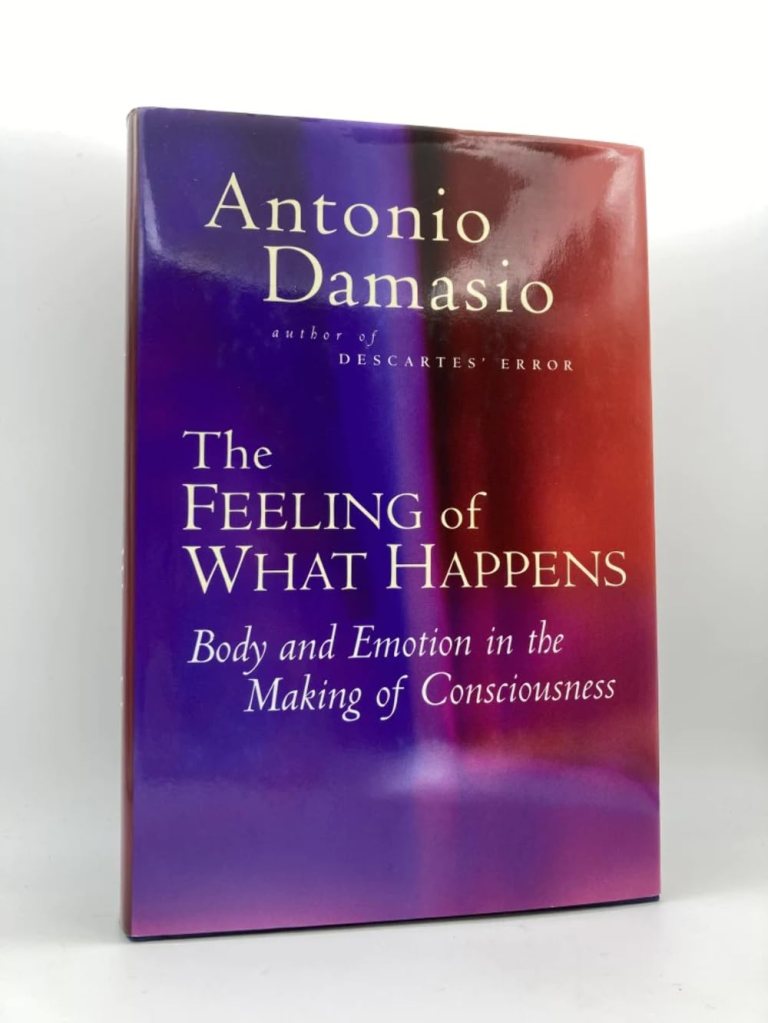
Book cover belongs to the publisher and is displayed for identification and review purposes.
Note: This book review is for informational and educational purposes only. It is not medical advice and should not replace guidance from a qualified healthcare professional. Every brain injury and recovery journey is different.


Do you Love Love YOUR Brain?