
What do you imagine when you think about your future?
Do you imagine things getting better?
Do you imagine yourself feeling stronger?
Do you imagine yourself becoming more confident?
Or does your mind automatically return to everything that has gone wrong?
After a life-changing experience, it can be difficult to imagine a future that looks different from the present.
Brain injury can bring uncertainty.
You may not know exactly how recovery will unfold.
You may wonder whether you will return to work.
Whether your relationships will change.
Whether your abilities will improve.
Whether you will ever feel like yourself again.
And sometimes the hardest question is:
“Can I still imagine a life I want to live?”
In Feeling Is the Secret, Neville Goddard presents his spiritual and metaphysical ideas about consciousness, imagination, feeling, prayer, sleep, and the subconscious mind.
First published in 1944, the short book centers on Goddard’s belief in the power of imagination and the importance of emotionally experiencing a desired state.
This is not a neuroscience book.
It is not a brain injury recovery guide.
And its ideas about manifestation should not be treated as scientifically established explanations for illness, recovery, or life circumstances.
But it does raise an interesting question:
What happens when we begin paying attention to the inner stories we repeatedly tell ourselves?
💭 The Stories We Carry Inside
We all have an inner conversation.
Sometimes it sounds hopeful.
Sometimes it sounds frightened.
Sometimes it says:
“You can do this.”
And sometimes it says:
“It’s never going to get better.”
After brain injury, that inner conversation can become especially complicated.
You may have experienced setbacks.
You may have lost abilities.
You may have heard frightening information about your future.
You may have struggled with uncertainty.
It is understandable if hope feels difficult sometimes.
🌱 Imagining a Different Future
Goddard places enormous importance on imagination and feeling.
His philosophy encourages readers to imagine and inwardly experience a desired state as though it has already been realized.
For Goddard, this is part of a larger spiritual philosophy about consciousness and the subconscious.
We want to be careful with this idea.
Imagining recovery does not guarantee recovery.
Feeling hopeful does not make a medical condition disappear.
And experiencing difficult emotions does not mean you caused something bad to happen.
Your brain injury is not your fault.
But there can still be value in asking what kind of future you allow yourself to imagine.
❤️ Hope Can Have a Place in Recovery
Sometimes hope feels dangerous.
You might think:
“What if I get my hopes up and then things don’t change?”
That fear makes sense.
When you have experienced disappointment, protecting yourself from disappointment can feel safer than hoping.
But hope does not have to mean pretending everything is perfect.
Hope can be smaller than that.
Hope can mean:
“I don’t know what the future holds, but I am still open to possibilities.”
“I can have a difficult day and still believe tomorrow may be different.”
“I can accept where I am without deciding that this is where I will always be.”
🌙 The Moments Before Sleep
One of the practical ideas in Feeling Is the Secret is the importance Goddard gives to the period before sleep.
He encourages readers to enter sleep while experiencing the feeling associated with a desired state.
For readers interested in spiritual visualization, this may be one of the most memorable parts of the book.
But it can also be approached in a gentler way.
Before sleep, instead of replaying everything that went wrong during the day, perhaps you can give yourself a few quiet moments to imagine something comforting.
A peaceful tomorrow.
A meaningful conversation.
A moment of confidence.
A small success.
A feeling of safety.
You don’t have to force yourself to believe that everything will happen exactly as you imagine.
You can simply give your mind somewhere kind to rest.
🧠 Your Brain Injury Is Not a Failure of Positive Thinking
This is an important distinction.
Brain injury recovery is complicated.
There are physical, neurological, psychological, social, and environmental factors involved.
You cannot think your way out of a brain injury.
You cannot blame yourself for symptoms because you felt discouraged.
And you should never feel that you have failed because you cannot maintain positive feelings all the time.
Sometimes you will feel angry.
Sometimes frightened.
Sometimes exhausted.
Sometimes hopeful.
Sometimes all of these things in the same day.
That is human.
🌧️ You Are Allowed to Feel What You Feel
The title of this book puts feeling at the center.
That can be interesting to think about, but we should not turn it into pressure.
You do not need to force happiness.
You do not need to pretend you are okay.
You do not need to turn grief into gratitude before you are ready.
You do not have to deny difficult emotions to be hopeful.
There is room for sadness.
There is room for frustration.
There is room for uncertainty.
And there can still be room for hope.
🌻 What Future Do You Want to Imagine?
Brain injury can make the future feel smaller.
Your world may suddenly revolve around appointments, symptoms, medications, limitations, and recovery tasks.
Those things matter.
But they are not the entire future.
What else do you want?
Maybe it is returning to something you love.
Maybe it is spending more time with people you care about.
Maybe it is finding a new kind of work.
Maybe it is traveling again.
Maybe it is simply having a peaceful morning without feeling exhausted.
Your dreams do not have to look like anyone else’s.
And they do not have to look exactly like your old life.
🌅 You Can Hold Hope Without Making Promises
One thing we appreciate about approaching a book like this carefully is that we can take inspiration from an idea without accepting every claim literally.
You can explore visualization without believing that your thoughts control every event.
You can practice hopeful thinking without blaming yourself for setbacks.
You can imagine a meaningful future without pretending that recovery is predictable.
And you can hold spiritual beliefs while still seeking appropriate medical care and practical support.
There is room for both hope and reality.
🤍 Your Inner World Matters
Even when we cannot control everything that happens to us, our inner world still deserves attention.
What do you say to yourself when you make a mistake?
What do you imagine when you think about tomorrow?
Do you automatically expect failure?
Do you allow yourself to imagine something good?
These questions do not determine your medical outcome.
But they can help us notice the emotional environment in which we are living.
And sometimes that is worth exploring.
🌱 Small Hope Still Counts
You do not have to imagine an entirely different life.
Sometimes a small vision is enough.
Maybe tomorrow you will have a little more energy.
Maybe you will laugh with someone you love.
Maybe you will accomplish one thing that felt difficult.
Maybe you will discover something new about yourself.
Maybe your future will look different from what you originally imagined.
A changed future can still be a meaningful future.
💗 Love Love Brain Thoughts
Feeling Is the Secret is a very short book with a very strong point of view. Neville Goddard presents a spiritual philosophy in which feeling, imagination, consciousness, prayer, and the subconscious play a central role.
For the Love Love Brain community, we would not read this book as a medical explanation for brain injury or recovery. We would also be careful about any suggestion that someone’s thoughts or feelings caused their illness, injury, or setbacks. Brain injury is not something a person manifests by thinking the wrong thoughts.
Instead, there may be a gentler question worth taking from the book:
What kind of future are you allowing yourself to imagine?
When recovery feels uncertain, it can be easy to imagine only what you have lost. Giving yourself permission to imagine possibilities does not mean denying reality. It can simply mean refusing to let today’s limitations become the only story you tell about tomorrow.
You can be realistic and hopeful.
You can acknowledge what is difficult and still imagine something meaningful ahead.
And you can have a hard day without giving up on your future.
💬 We’d Love to Hear From You
Has brain injury changed the way you imagine your future?
Do you find visualization or imagining peaceful moments helpful?
What is something you would love to experience again – or experience for the first time?
Have you ever caught yourself assuming that today’s difficulties will last forever?
What would you like your future to feel like?
📖 Where to Find the Book
Feeling Is the Secret by Neville Goddard was first published in 1944. It is a short work exploring Goddard’s ideas about consciousness, imagination, feeling, prayer, and the subconscious mind. Because the book presents a spiritual and metaphysical philosophy, readers may find it most useful as a work of personal reflection rather than as a scientific or medical guide.
🛒 Get the Book on Amazon
Love Love Brain may earn a small commission from qualifying purchases made through our book recommendations. This helps support our work.
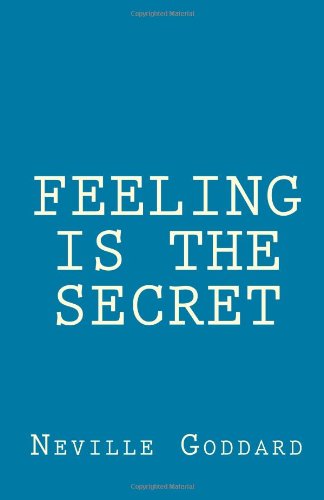
Book cover belongs to the publisher and is displayed for identification and review purposes.
Note: This book review is for informational and educational purposes only. It is not medical advice and should not replace guidance from a qualified healthcare professional. Every brain injury and recovery journey is different.
 ♥️♥️🧠 Love Love Brain
Do you Love Love YOUR Brain?