
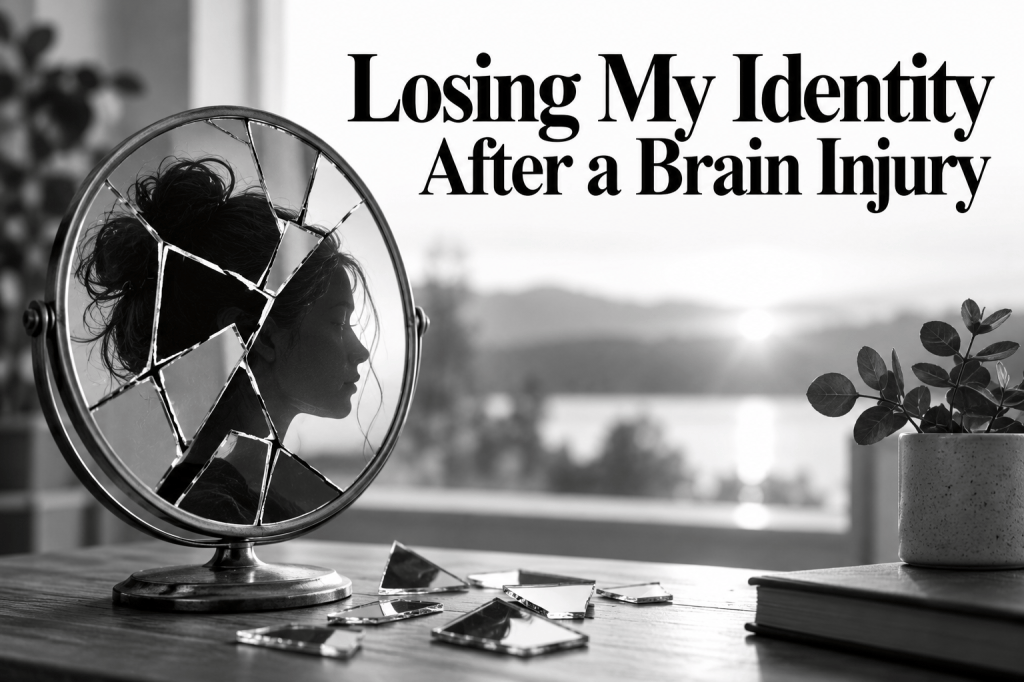
What happens when a brain injury changes the life you once knew? How do you find a new purpose when the work, activities, and relationships that once defined you become more difficult?
In this video, Adeline shares her journey from being a successful businesswoman and tennis enthusiast to founding Love Love Brain. She reflects on losing her former identity, finding a reason to keep going, and learning that caring for herself can help her give to others.
Her story offers a reminder that even when life changes dramatically, we can continue discovering new ways to connect, contribute, and find meaning.
💔 When Your Old Identity Changes
Before her brain injury, Adeline owned a tennis shop, designed tennis clothing, played on six or seven tennis teams, and organized tournaments for other women.
She describes herself as a “boss lady” who was always giving to others. In her relationships, she was the person who helped, supported, and gave generously.
These roles were an important part of her identity.
After her injury, she faced a very different life. She shares that she was searching for a reason to live because so much of what had once made her feel successful and capable had changed.
Losing familiar abilities and responsibilities can be deeply painful. You may wonder who you are when you can no longer do the things that once defined you.
🌱 From Love Tennis to Love Love Brain
Adeline’s former business was called Love Love Tennis. After her brain injury, she began transitioning toward peer support and social media through Love Love Brain.
This was a significant change from the life she had known.
Instead of focusing on tennis clothing, running a shop, and organizing tournaments, she began sharing her experiences and connecting with others affected by brain injury.
Love Love Brain became a way for her to offer support, share helpful information, and help other survivors feel less alone.
Her journey shows that a new purpose does not have to erase your past. The experiences, knowledge, and compassion you developed before an injury can still become part of what you contribute to the world.
💗 Learning to Fill Your Own Cup
Adeline describes herself as the “faucet” in her relationships because she was always giving to others.
Now, she is learning the importance of gratitude, presence, and mindfulness.
She has noticed that when she takes care of herself and fills her own cup, it becomes easier for her to give to others.
This is connected to her Love Love Brain tagline:
“Better brain, brighter being.”
For Adeline, this means paying attention to her own needs rather than focusing entirely on what she can do for everyone else.
If you are used to being the person who always helps, slowing down to care for yourself may feel unfamiliar.
But you deserve the same care and kindness you give to others.
📚 Learning at Your Own Pace
Adeline also talks about reading a book that would have felt far too overwhelming for her the previous year.
She describes the material as being closer to a master’s-level textbook than a simple introductory book. She uses many tags to keep track of the content.
This illustrates how learning can feel different after a brain injury.
Reading, remembering information, and following complex ideas may require more effort than they once did. What feels manageable today may have been overwhelming a year ago.
You do not have to rush through a book or understand everything immediately.
You can take breaks, read a little at a time, use notes, and return to difficult sections when you feel ready.
Progress can include being able to do something today that felt overwhelming before.
🤝 Finding a New Way to Give
Adeline’s story is not about pretending that brain injury is easy. She openly describes how much she struggled and how difficult it was to find a reason to continue.
Through Love Love Brain, she is discovering a different way to contribute.
She may no longer live the same life she had before, but she can share her experiences, connect with other survivors, and offer encouragement to people facing similar challenges.
Your contribution does not have to look the same as it did before your injury.
Sometimes, sharing what you have learned can become a meaningful way to help someone else feel understood.
💗 Love Love Brain Note
If your brain injury has changed your identity, work, relationships, or abilities, you may need time to discover what your life looks like now.
You are allowed to grieve what has changed. You are also allowed to explore new interests, accept support, and find a different purpose.
You do not have to give everything to everyone else. Your own well-being matters, too.
Start with what you need today. A moment of gratitude, a little rest, or one small step toward something meaningful can be enough.
You are more than the life you had before your brain injury. There is still room for meaning, connection, and growth. 💗
🎥 Watch the Video
Watch Adeline share her story and the purpose behind Love Love Brain:
📚 Learn More About Debbie Hampton
Debbie’s Book Title:
How To Use Mindfulness As A Mental Health Tool
Debbie’s Website:
The Best Brain Possible
Book Review:
How To Use Mindfulness As A Mental Health Tool
Get the Book on Amazon:
How To Use Mindfulness As A Mental Health Tool
📱 Follow and Support Love Love Brain
If this message speaks to you, please support Love Love Brain by following us on social media. 💗
Stay connected for more stories, reflections, helpful information, and supportive content about brain injury, recovery, resilience, and everyday life.
Click the buttons below to follow and support us on social media:
Note: Every brain injury is different. This content is for education and support, not medical advice.


Do you Love Love YOUR Brain?