
Sometimes your mind feels like it will not slow down.
Thoughts keep coming.
Worries repeat.
Your body feels tense.
You cannot concentrate.
You feel emotionally overwhelmed.
Or you may simply feel exhausted from trying to keep up with everything happening around you.
After a brain injury, these experiences can feel even more difficult.
In How to Use Mindfulness as a Mental Health Tool: To Beat Depression & Anxiety, and Change Your Brain, Debbie Hampton explores mindfulness as a practical tool for mental health and everyday life.
Published in November 2023, the book explains mindfulness in plain language and explores attention, focus, neuroplasticity, depression, anxiety, breathing, gratitude, compassion, affirmations, digital mindfulness, and everyday mindfulness practices.
And one of the book’s most accessible ideas is this:
Mindfulness does not have to be complicated.
🌿 What Is Mindfulness?
Mindfulness can sound intimidating.
You may imagine sitting completely still.
Eyes closed.
Perfectly calm.
No thoughts.
No distractions.
But mindfulness does not have to look like that.
Mindfulness can simply mean noticing what is happening right now.
Your breathing.
The sounds around you.
Your body.
Your thoughts.
Your emotions.
The food you are eating.
The person you are talking to.
You are noticing the present moment.
🧠 When Attention Becomes Difficult
After a brain injury, attention can change.
You may begin a task and forget what you were doing.
You may lose track of a conversation.
You may become distracted by noise.
You may struggle to focus on a page.
You may find that multitasking no longer works the way it used to.
Mindfulness gives you an opportunity to practice bringing your attention back.
You get distracted.
You notice.
You return.
Then you do it again.
Coming back is part of the practice.
🌬️ Your Breath Can Be an Anchor
Your breath is always with you.
You do not need special equipment.
You do not need a meditation room.
You do not need an hour of free time.
You can simply pause.
Notice one breath.
Then another.
Notice the feeling of breathing.
Notice what is happening in your body.
The book includes breathing practices as one of the ways mindfulness can be brought into everyday life.
Sometimes a simple pause can create a little space between what is happening and how you respond.
💭 You Are Not Every Thought You Have
Our brains produce thoughts constantly.
Some are helpful.
Some are neutral.
Some are painful.
Some are frightening.
Some are simply random.
Mindfulness can help us notice thoughts without automatically treating every thought as a fact.
For example:
“I’m never going to get better.”
You can try:
“I’m having the thought that I’m never going to get better.”
That small change creates some distance.
The thought is still there.
But you are observing it.
You are not necessarily following it.
💔 Making Space for Difficult Emotions
Mindfulness does not mean pretending difficult emotions do not exist.
You can notice sadness.
Anger.
Fear.
Frustration.
Grief.
You do not have to immediately push them away.
After brain injury, grief can come from many places.
You may grieve your old abilities.
Your independence.
Your career.
Your relationships.
Your routines.
Your expectations for the future.
These emotions do not mean you are ungrateful.
They mean something important changed.
🌱 Mindfulness and Neuroplasticity
Hampton connects mindfulness with neuroplasticity and explores how mindfulness may affect the brain and mental health.
This can be an encouraging idea.
The brain can learn.
The brain can adapt.
Repeated practices can become familiar.
But mindfulness should not be presented as a cure for brain injury.
It cannot repair every neurological change.
It does not guarantee that depression or anxiety will disappear.
It is one possible tool.
And sometimes one useful tool can still be valuable.
📱 Mindfulness Is More Than Meditation
Meditation is only one of the tools discussed in the book.
Hampton also explores breathing practices, gratitude, compassion, affirmations, digital mindfulness, and ways to bring mindfulness into everyday life.
That can make mindfulness feel more approachable.
You can practice while drinking tea.
While eating.
While walking.
While listening to music.
While sitting outside.
While taking a shower.
While doing the dishes.
You do not necessarily need to add another complicated activity to your day.
You can practice during something you are already doing.
🧘 Mindfulness Does Not Mean Emptying Your Mind
One common misunderstanding is that mindfulness means having no thoughts.
But thoughts will happen.
Your job is not to stop your brain from thinking.
Your job is to notice.
“There is a thought.”
“There is a feeling.”
“There is tension in my body.”
“I am distracted.”
And then gently return.
There is no need to criticize yourself.
💗 Compassion for Yourself
Self-compassion can be especially important after brain injury.
You may become frustrated with yourself.
You may think:
“I should be better by now.”
“Why can’t I do this?”
“I used to be able to do everything.”
Try asking a different question:
“What does my brain need today?”
Maybe it needs rest.
Maybe it needs quiet.
Maybe it needs help.
Maybe it needs fewer demands.
Maybe it needs patience.
Listening to your needs is not weakness.
It is awareness.
🌧️ You Don’t Have to Be Calm All the Time
Mindfulness does not mean you will never feel anxious.
It does not mean you will never get angry.
It does not mean you will never have a difficult day.
You can practice mindfulness and still struggle.
You can meditate and still feel sad.
You can practice breathing and still feel overwhelmed.
That does not mean you failed.
Mindfulness is a practice, not a performance.
🤝 Mindfulness and Professional Support
The book discusses mindfulness in relation to depression and anxiety and explores mindfulness-based therapies and other mental-health applications.
For someone experiencing significant depression, anxiety, trauma symptoms, or thoughts of self-harm, mindfulness should not replace professional care.
A qualified mental-health professional or healthcare provider can help determine what kind of support is appropriate.
You can use mindfulness as one tool.
You do not have to use it as your only tool.
🌻 You Can Start Small
You do not need to change your entire life.
Try one minute.
Notice your breathing.
Listen to the sounds around you.
Notice how your feet feel against the floor.
Pay attention while drinking your next cup of coffee.
Take one slow breath before answering a difficult message.
Small moments of awareness can become part of your day.
💡 The Present Moment Is Enough for Now
Brain injury can make you think about the past.
What happened.
What you lost.
What you used to do.
Who you used to be.
It can also make you worry about the future.
Will I recover?
Will I work again?
Will things ever feel normal?
Those questions are understandable.
But mindfulness gently brings your attention back to what is happening right now.
Not the entire future.
Not everything you have lost.
Just this moment.
💗 Love Love Brain Thoughts
How to Use Mindfulness as a Mental Health Tool presents mindfulness as a practical and accessible tool for attention, mental health, and everyday life. Hampton explores mindfulness, neuroplasticity, breathing, compassion, gratitude, affirmations, and mindfulness-based approaches to depression and anxiety.
For Love Love Brain, the idea of returning to the present can be especially meaningful after brain injury.
You do not have to solve your entire recovery today.
You do not have to know exactly what the future will look like.
You do not have to stop grieving.
You do not have to become perfectly calm.
You can simply notice where you are right now.
One breath.
One step.
One task.
One conversation.
One moment.
Mindfulness can also offer a gentler way of speaking to yourself.
Instead of:
“Why am I still struggling?”
Try:
“I’m having a difficult moment. What do I need?”
Instead of:
“I should be doing more.”
Try:
“What is realistic for my brain today?”
Instead of:
“I need to fix everything.”
Try:
“What is one small thing I can do right now?”
Sometimes healing begins with simply being present for yourself.
💬 We’d Love to Hear From You
Have you tried mindfulness during your recovery?
What helps you feel grounded?
Breathing?
Walking?
Meditation?
Music?
Prayer?
Gratitude?
Sitting somewhere quiet?
Or simply taking a break?
Share your experience in the comments.
Your simple strategy may become someone else’s helpful tool.
📖 Where to Find the Book
How to Use Mindfulness as a Mental Health Tool: To Beat Depression & Anxiety, and Change Your Brain by Debbie Hampton was published on November 9, 2023. The paperback edition is listed at 323 pages.
🛒 Get the Book on Amazon
Love Love Brain may earn a small commission from qualifying purchases made through this link. This does not affect the price you pay.
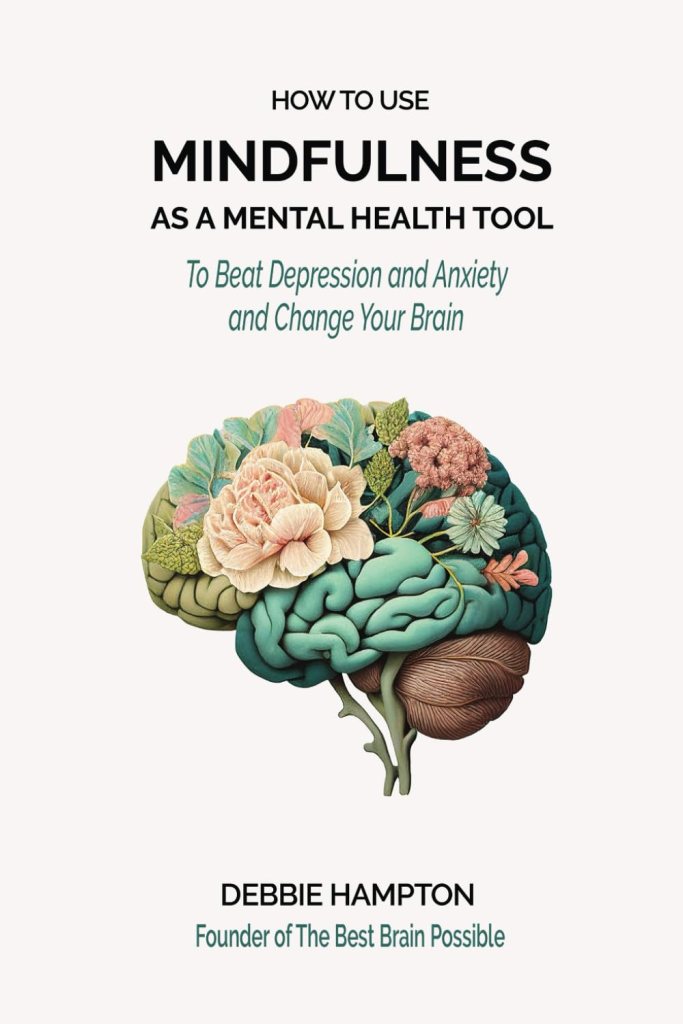
Book cover belongs to the publisher and is displayed for identification and review purposes.
Note: This book review is for informational and educational purposes only. It is not medical advice and should not replace guidance from a qualified healthcare professional. Every brain injury and recovery journey is different.


Do you Love Love YOUR Brain?