
A brain injury can change nearly every part of life, from how we think and communicate to how we work, maintain relationships, and imagine our future. For many survivors, one of the hardest challenges is learning how to move forward when the person they were before the injury feels far away.
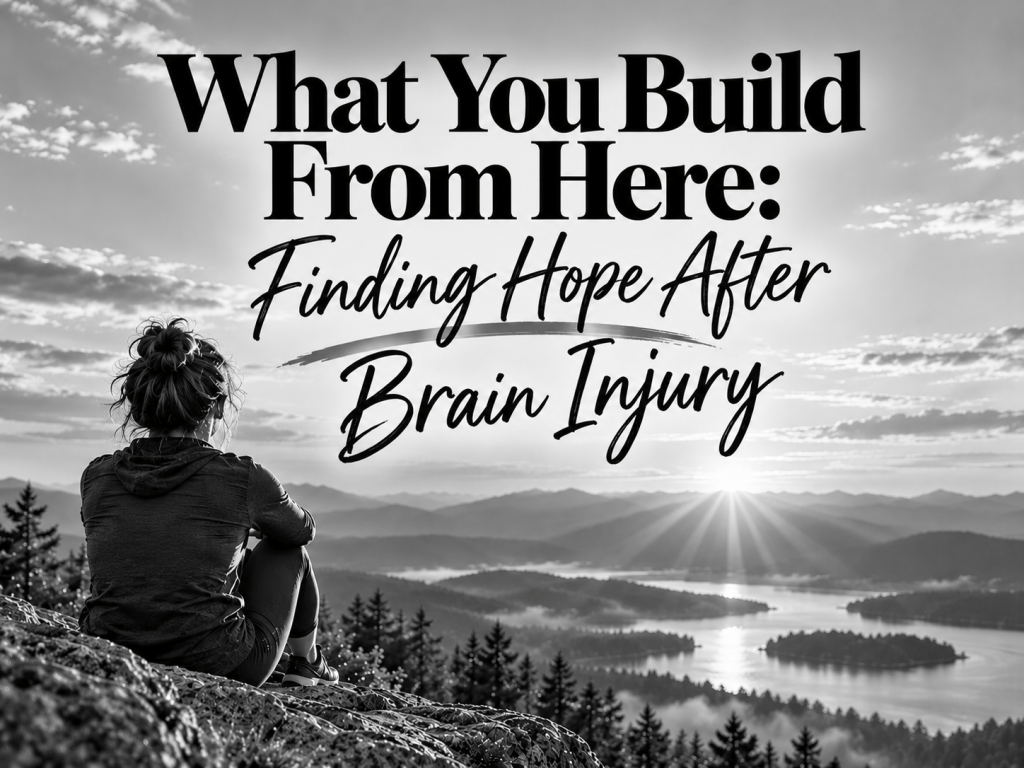
In this special Love Love Brain interview, Adeline speaks with Alex Lombardi, author of What You Build From Here, about navigating life after traumatic brain injury (TBI), rebuilding daily routines, setting realistic goals, establishing boundaries, and learning to embrace a new version of yourself.
Alex shares her experience of living with three traumatic brain injuries and explains how she began exploring the parts of everyday life she could adapt to support her recovery. Adeline also opens up about her own challenges, including memory difficulties, fatigue, physical limitations, and the emotional process of accepting that her life may not look the way it once did.
Their conversation offers an important reminder: moving forward does not mean pretending that nothing has changed. It means acknowledging what you have experienced, recognizing what you need today, and discovering what may still be possible.
🌱 1. You Are Not Broken, You Are Still Becoming.
One of the most meaningful messages Alex shares from her book is:
“You are not behind. You are not broken. You are just getting started.”
For someone recovering from a brain injury, these words can offer a different perspective on the future.
Recovery can feel isolating, particularly when other people cannot see the difficulties you experience. Someone may notice that you speak more clearly or look healthier and assume you have recovered, even though you continue to struggle with fatigue, memory, concentration, sensory sensitivity, or everyday activities.
During the interview, Adeline describes how people sometimes assume she is doing well because she sounds better. Yet she continues to experience significant challenges that affect her daily life.
Alex understands this disconnect from her own experience with brain injuries. She explains that invisible symptoms can make recovery difficult to navigate in both personal and professional settings.
Looking better does not necessarily mean feeling better, and progress in one area does not mean every challenge has disappeared.
If you are living with a brain injury, you do not have to measure your progress against someone else’s timeline. Your experience is unique, and your needs may change as you move through recovery.
You are allowed to acknowledge how difficult things are while remaining open to new possibilities.
🎯 2. Start With One Small Action
One of the practical ideas Alex discusses is breaking long-term goals into smaller, manageable actions.
Instead of focusing only on where you want to be five years from now, consider what you can do this year, this month, this week, and today.
Alex describes using the idea of identifying the one thing that can move you closer to your goal. For people experiencing cognitive fatigue after a brain injury, she suggests making the daily action especially small, potentially five minutes or less.
The purpose is to reduce the effort required to get started.
During the interview, Adeline shares her goal of exercising more consistently. She purchased a used stationary bicycle and challenged herself to ride for just one minute a day. She managed to do at least one minute for 30 consecutive days, even though getting started could still feel difficult.
Rather than judging the goal by how long she exercised, the important part was building a repeatable action.
You can apply this approach to many areas of life:
📚 If you want to read again, start with a short passage and rest when needed.
🏃 If you want to become more physically active, discuss appropriate activity with your healthcare professional and begin at a suitable level.
🏡 If you want to organize your home, start with one small area.
🎨 If you want to return to a personal project, spend a few minutes identifying your next step.
A small action may seem insignificant when compared with your long-term ambitions. However, it can help make a goal feel more approachable.
You do not have to accomplish everything today. Focus on one realistic step that matters to you.
🧠 3. Make Your Environment Work for You
Alex explains that motivation can become harder to rely on when every task requires multiple decisions. Her suggestion is to reduce unnecessary decisions before they have a chance to become obstacles.
For Adeline’s exercise goal, Alex recommends preparing workout clothes the night before, keeping them in a visible place, and making the bicycle part of an established morning routine.
This removes some of the steps between deciding to exercise and actually beginning.
The same principle can help with everyday tasks after a brain injury.
For example, you might:
👕 Choose your clothes with your caregiver the evening before.
📍 Keep essential items in consistent locations.
📝 Use a written checklist for your morning routine.
🍱 Label meals or containers to make choices easier.
⏰ Set reminders for appointments and important tasks.
📞 Prepare questions before calling a healthcare provider.
Adeline also describes how opening a refrigerator filled with food can sometimes feel overwhelming. Alex responds by encouraging her to simplify the environment and create routines that support her current needs.
The goal is not to force yourself to function as you did before your injury. It is to find practical ways to make everyday life more manageable now.
Alex also emphasizes that what works for one person may not work for another. A routine should be tested and adjusted to fit your circumstances, energy, and abilities.
💗 4. Grieve Your Old Identity While Making Room for a New One
One of the most emotional moments in the interview comes when Adeline talks about her identity before and after her brain injury.
Before the accident, she worked continuously, ran businesses, played tennis, and took on many responsibilities. She describes being a wife, a businesswoman, a tennis player, and someone who often tried to keep everyone happy.
After her injury, many of those roles changed. She explains that she is no longer able to work in the same way and has had to reconsider what her future might look like.
She asks Alex how she can accept the person she is today and learn to love this new version of herself.
Alex responds with an important message: there needs to be room to grieve the person you were before the injury.
People may encourage survivors to stay positive or insist that they can return to their previous lives. However, those statements can make it harder to acknowledge genuine losses and limitations.
Alex explains that moving forward can involve accepting that some dreams, responsibilities, and abilities may change. She also encourages survivors to recognize that they are allowed to evolve.
This does not mean giving up on improvement or assuming that recovery has reached its limit. It means allowing yourself to work toward a meaningful future without making your worth depend on becoming exactly who you were before.
You can honor your past while discovering new interests, priorities, relationships, and goals.
You may also find that your definition of success changes.
Perhaps success once meant managing a business, working long hours, or accomplishing several things in a day. Today, it might mean completing a rehabilitation session, preparing a meal, connecting with someone you love, or respecting your need to rest.
These changes deserve recognition, too.
You are more than the roles you used to fill. Your identity can continue to grow, even when your life looks different.
🛡️ 5. Communicate Your Boundaries and Protect Your Well-Being
Adeline and Alex also discuss the importance of boundaries, particularly when a brain injury changes a person’s needs or increases their vulnerability.
Adeline shares difficult personal experiences involving inappropriate behavior and explains why she currently relies on support and protective arrangements in certain situations.
Alex acknowledges the seriousness of her concerns and discusses the value of communicating expectations before a boundary is crossed.
Although every situation is different, setting boundaries can help people understand what you need, what behavior is unacceptable, and what arrangements make you feel safer.
For example, you might:
🤝 Ask a trusted person to accompany you to certain appointments.
🩺 Request that a healthcare professional explain a procedure before beginning.
⏸️ Communicate your need for breaks during long conversations.
🛡️ Limit contact with people whose behavior makes you feel unsafe.
💬 Tell family members what kind of assistance is helpful and what is not.
🫂 Ask whether a support person or chaperone can be present when appropriate.
You do not have to wait until you are overwhelmed to express a need. When possible, communicating expectations in advance can help everyone understand what is required.
If someone behaves inappropriately, remember that their behavior is not your fault. You deserve to be treated with dignity and respect. If you feel unsafe, seek help from a trusted person or an appropriate professional or support service.
Boundaries are not about controlling everyone around you. They are about protecting your well-being and communicating what you need to feel respected and supported.
🤝 6. Help Loved Ones Understand Invisible Symptoms
Brain injuries affect more than the person who experiences them. They can also change family relationships, friendships, caregiving responsibilities, and communication.
Adeline explains that some people in her life did not fully understand what she was going through. She also describes the deeper connections that have developed with people who have made an effort to understand and support her current needs.
Alex shares that writing What You Build From Here helped some of her friends and family understand experiences she had previously struggled to explain.
The book includes practical information and exercises that can help readers explore routines, boundaries, goals, and everyday choices. Alex also discusses how caregivers and loved ones can benefit from learning more about the survivor’s experience.
Sometimes, a person living with a brain injury may not have the energy, memory, or words to explain what is happening. A helpful resource can give both the survivor and their support network a starting point for conversation.
If you are supporting someone with a brain injury, consider asking:
🧩 What activities are especially difficult right now?
🌧️ What does a difficult day look like for you?
📝 Would reminders or help organizing tasks be useful?
🤝 When do you need assistance, and when would you prefer space?
💗 What can I do to help you feel understood and respected?
Listen without assuming that you already know the answers.
And if you are the survivor, remember that you do not have to explain everything perfectly. You can share information gradually, use written resources, or ask someone you trust to help communicate your needs.
Support is most effective when it responds to the person you are today, rather than expecting you to return to who you were before.
🔎 7. Become the Researcher of Your Own Life
A central idea in Alex’s approach is learning to become the researcher of your own life.
She encourages people to explore practical strategies, test what works, observe the results, and make adjustments. Her goal is to help people discover approaches that fit their individual circumstances.
For example, you might experiment with different ways of organizing your day. You could try preparing clothes the night before, scheduling a demanding task during a time when you tend to have more energy, or using a checklist to reduce the number of things you need to remember.
After trying a strategy, consider:
✅ Did it make the task easier?
😌 Did it reduce stress or confusion?
🔋 Was it realistic for my current energy level?
🔄 What should I change next time?
This approach can help you understand your own patterns and make more informed decisions about daily life.
Alex also discusses the importance of looking beyond formal rehabilitation sessions. Professional treatment and rehabilitation remain important, but everyday routines, relationships, rest, and the environment in which you live can also affect how manageable your days feel.
The goal is not to replace medical care with self-experimentation. It is to complement appropriate professional support with practical strategies for daily living.
Not every technique will work for every person, and some strategies may need to change over time.
Be curious about your own experience. Make adjustments without blaming yourself when something does not work.
🌷 8. Give Yourself Permission to Move Forward Differently
Near the end of the conversation, Alex reflects on how much her own life has changed since her injuries. She shares that her future eventually included opportunities and experiences she had not imagined during the early stages of recovery.
Her story is not a promise that every survivor will experience the same outcome. Instead, it illustrates how difficult it can be to predict what life may look like from the middle of a challenging period.
Adeline also reflects on learning to say no, establishing stronger boundaries, and discovering a different relationship with herself.
Both women discuss the importance of releasing the pressure to recreate the past and making room for the person they are becoming.
Moving forward does not require you to feel hopeful every day. There can be moments of frustration, sadness, grief, and uncertainty alongside moments of progress.
You are allowed to move at your own pace. You are allowed to change your goals. You are allowed to rest.
If you are ready to work toward something new, start by identifying one area of your life that you can influence today.
It might be a routine, a conversation, a small personal goal, or a request for support.
You do not need to know exactly where the road leads to take a meaningful first step.
💗 Love Love Brain Thoughts
Adeline’s conversation with Alex Lombardi reminds us that life after a brain injury is not simply about recovering lost abilities. It can also involve grieving, adapting, redefining success, building new routines, and learning to accept help.
One of the most powerful ideas in their discussion is that you can acknowledge what has changed without deciding that your future has no possibilities.
You do not have to pretend that recovery is easy. You do not have to force yourself to be positive when you are struggling. And you do not have to prove your worth by accomplishing everything you once could.
Instead, give yourself permission to discover what works for you now.
Start small. Simplify where you can. Communicate your needs. Protect your boundaries. Invite trusted people to understand your experience.
Most importantly, remember that your identity is bigger than your injury and bigger than the things you can no longer do in the same way.
You may not be able to return to the exact life you had before, but you can continue building a life that reflects who you are becoming. 💗
💬 We’d Love to Hear From You
What has helped you adjust to life after a brain injury or another major life change?
Have you discovered a routine, boundary, or small daily action that makes your life more manageable?
Share your thoughts in the comments. Your experience may help someone else feel less alone.
🎥 Watch the Interview
Watch Adeline’s full conversation with Alex Lombardi about brain injury recovery, building realistic routines, setting boundaries, and finding hope in the life ahead.
📚 Learn More About Alex Lombardi
Alex’s Book Title:
What You Build From Here
Alex’s Website:
Alex Lombardi Official
Alex’s Instagram:
@alexlombardiofficial
Alex’s Facebook:
Alex Marie Lombardi
Alex’s Podcast:
Explore Enriched with Alex Lombardi on Apple Podcasts.
Book Review:
What You Build From Here
Get the Book on Amazon:
What You Build From Here
Visit Alex’s website to learn more about her work, speaking opportunities, and The Brain Edit™.
If you enjoyed this interview, consider exploring Alex’s book and following her work for more ideas on intentional living, personal development, building sustainable habits, and creating a life aligned with your goals.
Affiliate disclosure: Love Love Brain may earn a commission from qualifying purchases made through the Amazon affiliate link, at no additional cost to you.
📱 Follow and Support Love Love Brain
If this message speaks to you, please support Love Love Brain by following us on social media. 💗
Stay connected for more stories, reflections, helpful information, and supportive content about brain injury, recovery, resilience, and everyday life.
Click the buttons below to follow and support us on social media:
Note: Every brain injury is different. This content is for education and support, not medical advice. The experiences shared in this interview are personal, and strategies that help one person may not be appropriate for everyone.


Do you Love Love YOUR Brain?