
Have you ever reached a point in life when you begin questioning everything?
Maybe the things that once mattered no longer feel as important.
Maybe you feel drawn toward a deeper understanding of yourself.
Or perhaps a difficult life experience has changed the way you see the world, leaving you searching for meaning, purpose, and a renewed sense of direction.
Sometimes, the most unexpected experiences encourage us to look inward.
For people living with traumatic brain injury (TBI), this search can become part of adjusting to a life that looks different from the one they once knew.
You may find yourself reconsidering your priorities, relationships, beliefs, and what truly matters.
Living in the Light: A Guide to Spiritual Awakening, Chakra Healing, Kundalini Rising and Living from Higher Consciousness by Alaina Marie explores spirituality, personal transformation, energy healing, and the journey toward greater self-awareness.
Drawing from her personal spiritual awakening and experiences exploring different spiritual traditions, Alaina Marie shares ideas and practices intended to help readers connect with their inner selves and discover a deeper sense of purpose.
This is not a book about traumatic brain injury, and its spiritual concepts should not be confused with established medical treatments.
However, some of its themes may encourage readers to reflect on identity, personal growth, hope, and finding meaning during difficult periods of life.
🧠 Discovering a New Relationship With Yourself
A life-changing experience can affect how you see yourself.
After a brain injury, you may notice changes in your abilities, routines, relationships, and expectations for the future.
You might wonder:
Who am I now?
What matters most to me?
What kind of life do I want to create?
These questions can be difficult, especially when you are still adjusting to everything that has changed.
One of the ideas explored in Living in the Light is the importance of developing a deeper connection with yourself.
For someone navigating life after brain injury, this can be an invitation to explore identity beyond the injury.
You are more than your symptoms.
You are more than the things you can or cannot do.
And you are allowed to discover new interests, values, and possibilities as your life evolves.
🌱 Spiritual Awakening and Personal Transformation
Spiritual awakening can mean different things to different people.
For some, it involves exploring their beliefs.
For others, it means becoming more mindful, questioning old patterns, or developing a stronger connection with their values.
Alaina Marie approaches spiritual awakening through her own experiences and exploration of different spiritual practices.
After a brain injury, personal transformation may also take an unexpected form.
You may begin to appreciate things you previously overlooked.
You may become more intentional about how you spend your energy.
You may reconsider relationships that no longer support your well-being.
Or you may discover that your definition of a meaningful life has changed.
Transformation does not have to mean becoming a completely different person.
Sometimes, it means learning to understand yourself in a new way.
❤️ Learning to Listen to Your Inner Voice
Life can become noisy.
There are expectations from other people, responsibilities, worries about the future, and constant demands on our attention.
After a brain injury, mental fatigue can make it even harder to process everything happening around you.
Sometimes, stepping back and asking yourself what you truly need can be valuable.
You might ask:
Am I giving myself enough time to rest?
What activities make me feel connected and fulfilled?
Which relationships bring encouragement into my life?
What do I need to let go of?
Developing self-awareness does not mean every answer will come immediately.
It means giving yourself permission to pay attention to your own needs rather than always responding to outside expectations.
🌸 Understanding the Chakras
One of the central themes of Living in the Light is chakra healing.
In certain spiritual traditions, chakras are described as energy centers associated with different aspects of physical, emotional, and spiritual experience.
Different chakras are traditionally connected with themes such as safety, creativity, personal confidence, love, communication, intuition, and spiritual awareness.
For readers interested in spirituality, exploring these concepts may provide a framework for personal reflection.
For example, you might reflect on whether you feel secure, whether you have opportunities to express yourself, or whether your relationships provide a sense of connection.
It is important to understand that chakras are part of spiritual belief systems, not medically established structures of the brain or body.
Chakra practices should not replace medical care, rehabilitation, or evidence-based treatment for brain injury.
🐍 Kundalini and the Journey of Awakening
The book also explores kundalini rising, a concept found in certain yogic and spiritual traditions.
Kundalini is traditionally described as a form of spiritual energy associated with awakening and expanded consciousness.
Alaina Marie shares her own experience of kundalini awakening as part of her spiritual journey.
For readers interested in spiritual exploration, this may introduce another perspective on personal transformation.
However, spiritual experiences can be interpreted differently by different people.
Practices intended to stimulate intense physical or emotional experiences may not be suitable for everyone, particularly individuals with neurological conditions or a history of mental health difficulties.
If you are considering intensive meditation, breathwork, or other practices, it is worth discussing them with an appropriate healthcare professional first.
You do not need to pursue an intense spiritual experience to develop self-awareness or find meaning in your life.
🌿 Finding Meaning After Brain Injury
A brain injury can change the way you think about your future.
Plans may need to change.
Relationships may become different.
Activities that once brought happiness may require adjustments.
And sometimes, you may find yourself grieving the life you had before.
During this process, exploring spirituality or personal growth may help some people reflect on what gives their lives meaning.
Maybe it is spending time with loved ones.
Maybe it is helping others.
Maybe it is discovering a new creative interest.
Maybe it is finding peace in ordinary moments.
Meaning does not have to come from achieving something extraordinary.
It can be found in the relationships we build, the experiences we appreciate, and the small things that make life worthwhile.
💭 Letting Go of Who You Think You Should Be
One of the difficult parts of living after a brain injury can be comparing your current life with your former life.
You may remember how much energy you once had.
You may miss your previous independence.
You may feel frustrated when everyday activities require more time and effort.
It can be tempting to measure your worth against what you used to accomplish.
But your value is not determined by your productivity.
You do not have to meet someone else’s expectations to deserve happiness.
You are allowed to adjust your goals.
You are allowed to change direction.
And you are allowed to build a life that respects your current abilities and needs.
🌻 Living With Greater Awareness
Living more consciously does not necessarily require complicated spiritual practices.
Sometimes, it begins with ordinary decisions.
Noticing when you are tired.
Recognizing when a relationship is causing unnecessary stress.
Making time for activities that bring you joy.
Paying attention to the way you speak to yourself.
Choosing to spend your energy on what matters most.
For people experiencing neurofatigue after brain injury, this kind of awareness may be particularly relevant.
Protecting your energy and recognizing your limits can be important parts of everyday self-care.
You do not have to do everything.
You can choose what deserves your attention today.
🤍 Your Journey Does Not Have to Look Like Anyone Else’s
Spiritual growth is personal.
Some people connect deeply with meditation, energy healing, and spiritual teachings.
Others find meaning through faith, relationships, creativity, nature, or service to others.
There is no single path that everyone must follow.
The same is true after brain injury.
Every survivor has different experiences, challenges, abilities, and goals.
Your journey does not need to look like another person’s recovery.
And your understanding of personal growth does not need to match someone else’s beliefs.
Take time to discover what feels meaningful and supportive to you.
🌷 Hope Without Pressure
Sometimes, books about spiritual awakening and higher consciousness can make personal transformation sound like something we should constantly pursue.
But growth does not need to become another responsibility.
You do not have to be positive every day.
You do not have to meditate for hours.
You do not have to understand every spiritual concept.
And you do not have to feel completely transformed to be making progress.
Some days, taking care of yourself is enough.
Some days, resting is enough.
Some days, simply getting through a difficult moment is an accomplishment.
You are allowed to grow at your own pace.
💗 Love Love Brain Thoughts
Living in the Light: A Guide to Spiritual Awakening, Chakra Healing, Kundalini Rising and Living from Higher Consciousness by Alaina Marie is a spiritual self-development book that explores personal awakening, chakra healing, kundalini, and the search for a deeper connection with oneself. Through her personal experiences and spiritual exploration, Marie encourages readers to consider their purpose, consciousness, and relationship with their inner world.
For the Love Love Brain community, we see a meaningful connection in the book’s invitation to reflect on identity and personal transformation. After a brain injury, life may not look the way it once did. You may need to reconsider your priorities, discover new ways to experience joy, and find meaning in a different set of circumstances. Exploring spirituality can be one way some people approach these questions, provided it complements rather than replaces appropriate medical and rehabilitation support.
Most importantly, we believe that personal growth should never become another source of pressure. You do not need to follow a particular spiritual path, experience an awakening, or achieve a certain level of consciousness to live a meaningful life. Your journey is your own. You can embrace what brings you comfort, remain thoughtful about what you believe, and give yourself permission to grow in ways that feel right for you.
💬 We’d Love to Hear From You
Has a major life experience changed the way you see yourself?
Have you explored spirituality or mindfulness as part of your personal journey?
What helps you feel connected to yourself?
Have your priorities changed since your brain injury?
And what does living a meaningful life look like to you today?
We’d love to hear your thoughts and experiences.
📖 Where to Find the Book
Living in the Light: A Guide to Spiritual Awakening, Chakra Healing, Kundalini Rising and Living from Higher Consciousness by Alaina Marie is available through the author’s official website and Amazon. The book draws on Marie’s personal spiritual journey and explores different approaches to awakening, energy healing, and higher consciousness.
🛒 Get the Book on Amazon
Love Love Brain may earn a small commission from qualifying purchases made through our Amazon affiliate links. This comes at no additional cost to you and helps support our work.
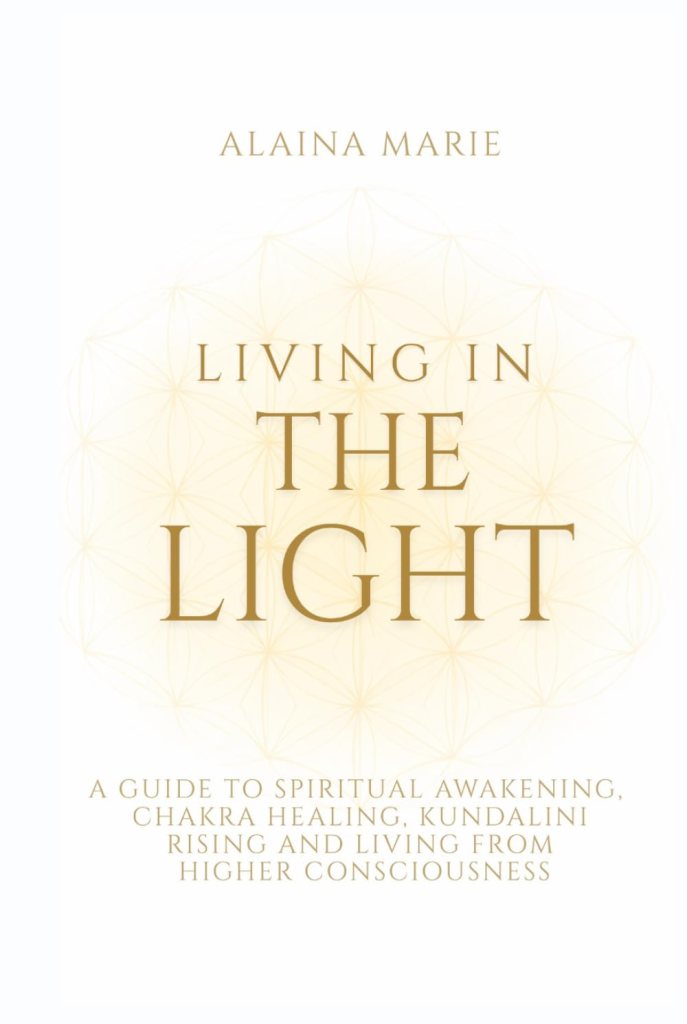
Book covers are shown for identification purposes and remain the property of their respective publishers and authors.
Note: This book review is for informational and educational purposes only. It is not medical advice and should not replace guidance from a qualified healthcare professional. Spiritual practices are not substitutes for medical treatment. Every brain injury and recovery journey is different.


Do you Love Love YOUR Brain?