
Living with a traumatic brain injury (TBI) can make everyday activities more challenging. Tasks that once felt simple may now require more concentration, time, and energy. Even answering emails, having conversations, reading, or completing household chores can sometimes leave you feeling mentally tired.
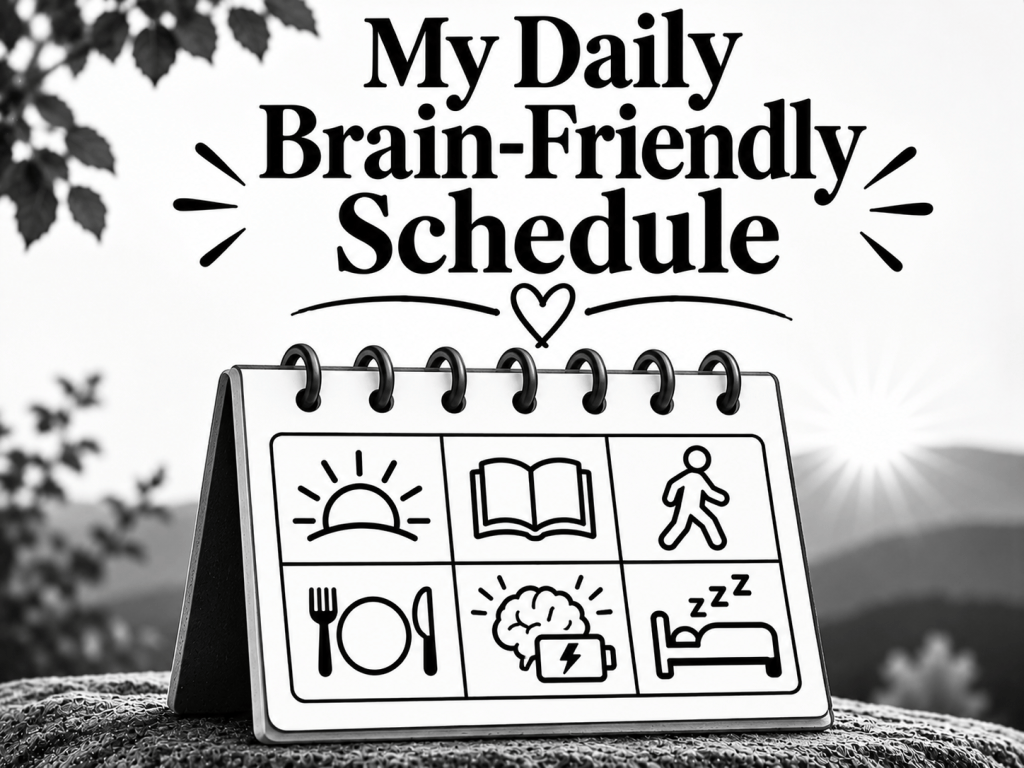
That’s why having a brain-friendly daily routine can be helpful. A simple schedule gives your day some structure while reminding you to slow down, focus on one thing at a time, and make room for rest.
The goal isn’t to fill every minute with activities. It’s to find a comfortable balance between doing what you need to do and giving your brain time to recharge. 💗
🌸 Example of a Brain-Friendly Morning Routine
Here is an example of a morning schedule you can use as a starting point. Adjust the times, activities, and rest periods based on your energy and needs.
| ⏰ Time | 💗 Activity |
|---|---|
| 9:00 | 📝 Write down today’s priorities |
| 9:00–9:30 | 🎯 Focus on one task |
| 9:30–9:40 | 😌 Quiet rest, no screens |
| 9:40–10:10 | 🐢 Complete an easier task |
| 10:10–10:25 | 🧘 Rest, hydrate, and relax |
| 10:25–10:55 | 💬 Emails or conversations |
| 10:55–11:10 | 💗 Rest and recharge |
Remember: This is only an example, not a schedule you must follow. You can shorten activities, add more breaks, or change the starting time to suit your needs.
📝 Start Your Day by Choosing Your Priorities
Before getting busy, take a few minutes to write down what you would like to accomplish.
Choose only the most important tasks. You don’t need to complete your entire to-do list in one day.
Writing things down can also reduce the pressure of trying to remember everything.
🎯 Focus on One Task at a Time
Multitasking can make it harder to concentrate and manage your energy.
Try completing one activity before moving on to another. Avoid switching between several tasks whenever possible.
If a task feels too difficult, break it into smaller steps. Even completing one small part is progress. 🌱
😌 Make Time for Quiet Breaks
Rest is an important part of a brain-friendly routine.
After concentrating on a task, give yourself a few minutes away from screens, noise, and other distractions. You can close your eyes, sit quietly, or simply relax.
Don’t wait until you feel completely exhausted before taking a break. Give yourself permission to rest throughout the day.
🐢 Adjust Your Activities to Your Energy
Not every task requires the same amount of effort.
Try scheduling activities that need more concentration when you usually have the most energy. Save simpler activities for later, when you may feel more tired.
Some days will be easier than others. It’s okay to adjust your plans.
💧 Remember the Basics: Hydrate and Recharge
During your day, remember to take care of your basic needs.
💧 Drink water regularly.
🍽️ Make time for meals and snacks.
😌 Take breaks between activities.
🌿 Find a quiet place when you need less stimulation.
💗 Ask for help when a task feels overwhelming.
Small reminders can help you build a routine that feels more manageable.
🔋 My Daily Brain Check-In
Before starting your day, pause and ask yourself these three questions:
🔋 When do I have the most energy?
🏡 Where can I rest quietly?
💗 What will I do to protect my brain today?
You can write down your answers and use them to guide your daily activities.
💗 Love Love Brain Thoughts
Living with a brain injury may mean learning a different way to manage your time and energy. You may not be able to do everything you used to do, and that’s okay.
Your routine doesn’t have to look like anyone else’s. Some days you may accomplish more, while other days you may need extra rest.
Be patient with yourself. Celebrate small accomplishments, listen to your needs, and remember that taking a break doesn’t mean you’re falling behind.
Rest is not giving up. Rest is part of healing.
Better Brain, Brighter Being. 🧠💕
💬 We’d Love to Hear From You
Do you follow a daily routine that helps you manage your brain energy?
What activities, reminders, or breaks make your day easier?
Share your tips and experiences in the comments. Your ideas may help someone else living with a brain injury feel supported and understood. 💗
📱 Follow and Support Love Love Brain
If this message speaks to you, please support Love Love Brain by following us on social media. 💗
Stay connected for more stories, reflections, helpful information, and supportive content about brain injury, recovery, resilience, and everyday life.
Click the buttons below to follow and support us on social media:
Note: Every brain injury is different. This content is for education and support, not medical advice.


Do you Love Love YOUR Brain?