
As a glass artist, I work with what most people throw away.
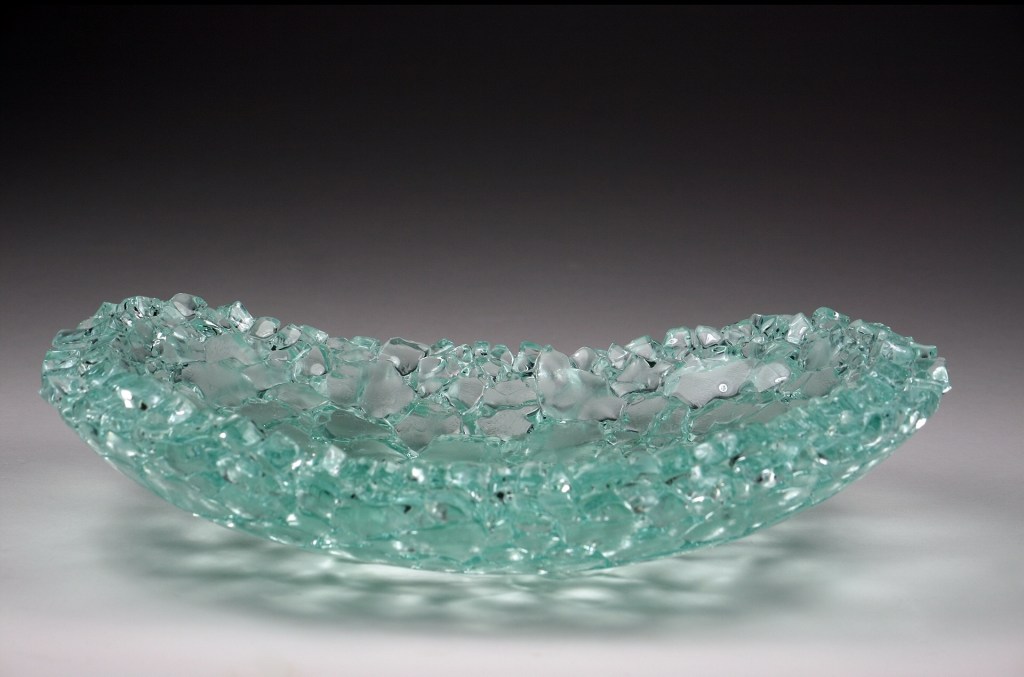
A discarded pane of tempered glass.
A material once valued, then cracked, then deemed useless.
I take that glass, and I break it further, intentionally.
I smash it, reshape it, and rebuild it into something entirely new.
A form that holds light differently.
A surface that reflects strength, texture, and quiet beauty.
And one day, as I stood looking at a finished piece, it occurred to me that this process feels deeply familiar.
What if our acquired brain injury is that pane of glass?
A sudden impact.
A shattering moment.
Life as we knew it was broken into fragments we never asked for.
Yet the glass is still there.
Every piece remains.
Nothing is actually lost.
What if, instead of seeing ourselves as broken, we allowed ourselves to be transformed?
Tempered glass is remarkable. It is stronger than ordinary glass. When it breaks, it does not dissolve into dust. It becomes something that can be reformed, fused, renewed. The very quality that once made it rigid becomes the reason it can be reborn.
A traumatic brain injury changes us. There is no pretending otherwise.
But what if change does not mean lesser?
What if it means different?
What if it means deeper?
I live with a TBI too. I know the pain, the grief, the exhaustion, and the frustration of learning how to think, feel, and move through the world again. I know the days when progress feels invisible and the nights when the old version of life feels impossibly far away.
But I also know this.
A brain that has been injured learns in new ways.
A nervous system that has been challenged becomes exquisitely sensitive.
A heart that has suffered often grows more compassionate, more present, more honest.
What if we could begin to notice the gifts alongside the losses?
The learning instead of the complaining.
The wisdom instead of the fear.
In my studio, every shard of glass matters. I do not discard the broken pieces. I study them. I listen to them. I place them carefully, knowing they will become part of a whole that never existed before.
Recovery can be like that, too.
Slow. Intentional. Nonlinear.
And unexpectedly beautiful.
This is not about denying pain or rushing healing. It is about allowing meaning to emerge. It is about choosing, when possible, to ask a gentler question.
What if I could use this for good?
What if our lived experience, our hard-won insight, our altered pace and perspective are not weaknesses but contributions? What if our art, whether made of glass, words, music, or simply the way we show up for others, carries more depth precisely because of what we have survived?
As we step into a new year, I hold this intention close to my heart.
May we find the light within what has been shattered.
May we honour what was, without being trapped by it.
May we share our art, in whatever form it takes, with courage and generosity.
Happy New Year.
May we all continue to rebuild, reshape, and reveal something even more beautiful than before.


Do you Love Love YOUR Brain?