
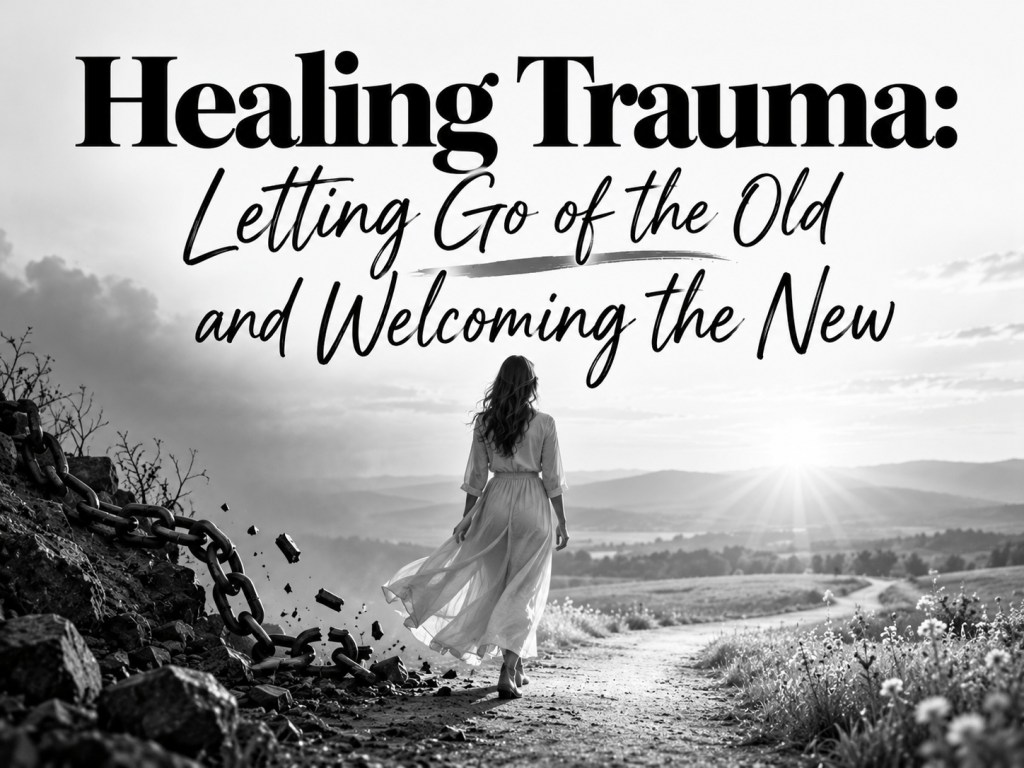
🌸 What if healing isn’t about becoming who we used to be, but learning to love who we are becoming?
Trauma can change how we think, feel, react, and experience the world.
But our brains and bodies also have the capacity to learn new patterns. This is where healing begins. 💗
🧠 1. How Trauma Affects Our Nervous System
When we experience fear, stress, or trauma, our nervous system activates survival responses:
🥊 Fight: Defend ourselves.
🏃 Flight: Escape danger.
🧊 Freeze: Become still or shut down.
🫶 Fawn: Try to please others to feel safe.
These are automatic protective responses, not personal weaknesses.
When danger passes, our nervous system can gradually return to a calmer state.
But sometimes, especially after overwhelming or repeated trauma, our bodies remain on high alert.
💔 2. When Trauma Remains Unresolved
Unresolved trauma can contribute to:
😣 Tight shoulders and jaw tension
🤕 Headaches and muscle pain
🦋 Stomach discomfort
😰 Persistent anxiety
😴 Sleep difficulties
🚨 Feeling constantly on guard
💭 Repetitive negative thoughts
These symptoms are real, although they can have many causes.
Researchers and trauma specialists, including Peter Levine, who developed Somatic Experiencing, and Dr. Bessel van der Kolk, author of The Body Keeps the Score, have explored how traumatic experiences affect both mind and body.
💡 Important lesson: Our nervous system may continue reacting to danger even when we are currently safe.
🛡️ 3. Our Brain Tries to Protect Us
Our brains constantly predict what might happen next.
After trauma, the brain may become especially sensitive to anything resembling a previous painful experience.
We might begin avoiding:
🚪 Certain places
👥 Certain people
💬 Difficult conversations
❤️ Emotional vulnerability
🌍 New experiences
Avoidance can bring temporary relief, but over time, it may make our world smaller.
What we call our comfort zone may sometimes be a protective boundary created by fear.
Healing means gently expanding that boundary, at a pace our nervous system can tolerate.
🌱 4. How Can We Begin Healing?
Here are five gentle strategies.
🫁 Breathe: Practice slow, comfortable breathing to help settle your nervous system.
🧘 Ground yourself: Feel your feet on the floor. Notice five things you can see around you.
💗 Practice self-compassion: Replace harsh self-judgment with kind, encouraging words.
🚶 Move gently: Walking, stretching, dancing, or other comfortable movements may help relieve stress.
🤝 Seek support: Trauma-informed therapy can help us process painful experiences and build healthier responses.
Healing does not require forcing ourselves to relive trauma or pushing through overwhelming feelings.
🌅 5. Five Morning Affirmations for a New Chapter
For the next 14 mornings, place your hand over your heart. 💕
Take a gentle breath and repeat:
🌷 1. I close the old chapter with gratitude.
🌱 2. I make room for what is new, and I welcome it with courage.
🦋 3. The old me brought me here. The new me will carry me forward.
💗 4. I don’t need everyone to understand who I am becoming.
📖 5. Today is page one, and I am writing it with LOVE.
These affirmations are a self-compassion practice, not a scientifically established 14-day trauma treatment.
🧠 6. Neuroplasticity: Our Opportunity to Grow
Neuroplasticity is the brain’s ability to adapt and reorganize through learning and experience.
Even after a traumatic brain injury, some learning and adaptation may remain possible, although recovery varies from person to person.
Every time we practice a healthier response, we give ourselves another opportunity to learn.
🌸 Instead of judgment, practice compassion.
🌸 Instead of avoidance, try one manageable step.
🌸 Instead of fighting every emotion, practice acknowledging it.
🌸 Instead of comparing yourself to your old self, celebrate today’s progress.
💕 My LOVE LOVE BRAIN Message
Living with a traumatic brain injury and PTSD has taught me that healing isn’t always about returning to the person I was before.
Sometimes, it means learning to accept and love the person I am today.
I cannot always control my first thought, emotional reaction, or nervous system response.
But I can practice how I respond next.
Some days, that feels impossible. Other days, I notice a little more patience, courage, and compassion.
And those little moments matter. 🌷
I don’t have to hate the old me to welcome the new me.
My past deserves compassion.
My present deserves patience.
And my future deserves hope.
💗 LOVE LOVE is my intention.
🧠 Neuroplasticity is my opportunity.
🦋 Self-compassion is my daily practice.
🌈 And healing is my journey, one loving thought at a time.
📱 Follow and Support Love Love Brain
If this message speaks to you, please support Love Love Brain by following us on social media. 💗
Stay connected for more stories, reflections, helpful information, and supportive content about brain injury, recovery, resilience, and everyday life.
Click the buttons below to follow and support us on social media:
Note: Every brain injury is different. This content is for education and support, not medical advice.


Do you Love Love YOUR Brain?