
When new symptoms appear, it’s natural to look for an explanation.
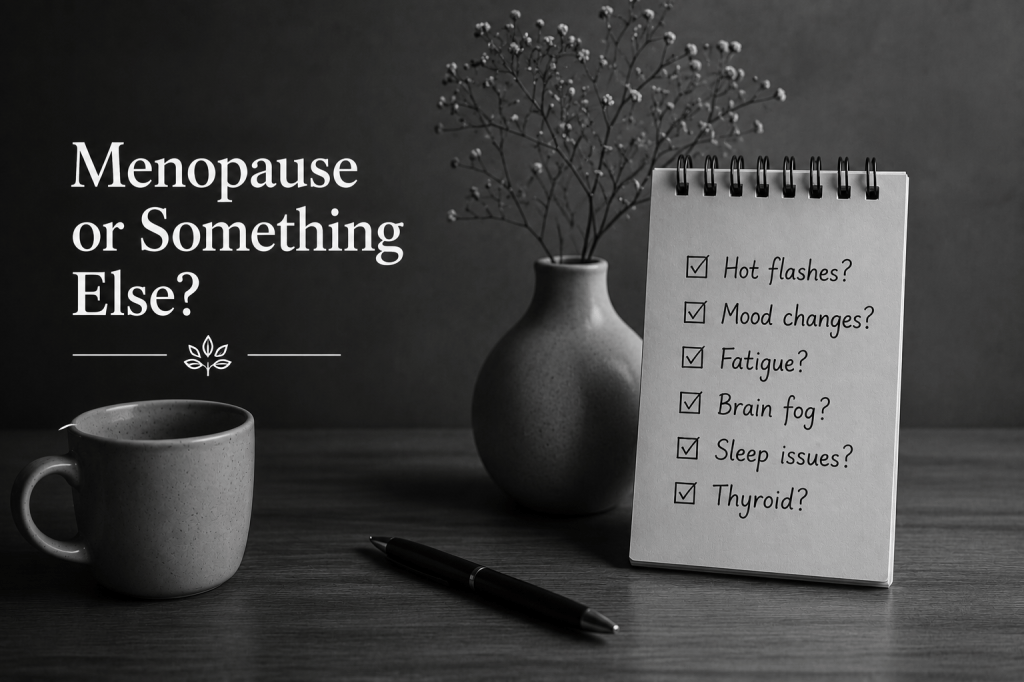
For many women, menopause is often the first thing people think of. But after a brain injury, symptoms like fatigue, memory problems, brain fog, mood changes, and sleep disturbances can have many possible causes.
In Part 9 of my journey, I share why it’s important not to assume every symptom is menopause and why careful evaluation matters.
🌸 Similar Symptoms, Different Causes
Brain injury and menopause can share many of the same symptoms.
That overlap can make it difficult to determine what’s really happening without considering your full medical history and speaking with qualified healthcare professionals.
Every person’s experience is unique, and there isn’t always one simple explanation.
🩺 Looking at the Whole Picture
Our bodies are complex.
Changes in hormones, medications, stress, sleep, and brain injury recovery can all influence how we feel.
Rather than jumping to conclusions, it’s important to ask questions, gather information, and work with healthcare providers who listen to your concerns.
💙 Trust Your Experience
You know your body better than anyone else.
If something doesn’t feel right, don’t be afraid to speak up, ask for clarification, or seek another opinion when appropriate.
Being heard is an important part of receiving the care you deserve.
⚖️ My Experience Is Personal
This video shares my personal experience navigating symptoms during brain injury recovery.
It is not medical advice and should not replace guidance from your physician or healthcare provider.
Every person is different, and only a qualified healthcare professional can evaluate your individual situation.
🎥 Watch the Video
In this video, Adeline discusses how symptoms associated with brain injury recovery can sometimes be mistaken for menopause. She encourages viewers to consider the full picture, ask questions, and advocate for themselves when seeking answers about their health.
💬 We’d Love to Hear From You
Have you ever had symptoms that were misunderstood or attributed to the wrong cause?
What helped you find the answers you needed?
Share your story or words of encouragement in the comments. Your experience may help someone else feel seen and understood.
🌻 About Love Love Brain
Love Love Brain is dedicated to supporting brain injury survivors, caregivers, and families through education, personal stories, expert interviews, and practical recovery tools. Our mission is to provide hope, build community, and remind every survivor that healing is a journey worth sharing.


Do you Love Love YOUR Brain?