
Anger can be one of the most misunderstood experiences after brain injury.
Sometimes it appears suddenly.
Sometimes frustration builds quietly until it becomes overwhelming.
Sometimes a small problem feels much bigger than it should.
And afterward, there may be guilt.
“Why did I react like that?”
“What happened to me?”
“Why can’t I control this?”
Anger Management After Brain Injury by Leon Edward specifically addresses anger following traumatic brain injury, mild TBI, and concussion. The book covers anger physiology, triggers, warning signs, strategies for preventing outbursts, management techniques, therapy, relationships, and the role of families, caregivers, and healthcare professionals.
💔 Anger After Brain Injury Can Be Complicated
Anger isn’t always simply about being angry.
It can happen alongside:
😣 Frustration
😴 Fatigue
🧠 Cognitive overload
💭 Emotional overwhelm
😔 Grief
😰 Anxiety
Brain injury research has identified emotion regulation difficulties as one factor associated with anger after acquired brain injury.
Understanding this doesn’t mean excusing harmful behavior.
It means looking for the factors that may be contributing to it.
🌪️ Learn Your Triggers
Anger can have patterns.
Maybe it happens when you’re tired.
Maybe certain environments overwhelm you.
Maybe noise becomes too much.
Maybe feeling misunderstood triggers frustration.
Maybe too many demands at once push you beyond your limit.
Learning your patterns can give you an opportunity to respond earlier.
🛑 Notice the Warning Signs
Before anger becomes overwhelming, your body may give you clues.
Your muscles may tense.
Your thoughts may speed up.
Your voice may change.
Your heart may race.
You may feel the need to escape.
These signals can become an early warning system.
🌱 Create Space Before the Explosion
Sometimes the most helpful thing is creating distance from the situation.
Take a break.
Move somewhere quieter.
Breathe.
Ask for time.
Tell someone you’re becoming overwhelmed.
There is strength in recognizing:
“I need to step away before this gets worse.”
🤝 Caregivers Are Part of the Conversation
Anger can affect the whole family.
Caregivers may not always know what is happening.
They may feel hurt or frightened.
They may need support too.
Open communication can help everyone understand what triggers difficult moments and what strategies may help.
❤️ Anger Doesn’t Make You a Bad Person
Having anger doesn’t make you a bad person.
But learning how to manage anger matters.
Your emotions are real.
Your behavior still matters.
You can acknowledge both.
“I’m angry.”
and
“I can choose what I do with that anger.”
💗 Love Love Brain Thoughts
Sometimes anger is a signal.
Maybe your brain is overwhelmed.
Maybe your body needs rest.
Maybe you’re in pain.
Maybe you feel unheard.
Maybe something has become too much.
Learning to recognize those signals doesn’t mean anger disappears.
It gives you an opportunity to understand what is happening before it takes over.
You are not your anger.
You are a person learning how to understand yourself.
💬 We’d Love to Hear From You
Has anger changed for you after brain injury?
Have you learned to recognize your warning signs?
What helps you calm down when emotions become overwhelming?
Share your experience in the comments.
📖 Where to Find the Book
Anger Management After Brain Injury is available in audiobook format and is described as a resource for TBI, mTBI, and concussion survivors, families, caregivers, and healthcare professionals.
🛒 Get the Book on Amazon
Love Love Brain may earn a small commission from qualifying purchases made through this link. This does not affect the price you pay.
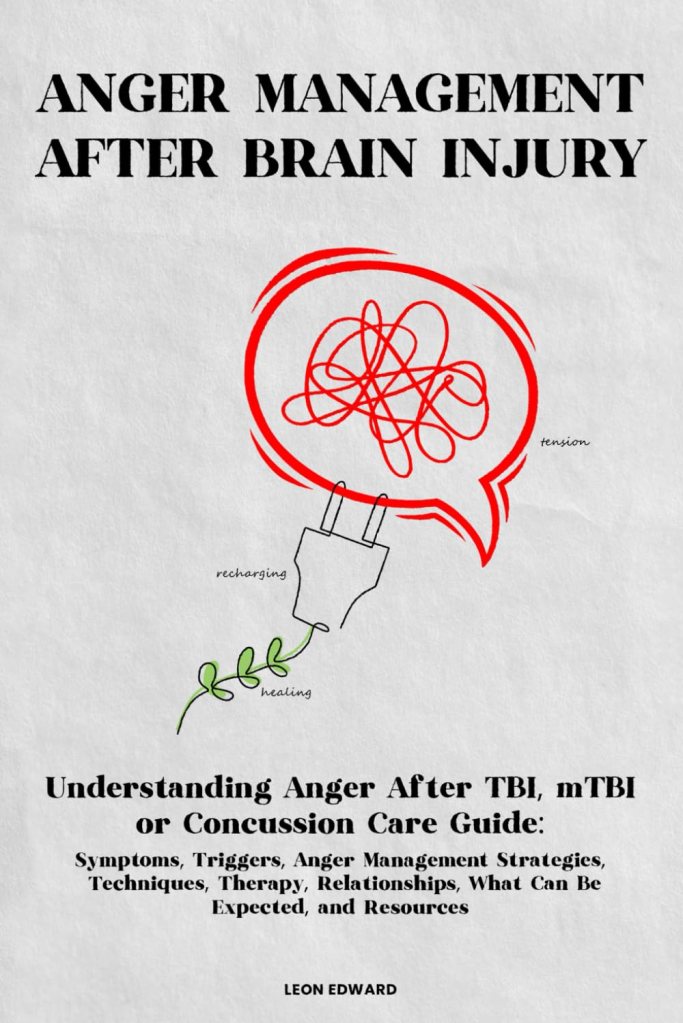
Book cover belongs to the publisher and is displayed for identification and review purposes.
Note: This book review is for educational and reflective purposes only and is not medical advice.


Do you Love Love YOUR Brain?