
What if changing the way we respond to our thoughts could change the way we experience difficult moments?
That is one of the central ideas behind Cognitive Behavioral Therapy, commonly known as CBT.
Cognitive Behavioral Therapy by Olivia Telford introduces readers to CBT concepts and practical exercises involving thoughts, feelings, behaviors, self-confidence, communication, and mental wellbeing. The book explores how thoughts, emotions, and actions influence one another and encourages readers to examine unhelpful thought patterns.
For someone living with a brain injury, these ideas can offer another way to think about the emotional challenges that can accompany recovery.
🧠 Thoughts Can Feel Like Facts
Sometimes a thought arrives so quickly that we don’t question it.
“I can’t do this.”
“I’m failing.”
“Nobody understands me.”
“I’ll never get better.”
The thought feels true.
But a thought is not automatically a fact.
CBT encourages us to examine our thoughts rather than automatically accepting every thought as reality.
🐜 Automatic Negative Thoughts
After brain injury, self-critical thoughts can become especially painful.
“I used to be able to do this.”
“Why can’t I remember?”
“I’m a burden.”
“I’m never going to be normal again.”
Instead of accepting these thoughts immediately, we can pause.
Ask questions.
Look for evidence.
Consider another perspective.
🌱 Changing the Question
Instead of:
“What’s wrong with me?”
Try:
“What am I struggling with right now?”
Instead of:
“Why can’t I do this?”
Try:
“What support would make this easier?”
The question changes the conversation we have with ourselves.
❤️ Self-Compassion Matters
Recovery is difficult enough without becoming our own harshest critic.
We can acknowledge that something is hard without turning that difficulty into an identity.
“This is hard.”
is different from:
“I am incapable.”
“I need help.”
is different from:
“I am a burden.”
Those differences matter.
🧩 Small Changes Can Add Up
CBT often emphasizes practical exercises and changes in thinking and behavior. Telford’s book specifically includes exercises intended to help readers examine thoughts, behaviors, relationships, and emotional challenges.
For brain injury survivors, small steps may be especially important.
One thought.
One response.
One new habit.
One difficult situation handled differently.
🌿 You Don’t Have to Believe Every Thought
Our brains produce thoughts constantly.
Some are helpful.
Some are fearful.
Some are memories.
Some are assumptions.
Some are simply noise.
We don’t have to treat every thought as an instruction.
We can notice it.
Pause.
Question it.
Then decide how we want to respond.
💗 Love Love Brain Thoughts
Your thoughts may change throughout recovery.
Some days may feel hopeful.
Other days may feel frightening.
That doesn’t mean you’re doing recovery wrong.
You can learn to notice the thoughts that make things harder.
You can challenge them.
You can replace harshness with compassion.
And you can give yourself permission to be a work in progress.
You don’t have to think perfectly to heal.
You simply have to keep learning how to respond to yourself with kindness.
💬 We’d Love to Hear From You
What negative thought do you hear most often?
What helps you challenge it?
What would you say to a friend who was thinking the same thing?
Share your experience in the comments.
📖 Where to Find the Book
Olivia Telford’s Cognitive Behavioral Therapy was published by Pristine Publishing in 2020. The listed edition is 166 pages and includes exercises related to thought patterns, emotions, communication, and personal change.
🛒 Get the Book on Amazon
Love Love Brain may earn a small commission from qualifying purchases made through this link. This does not affect the price you pay.
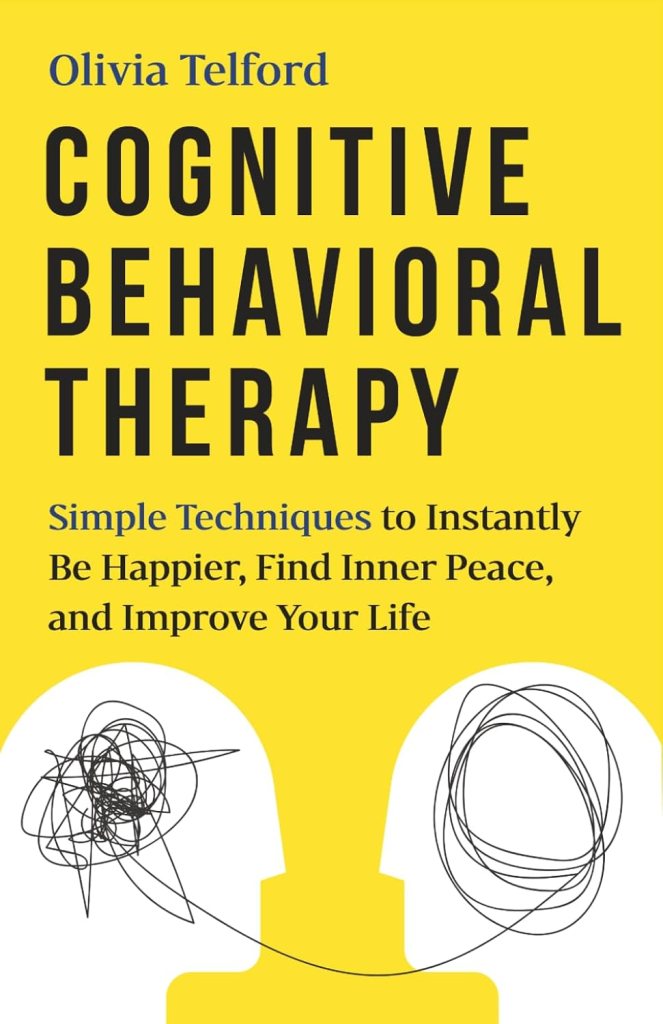
Book cover belongs to the publisher and is displayed for identification and review purposes.
Note: This book review is for educational and reflective purposes only and is not medical advice.


Do you Love Love YOUR Brain?