
What if the health of your brain is connected to something you may not think about very often?
Your gut.
For years, conversations about brain health have often focused on the brain itself. But Brain Maker: The Power of Gut Microbes to Heal and Protect Your Brain for Life by Dr. David Perlmutter explores the relationship between the gut microbiome and the brain and why the trillions of microorganisms living in our digestive system may matter to overall health.
The book introduces readers to the gut-brain connection and explores how factors such as diet, lifestyle, inflammation, and the health of the microbiome may influence brain health.
For people living with brain injury, the book offers another perspective to consider when thinking about whole-body health and recovery.
🧠 Your Brain Doesn’t Work Alone
The brain is connected to the rest of the body in countless ways.
One of the relationships explored in Brain Maker is the connection between the digestive system and the brain.
The gut contains trillions of microorganisms that interact with our bodies in complex ways.
This community is known as the microbiome.
Dr. Perlmutter explores the idea that the health and balance of this microbial community may have important implications for the brain.
This can change the way we think about brain health.
Instead of looking at the brain as completely separate from the rest of the body, we can begin to think about health as an interconnected system.
🌱 The Gut-Brain Connection
The central theme of Brain Maker is the relationship between the gut and the brain.
The communication between these systems is often referred to as the gut-brain axis.
This connection involves multiple pathways, including the nervous system, immune system, hormones, and metabolic processes.
For readers interested in brain health, this can be a fascinating area to explore.
It also raises an important question:
Could taking care of the gut be one part of taking care of the brain?
🦠 Meet Your Microbiome
Our digestive system isn’t simply a place where food is processed.
It is home to a vast community of microorganisms.
These microorganisms interact with one another and with our bodies.
The book explores how factors such as diet, medications, stress, and lifestyle can influence the microbiome.
This is particularly interesting because the microbiome isn’t necessarily static.
It can change over time.
What we eat and how we live can influence the environment in which these microorganisms exist.
🍎 Food Can Influence the Gut
One of the major themes in Brain Maker is nutrition.
The foods we eat can affect the environment of the gut and the microorganisms that live there.
The book encourages readers to think beyond individual nutrients and consider the overall relationship between food, digestion, inflammation, and the microbiome.
For brain injury survivors, nutrition can already be an important part of maintaining energy and supporting overall health.
This book adds another perspective by exploring how nutrition may also relate to the gut-brain connection.
🔥 Inflammation and Brain Health
Inflammation is another major topic explored throughout the book.
The immune system and the gut microbiome are closely connected, and the book examines how changes in the gut environment may influence inflammatory processes throughout the body.
Inflammation is a complex subject, and brain injury can involve many different biological processes.
The book encourages readers to think about the body as an interconnected system rather than viewing individual symptoms in isolation.
💊 Medications Can Affect the Microbiome
Another important topic is the relationship between medications and gut bacteria.
Some medications can alter the microbiome.
This doesn’t mean that medications are inherently harmful or that someone should stop taking prescribed medication.
Rather, it highlights the importance of understanding that medications, nutrition, and the microbiome can interact in complex ways.
Never stop or change prescribed medication without speaking with your healthcare professional.
🧠 What Does This Mean for Brain Injury?
Brain Maker isn’t specifically a brain injury recovery manual.
It doesn’t provide a treatment plan for TBI or stroke.
But its discussion of the gut-brain connection can encourage survivors to think about whole-body health.
Recovery can involve many different areas:
🧠 Brain health
🍎 Nutrition
🦠 Gut health
😴 Sleep
🚶 Movement
💧 Hydration
❤️ Emotional wellbeing
🤝 Social connection
Looking at these areas together can provide a broader picture of health.
🌿 Small Choices Can Add Up
One of the most approachable ideas in the book is that everyday choices can influence our health.
What we eat.
How active we are.
How we manage stress.
How well we sleep.
How we care for our bodies.
None of these things is a magic solution.
But they can become part of a larger approach to wellness.
For someone recovering from brain injury, that may mean focusing less on doing everything perfectly and more on making small, sustainable choices.
❤️ Whole-Body Health Matters
Brain injury can make us focus intensely on the brain.
Understandably.
But the brain is part of the body.
Energy, digestion, sleep, movement, nutrition, stress, and emotional health can all affect how we experience daily life.
Brain Maker encourages readers to consider this bigger picture.
Taking care of your brain can also mean taking care of the body that supports it.
💭 Be Curious, Not Perfect
Nutrition and gut health can sometimes become overwhelming.
There are endless diets.
Conflicting opinions.
New supplements.
New health trends.
It’s easy to feel like you’re doing something wrong.
At Love Love Brain, we believe it can be more helpful to stay curious than to chase perfection.
Ask questions.
Learn about your own body.
Work with qualified healthcare professionals.
Make changes that are appropriate for you.
And remember that health is personal.
🌻 Hope Through Understanding
Learning more about the body can give us another way to understand our health.
The more we learn about the gut-brain connection, the more we can appreciate how complex the human body really is.
There is still much to learn.
Research into the microbiome and its relationship with brain health continues to develop.
That means books like Brain Maker can be a starting point for curiosity and conversation rather than a final answer.
💗 Love Love Brain Thoughts
Brain Maker reminds us that brain health doesn’t exist in isolation.
Our brains are connected to our bodies.
Our bodies are connected to our environment.
And our daily habits can influence many systems at once.
For someone living with a brain injury, this broader perspective can be meaningful.
Recovery isn’t always about finding one perfect answer.
Sometimes it means looking at the whole picture.
What are you eating?
How are you sleeping?
Are you moving your body in ways that are appropriate for you?
Are you managing stress?
Are you staying connected?
Are you giving your body the nourishment and care it needs?
You don’t have to change everything overnight.
Start small.
Listen to your body.
Ask questions.
And give yourself time.
Your brain is part of you.
Your gut is part of you.
Your whole body deserves care.
💬 We’d Love to Hear From You
Have you ever explored the connection between gut health and brain health?
Have you noticed that certain foods or lifestyle habits affect how you feel?
What small change has helped you take better care of your overall health?
Share your experience in the comments.
Your story may be exactly what another survivor needs to hear today.
📖 Where to Find the Book
If you’d like to learn more about Brain Maker: The Power of Gut Microbes to Heal and Protect Your Brain for Life, you can find it through major book retailers.
🛒 Get the Book on Amazon
Love Love Brain may earn a small commission from qualifying purchases made through this link. This does not affect the price you pay.
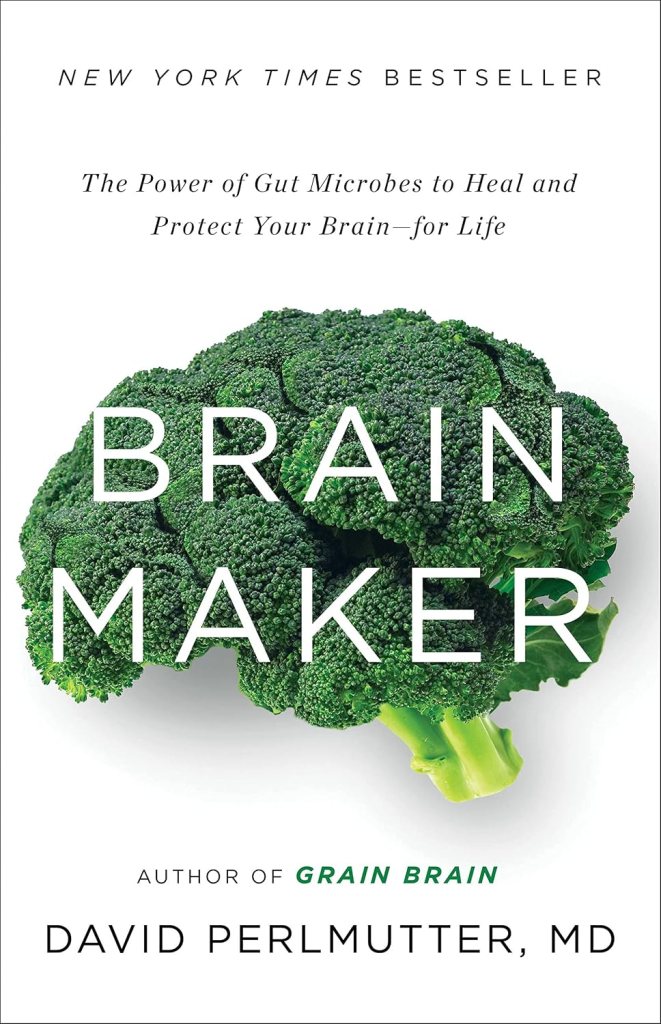
Book cover belongs to the publisher and is displayed for identification and review purposes.
Note: This book review is for educational purposes only. Information discussed in the book should not be considered medical advice or a substitute for individualized care from a qualified healthcare professional.


Do you Love Love YOUR Brain?