
One of the most difficult things about a brain injury can be trying to understand what has happened to the person you once were.
You may still look like yourself.
You may still know who you are.
But suddenly, things that once felt automatic can become confusing, exhausting, or impossible.
Work can change.
Relationships can change.
Independence can change.
Even simple everyday tasks can feel completely different.
Over My Head: A Doctor’s Own Story of Head Injury from the Inside Looking Out tells this experience from a particularly powerful perspective.
The author, Dr. Claudia L. Osborn, was a physician and clinical professor of medicine before a bicycle accident on July 11, 1988, caused a severe traumatic brain injury. Her memoir follows the long process of adjustment, rehabilitation, and rebuilding that followed.
What makes her story especially meaningful is that she understood medicine before she became a patient.
She knew the medical world.
Then she had to learn what it meant to live inside an injured brain.
📖 When the Doctor Becomes the Patient
Before her injury, Dr. Osborn was practicing and teaching medicine.
After the accident, her life changed dramatically.
She struggled with cognitive abilities that had once been essential to her profession. Even everyday activities such as shopping for groceries and sorting the mail could become difficult. She was also separated from the career and intellectual community that had been such an important part of her identity.
This part of her story can be difficult to imagine unless you’ve experienced brain injury yourself.
A person can know exactly how something is supposed to work and still be unable to make their brain cooperate.
That disconnect can be incredibly frustrating.
It can also be frightening.
🧠 Seeing Brain Injury From the Inside
The title Over My Head captures something important.
The book isn’t simply explaining brain injury from a medical perspective.
It allows readers to experience the world from inside Dr. Osborn’s injured brain.
Her story moves through confusion, dysfunction, frustration, alienation, rehabilitation, and eventually rebuilding. The book also includes humor and the “missteps” that can happen while learning how to navigate life again.
This inside perspective can help readers understand something that is often difficult to explain:
Brain injury is not always visible from the outside.
💔 Losing More Than a Career
When someone loses the ability to work, the loss can be much bigger than a paycheck.
Work can provide:
💼 Identity
🤝 Community
🧠 Intellectual stimulation
🌱 Purpose
❤️ A sense of contribution
For Dr. Osborn, the injury took her away from a profession she loved.
That meant she wasn’t simply trying to recover abilities.
She was also trying to understand who she was without the career that had defined such an important part of her life.
Many survivors can relate to this experience.
A brain injury may change your job, hobbies, independence, social life, or responsibilities.
And when those things change, you may find yourself asking:
“Who am I now?”
🌱 The Long Road Back
Recovery didn’t happen quickly.
Dr. Osborn underwent extensive rehabilitation through a physical medicine and rehabilitation team and participated in a brain injury treatment program at New York University Medical Center.
Her story shows that rehabilitation can involve much more than relearning physical skills.
It can mean learning how to manage everyday life.
How to communicate.
How to compensate for memory problems.
How to understand new limitations.
How to rebuild confidence.
And how to create a life that works with the brain you have now.
💭 When Simple Things Aren’t Simple Anymore
One of the most powerful aspects of the book is the attention given to ordinary activities.
Shopping for groceries.
Sorting the mail.
Following information.
Working.
Reading.
Remembering.
Things that once required almost no conscious effort can suddenly become overwhelming.
For survivors, this can be one of the most frustrating parts of brain injury.
Someone else may look at a simple task and wonder:
“Why can’t you just do it?”
But the survivor knows how much effort that task can actually require.
Over My Head gives readers a chance to understand that experience from the inside.
❤️ The Importance of Family and Friends
Brain injury doesn’t affect only the person who was injured.
It affects the people around them too.
Families and friends may suddenly find themselves supporting someone who has changed in ways they don’t fully understand.
They may have to adjust expectations.
They may have to become more patient.
They may have to learn new ways to communicate.
Dr. Osborn’s story also highlights the important role that family and friends played throughout her recovery. One review describes the book as a story not only of disability and rehabilitation, but also of the bonds of friendship and the emotional and practical lengths loved ones can go to when supporting someone with a disability.
🌻 Recovery Doesn’t Mean Becoming Exactly Who You Were
One of the deepest themes in Over My Head is identity.
Before her injury, Dr. Osborn had a clear sense of who she was.
She was a doctor.
A teacher.
A professional.
A friend.
A colleague.
After the injury, many of those roles became uncertain.
Recovery therefore became more than restoring abilities.
It became an opportunity to rebuild a life.
The goal wasn’t simply to erase what had happened.
It was to find a way forward.
💪 Courage Can Look Different After Brain Injury
Courage isn’t always dramatic.
Sometimes courage looks like getting out of bed.
Trying a task again.
Going to rehabilitation.
Asking for help.
Accepting that something needs to be done differently.
Trying something new.
Returning to a role you once thought you had lost forever.
Dr. Osborn’s journey eventually led her back to teaching and research responsibilities. Her story demonstrates that a person can experience profound changes and still find meaningful ways to contribute.
💛 There Can Still Be Humor
Brain injury stories can understandably focus on loss.
But Over My Head also contains humor.
That matters.
A difficult life experience doesn’t mean every moment has to be heavy.
Sometimes we laugh at the mistakes we make.
Sometimes humor helps us cope.
Sometimes being able to laugh again is part of discovering that life still contains joy.
The book’s humor helps make the story feel human rather than simply clinical.
🫶 A Story That Can Help Others Feel Less Alone
One of the most meaningful things a survivor can hear is:
“Someone else understands.”
Not every brain injury is the same.
Not every recovery looks the same.
But there can be comfort in recognizing pieces of your own experience in someone else’s story.
Readers who have experienced TBI may recognize the confusion.
The frustration.
The loss of independence.
The struggle to return to work.
The changes in relationships.
The search for a new identity.
And the hope that life can still become meaningful.
🌄 Rebuilding a Life
Dr. Osborn’s story ultimately moves from confusion and dysfunction toward rebuilding.
That doesn’t mean everything simply returned to the way it was.
Instead, she learned to navigate a changed world and eventually returned to meaningful professional work.
That distinction is important.
Sometimes recovery isn’t about going backward.
Sometimes it’s about finding a new way forward.
💗 Love Love Brain Thoughts
Over My Head gives words to an experience that many brain injury survivors struggle to explain.
You can still be yourself while becoming someone new.
A brain injury may change how you work.
It may change how you communicate.
It may change your relationships.
It may change your independence.
It may even change the dreams you once had.
But change does not mean that your life has lost its value.
You can grieve what you’ve lost.
You can miss who you were.
And you can still build something meaningful from where you are now.
Your recovery may not look like someone else’s.
Your timeline may not look like someone else’s.
Your life may not look the way you imagined.
But there can still be purpose.
There can still be connection.
There can still be laughter.
There can still be hope.
You are more than your injury.
And your story is not over.
💬 We’d Love to Hear From You
Have you ever felt like a brain injury changed your sense of identity?
Did you have to learn how to do everyday things differently?
What helped you begin rebuilding your life?
Share your experience in the comments.
Your story may be exactly what another survivor needs to hear today.
📖 Where to Find the Book
If you’d like to learn more about Over My Head: A Doctor’s Own Story of Head Injury from the Inside Looking Out, you can find information about the book through Dr. Claudia L. Osborn’s website and various book retailers.
🛒 Get the Book on Amazon
Love Love Brain may earn a small commission from qualifying purchases made through this link. This does not affect the price you pay.
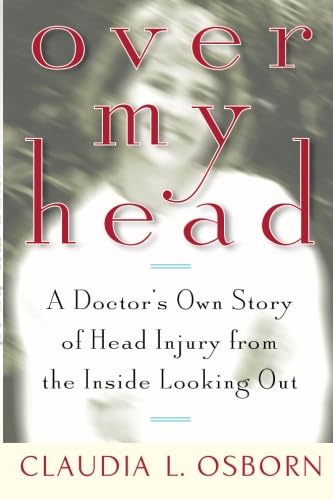
Book cover belongs to the publisher and is displayed for identification and review purposes.


Do you Love Love YOUR Brain?