
A brain injury doesn’t always leave a visible mark.
You can look fine.
You can speak normally.
You can walk into a room.
And yet, inside your brain, something may feel completely different.
For Clark Elliott, a seemingly ordinary accident led to years of debilitating symptoms that doctors struggled to explain. His experience became a long search for answers and, eventually, an exploration of emerging approaches to brain rehabilitation.
The Ghost in My Brain tells his personal story while also exploring what his experience taught him about the brain’s ability to adapt and recover.
📖 When Everything Suddenly Felt Different
Clark Elliott was an advertising professor living in Chicago when a bicycle accident changed his life.
After the accident, he began experiencing symptoms that affected nearly every part of his daily life.
His vision became distorted.
He struggled with balance.
He experienced dizziness and disorientation.
Thinking became difficult.
Everyday activities that had once been simple became exhausting.
Yet the severity of what he was experiencing wasn’t always obvious to the people around him.
That is one of the realities of brain injury.
The person may look fine while their brain is struggling.
🧠 Living With an Invisible Injury
One of the most powerful parts of Clark’s story is the disconnect between how he looked and how he felt.
From the outside, he could appear relatively normal.
Inside, however, his brain was struggling to process the world around him.
He describes a life where movement, vision, balance, concentration, and ordinary sensory experiences could become overwhelming.
For someone living with TBI, this can feel painfully familiar.
You may hear:
“But you look fine.”
“You don’t seem injured.”
“Maybe you’re just stressed.”
But invisible symptoms are still symptoms.
💔 When Doctors Don’t Have the Answers
Clark spent years searching for an explanation.
He visited doctors and specialists.
He tried different treatments.
He looked for anything that could explain why he felt so different after his injury.
The uncertainty became part of the struggle.
Not knowing what was happening can be frightening.
Especially when you know that something is wrong but cannot easily explain it to someone else.
His experience highlights an important reality:
Finding answers after brain injury can sometimes take time.
💭 The World Can Become Overwhelming
Imagine walking through a grocery store and suddenly finding the lights, sounds, movement, and visual information overwhelming.
Imagine trying to read when the words don’t seem to behave normally.
Imagine being surrounded by ordinary movement while your brain struggles to process what your eyes are seeing.
For Clark, these kinds of experiences became part of everyday life.
The book gives readers a glimpse into how ordinary environments can become extraordinarily difficult after a brain injury.
🌱 Searching for Another Way Forward
After years of struggling, Clark eventually encountered Dr. Theodore Carrick, a neurologist and chiropractor who used a different approach to treating his symptoms.
The treatment focused on retraining the brain through sensory and visual exercises.
Clark began working through exercises designed to help his brain process information differently.
The experience became a turning point in his recovery.
His story also became part of a larger discussion about neuroplasticity, or the brain’s ability to change and adapt.
🧠 The Brain Can Adapt
One of the central ideas explored in The Ghost in My Brain is neuroplasticity.
The brain is not necessarily a fixed system.
It can change in response to experience, learning, and rehabilitation.
For brain injury survivors, this idea can offer hope.
It doesn’t mean that every injury can be completely reversed.
It doesn’t mean that every treatment will work for every person.
But it does remind us that the brain has an extraordinary capacity to adapt.
💡 Recovery Can Require Thinking Differently
Clark’s experience challenged some of his assumptions about what recovery should look like.
Sometimes the answer isn’t simply pushing harder.
Sometimes it means understanding how the brain is processing information and finding new ways to work with it.
Recovery may involve:
🧠 Learning new strategies
👀 Retraining visual processing
🔄 Repeating new patterns
⏸️ Respecting the brain’s limits
🌱 Remaining open to different approaches
❤️ Hope Without Promising a Cure
One thing we appreciate about Clark’s story is that it doesn’t simply present brain injury recovery as easy.
His journey involved years of symptoms, uncertainty, frustration, and searching.
His experience should not be interpreted as a guarantee that a particular treatment will work for everyone.
Every brain injury is different.
Every recovery is different.
What worked for one person may not work for another.
But personal stories can still give us something valuable:
Hope.
🤝 The Importance of Being Heard
When someone has an invisible injury, being believed can make an enormous difference.
Clark’s story reminds us how important it is to listen when someone says:
“Something isn’t right.”
A survivor may not have the perfect words to describe what their brain is experiencing.
They may not have an obvious physical injury.
But their experience is still real.
🌻 Recovery Can Change the Way You See Your Brain
Brain injury can make us focus on everything that has been lost.
What we can’t do.
What takes longer.
What feels different.
What we wish we could go back to.
But understanding the brain’s capacity to adapt can create another perspective.
Instead of asking only:
“What did I lose?”
we can also ask:
“What can I learn about my brain now?”
“What strategies might help me?”
“What is still possible?”
💗 Love Love Brain Thoughts
The Ghost in My Brain gives readers a powerful look at the hidden reality of concussion and brain injury.
Clark Elliott’s experience reminds us that an injury doesn’t have to be visible to be life-changing.
Sometimes the hardest part is explaining what other people cannot see.
Sometimes recovery means years of searching for answers.
Sometimes progress comes through an unexpected path.
And sometimes we have to learn to see our brains differently.
For survivors who feel misunderstood, this book can offer an important reminder:
You are not imagining the fact that something has changed.
Your experience matters.
Your questions matter.
And your recovery deserves patience.
At Love Love Brain, we believe that recovery is not about giving up on who you were.
It is about learning who you are now and discovering what may still be possible.
💬 We’d Love to Hear From You
Have you ever experienced symptoms that other people couldn’t see?
Did you struggle to find answers after your brain injury?
What helped you understand your brain better?
Share your experience in the comments.
Your story may help another survivor feel less alone.
📖 Where to Find the Book
If you’d like to learn more about The Ghost in My Brain or purchase a copy, you can find it through Amazon.
🛒 Get the Book on Amazon
Love Love Brain may earn a small commission from qualifying purchases made through this link. This does not affect the price you pay.
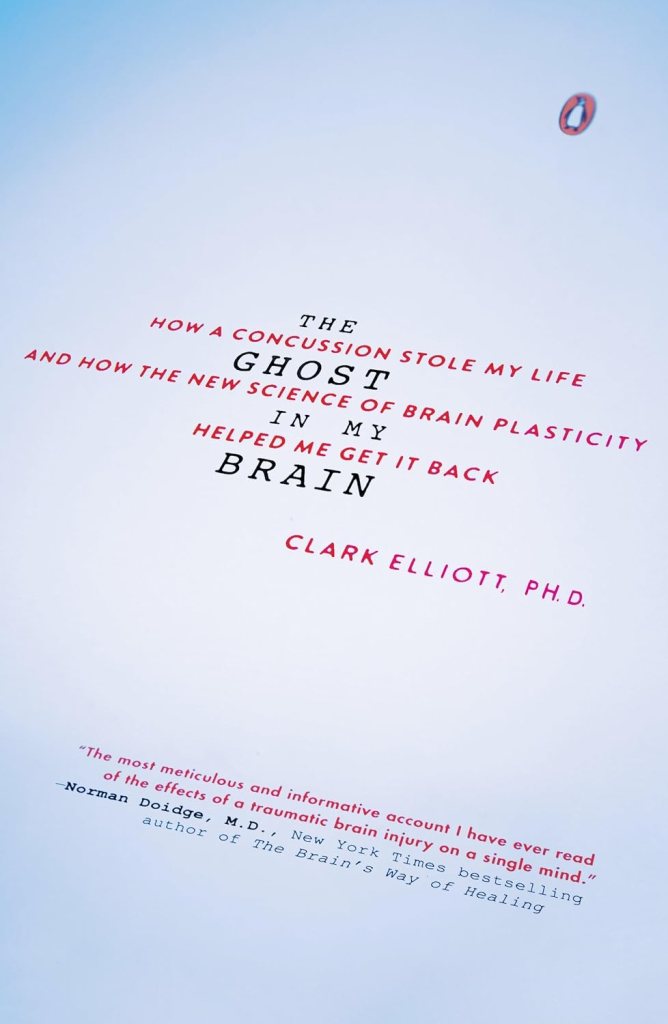
Book cover belongs to the publisher and is displayed for identification and review purposes.


Do you Love Love YOUR Brain?