
Stroke recovery can be a long and sometimes uncertain journey.
After the initial emergency, hospital stay, and rehabilitation, many survivors are left wondering:
What happens now?
How can I continue improving?
How do I know whether I’m making progress?
What can I do at home?
How can I stay motivated when recovery feels slow?
Stronger After Stroke, Third Edition: Your Roadmap to Recovery by Peter G. Levine offers a practical look at these questions. The book focuses on rehabilitation, neuroplasticity, exercise, goal setting, motivation, and strategies that can help survivors take a more active role in their recovery.
Although the book is specifically about stroke, many of its ideas about adapting, practicing, setting goals, and continuing to work toward meaningful activities may also resonate with people living with other types of brain injury.
📖 Recovery Can Continue Beyond Rehabilitation
For many survivors, finishing formal rehabilitation can feel like reaching the end of the road.
But recovery doesn’t necessarily stop when therapy sessions end.
Levine’s approach encourages survivors to continue working toward meaningful goals and to make purposeful practice part of their ongoing recovery.
The idea is encouraging:
There can still be work to do.
There can still be skills to practice.
There can still be goals to pursue.
And there can still be progress to celebrate.
🧠 Understanding Neuroplasticity
One of the central ideas in Stronger After Stroke is neuroplasticity, the brain’s ability to change and adapt through experience.
The book connects neuroplasticity with rehabilitation and purposeful practice.
For survivors, this can provide a different way of thinking about recovery.
Instead of seeing the brain as something that simply stops changing after an injury, we can recognize that learning and adaptation can continue.
That doesn’t mean recovery is guaranteed or that every survivor will experience the same results.
Every brain injury is different.
Every person’s recovery is different.
But understanding neuroplasticity can help create a sense of possibility.
🔄 Practice With Purpose
One of the book’s important messages is that practice matters.
But practice isn’t simply doing the same exercise without a goal.
Levine emphasizes task-specific practice, meaning that rehabilitation should be connected to the activities and abilities a survivor actually wants to improve.
For example, recovery isn’t only about moving a muscle.
It can be about using that movement to accomplish something meaningful.
Getting dressed.
Walking.
Reaching for an object.
Using the affected hand.
Participating in everyday activities.
The goal is to connect practice with real life.
🎯 Set Goals You Can See
Recovery can become discouraging when progress is difficult to notice.
That’s why setting specific goals can be helpful.
Instead of asking:
“Am I recovered yet?”
Try asking:
“What can I do today that I couldn’t do before?”
Maybe you can walk a little farther.
Maybe you can complete part of a task independently.
Maybe you can use your affected hand for a few more seconds.
Maybe something that once required assistance now takes less help.
These changes may seem small.
But small changes can be meaningful.
💪 Don’t Let a Plateau Become the End of the Story
Recovery doesn’t always happen at the same pace.
There may be periods of noticeable improvement.
Then there may be periods when progress feels almost invisible.
That can be incredibly frustrating.
Stronger After Stroke addresses the idea of plateaus and encourages survivors to continue exploring appropriate strategies rather than assuming that a slower period automatically means recovery is finished.
A plateau can feel discouraging.
But it doesn’t have to define the entire journey.
🏃 Movement and Exercise
The book discusses different forms of exercise and rehabilitation, including walking, treadmill training, resistance training, stretching, and other approaches to improving physical function.
Movement can also become part of everyday life.
Recovery doesn’t only happen during a scheduled therapy session.
It can happen while working toward activities that matter to you.
The key is finding an approach that is appropriate for your individual abilities and medical needs.
🧠 Mental Practice
Another interesting area discussed in the book is mental practice.
Mental practice involves imagining or mentally rehearsing a movement or activity.
For some survivors, this may become another tool to discuss with their rehabilitation team.
It is not a replacement for individualized therapy.
But it reflects a larger idea found throughout the book:
The brain is involved in learning, even when physical movement is difficult.
🦾 Understanding Spasticity
Spasticity can be one of the challenges that survivors encounter after stroke.
It can affect movement, comfort, positioning, and everyday activities.
Stronger After Stroke includes information about spasticity and approaches to managing it.
Understanding what is happening in your body can help you have more informed conversations with your healthcare and rehabilitation professionals.
❤️ Motivation Is Part of Recovery
Recovery takes effort.
And sometimes, effort is difficult to find.
There may be days when you’re tired.
Days when you feel discouraged.
Days when you wonder whether your work is making a difference.
The book recognizes motivation as an important part of recovery.
But being motivated doesn’t mean feeling positive every day.
Sometimes motivation simply means:
Trying again tomorrow.
Doing one small thing today.
Showing up for yourself.
🤝 Caregivers Are Part of the Journey
Stroke recovery affects more than the survivor.
Caregivers and family members may become part of the rehabilitation process too.
They may provide encouragement, transportation, assistance with daily activities, or help creating an environment where practice can continue.
Having shared goals can help survivors and caregivers understand what they are working toward together.
At the same time, caregivers also need patience, support, and time to care for themselves.
🌱 Recovery Is Personal
Perhaps one of the most important things to remember when reading a recovery book is that there is no universal recovery plan.
What works for one person may not work for another.
Your abilities, medical history, goals, symptoms, and circumstances are unique.
Stronger After Stroke can provide ideas and information, but it should not replace individualized medical or rehabilitation advice.
The most useful approach is to take what is relevant to your situation and discuss it with qualified professionals.
💗 Love Love Brain Thoughts
Stronger After Stroke, Third Edition offers an encouraging message:
Recovery can be an active journey.
You can set goals.
You can practice.
You can learn new strategies.
You can track your progress.
You can celebrate small victories.
And you can continue discovering what works for you.
Progress isn’t always dramatic.
Sometimes it’s one extra step.
One additional movement.
One task completed with less help.
One moment of greater independence.
One day when something feels just a little easier.
Those moments matter.
At Love Love Brain, we believe that recovery isn’t about comparing yourself to someone else’s timeline.
It’s about discovering what is possible for you and giving yourself permission to move forward one step at a time.
Your recovery is your own.
Your small victories count.
And every step forward matters.
💬 We’d Love to Hear From You
What has helped you stay motivated during your recovery?
Have you discovered an activity or practice that has helped you make progress?
What is one small recovery victory you’re proud of?
Share your experience in the comments.
Your story may be exactly what another survivor or caregiver needs to hear today.
📖 Where to Find the Book
If you’d like to learn more about Stronger After Stroke, Third Edition: Your Roadmap to Recovery, you can find it through major book retailers and the publisher.
🛒 Get the Book on Amazon
Love Love Brain may earn a small commission from qualifying purchases made through this link. This does not affect the price you pay.
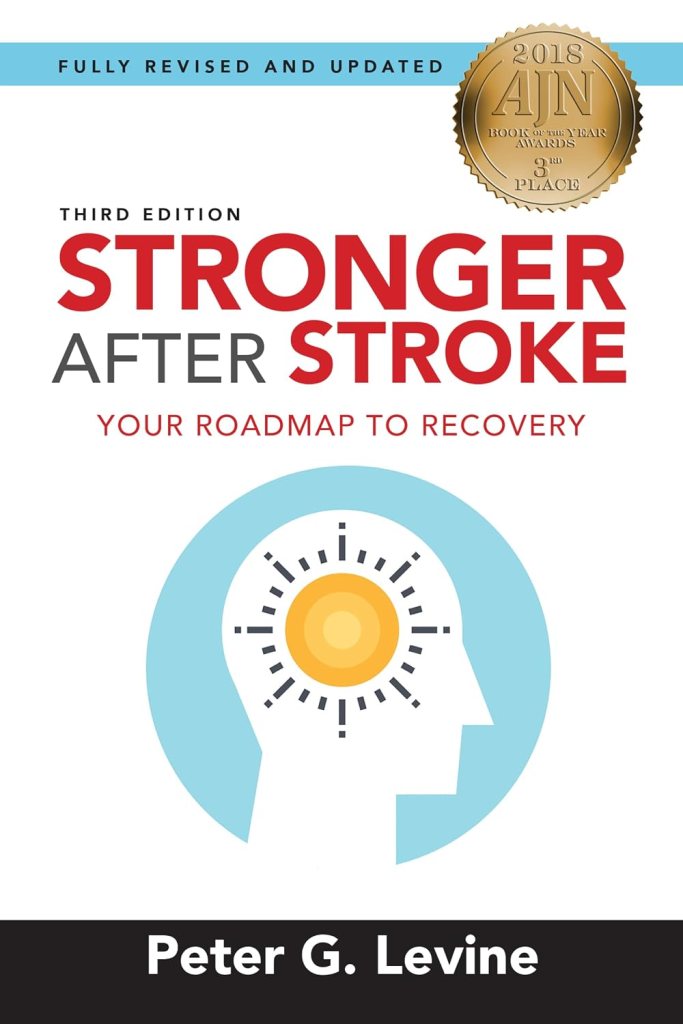
Book cover belongs to the publisher and is displayed for identification and review purposes.


Do you Love Love YOUR Brain?