
What if taking care of your body wasn’t simply about treating pain when it appears?
What if we also learned to understand why our bodies become painful, stiff, or injured in the first place?
The Injury Guide by Dr. Erin Boynton is a practical guide focused on movement, injury prevention, pain management, and maintaining physical function throughout life.
Dr. Boynton is an orthopaedic surgeon who specialized in Sports Medicine and Shoulder Surgery and has worked with professional sports organizations including the Toronto Blue Jays, Toronto Maple Leafs, and Toronto Argonauts.
🚶 Movement Matters
Movement is part of being human.
But pain or injury can make movement feel frightening.
You may start avoiding certain movements because you’re worried about making things worse.
Over time, less movement can create its own challenges.
The Injury Guide focuses on creating a stronger foundation for movement and understanding the reasons the body can break down.
💔 When Pain Keeps Coming Back
Many people treat pain only when it becomes severe.
Rest.
Pain medication.
Massage.
Stretching.
Temporary exercises.
Sometimes these approaches help.
But recurring pain may require a deeper look at the underlying factors.
Dr. Boynton’s approach emphasizes identifying the reasons the body is breaking down and using movement strategies to address them.
🧠 The Body and Brain Work Together
For people living with brain injury, movement can have an additional layer of meaning.
Balance may change.
Coordination may change.
Strength may change.
Fatigue can affect activity.
Sensory issues can make certain environments difficult.
This means movement after brain injury should be individualized.
What is appropriate for an athlete may not be appropriate for someone recovering from TBI.
The important lesson is not “exercise harder.”
It is:
Understand your body.
🌱 Build a Foundation
Dr. Boynton emphasizes that intense exercise isn’t necessarily the starting point.
The foundation comes first.
Basic movement.
Mobility.
Strength.
Control.
Awareness.
Only then can more demanding activity be built safely and appropriately.
🏃 You Don’t Have to Be an Athlete
The book draws on Dr. Boynton’s experience with elite athletes, but its message isn’t only for professional sports.
The publisher describes the book as a resource for anyone who wants to manage pain, heal injuries, prevent future problems, and maintain movement throughout life.
You don’t need to run marathons.
You don’t need to lift heavy weights.
You don’t need to become an athlete.
Movement can simply mean finding ways to keep your body active within your own abilities.
❤️ Movement After Brain Injury
For a brain injury survivor, movement may look different.
It might be:
🚶 A short walk
🪑 Chair exercises
🧘 Gentle mobility
🏊 Swimming
🌿 Gardening
💃 Dancing
Or simply practicing a movement that rehabilitation professionals have recommended.
The goal is not to compare.
The goal is to support your own body.
💗 Love Love Brain Thoughts
The Injury Guide reminds us that our bodies deserve attention before pain becomes overwhelming.
For brain injury survivors, this can be an especially useful reminder:
Your body is still part of your recovery.
Your brain.
Your muscles.
Your balance.
Your strength.
Your movement.
They all work together.
You don’t have to push through pain to prove you’re strong.
You don’t have to become an athlete.
You can simply learn to listen to your body and build movement that supports the life you want to live.
Move with awareness.
Build slowly.
Respect your limits.
Keep going when it is appropriate.
And remember that movement can be about more than exercise.
It can be about freedom, function, confidence, and participating in life.
💬 We’d Love to Hear From You
Has movement played an important role in your recovery?
What type of movement feels good and manageable for you?
What have you learned about listening to your body?
Share your experience in the comments.
📖 Where to Find the Book
The Injury Guide: Eliminate Pain, Heal Your Injuries, and Keep Moving Forever was published by Penguin Canada in 2026. Dr. Boynton’s official website also provides information about the book and her approach to movement.
🛒 Get the Book on Amazon
Love Love Brain may earn a small commission from qualifying purchases made through this link. This does not affect the price you pay.
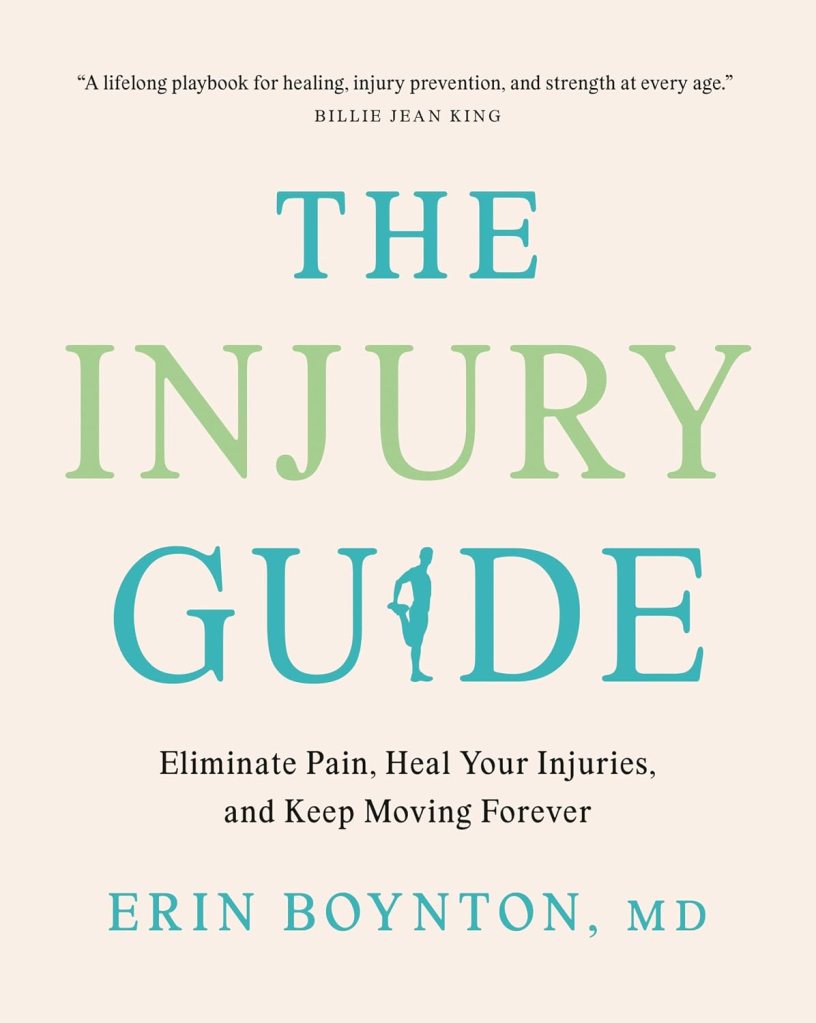
Book cover belongs to the publisher and is displayed for identification and review purposes.
Note: This review is for educational purposes only. Exercise and movement recommendations should be individualized, particularly for people recovering from brain injury, surgery, or other medical conditions. Consult an appropriate healthcare professional before beginning a new exercise program.


Do you Love Love YOUR Brain?