
Recovery after a brain injury can feel overwhelming.
There are appointments.
Symptoms.
Questions.
Changes.
Things you suddenly have to remember.
And things you suddenly cannot remember.
Sometimes you don’t need another complicated explanation.
Sometimes you just need someone to say:
“Here is one thing you can try.”
101 Tips for Recovering from Traumatic Brain Injury by Kelly Bouldin Darmofal offers practical advice for TBI survivors, caregivers, and teachers.
The book grew out of Darmofal’s own experience. She suffered a severe traumatic brain injury in 1992 and drew on two decades of recovery and perseverance when developing the tips in the book.
📖 When Recovery Becomes Everyday Life
Brain injury recovery isn’t limited to hospitals and therapy appointments.
It happens at home.
At work.
At school.
In relationships.
While shopping.
While getting ready in the morning.
While trying to remember where you put your keys.
The small moments can become the difficult moments.
And sometimes the best support comes from practical ideas that make those moments a little easier.
🧠 When Everything Feels Disorganized
After a brain injury, organization can become difficult.
You may forget appointments.
Lose track of objects.
Start one task and forget what you were doing.
Become overwhelmed by too many steps.
The book specifically discusses strategies for staying organized when life feels chaotic.
That can be incredibly valuable.
Because sometimes recovery isn’t about changing your brain overnight.
It is about creating systems that help your brain today.
📝 External Supports Are Not Failure
A calendar isn’t cheating.
A notebook isn’t cheating.
An alarm isn’t cheating.
A reminder on your phone isn’t cheating.
These tools can become part of your recovery system.
You don’t have to remember everything in your head.
Sometimes the smartest thing you can do is put the information somewhere your brain can find it later.
⏰ Sometimes One Alarm Isn’t Enough
One of the memorable practical ideas associated with Darmofal’s tips is the importance of using more than one alarm when necessary.
That may sound simple.
But simple solutions can be powerful.
Maybe you need:
⏰ A phone alarm
📝 A written reminder
📅 A calendar entry
👥 Someone to remind you
There is no shame in building layers of support.
💔 Avoiding Isolation
Brain injury can be lonely.
You may feel different from your friends.
You may not be able to participate in the same activities.
You may become tired during conversations.
You may feel embarrassed when you forget something.
Over time, it can become tempting to withdraw.
But isolation can make recovery feel even harder.
Finding safe ways to remain connected can matter.
Even if connection looks different now.
🤝 Caregivers Need Support Too
The book isn’t only written for survivors.
It also offers strategies for caregivers and teachers.
That matters because brain injury affects entire support systems.
Caregivers may need to learn:
How to communicate clearly.
How to provide reminders.
How to support independence.
How to recognize limitations.
How to encourage without pushing too hard.
Supporting someone with TBI requires patience.
And caregivers need compassion too.
🎓 Teachers and Educators Can Make a Difference
A student with brain injury may look like every other student.
But their brain may be processing information differently.
They may need:
📝 Written instructions
⏸️ Extra time
🔇 Reduced distractions
🔄 Repetition
📚 Smaller amounts of information
Understanding the injury can help educators respond with support rather than assuming a student simply isn’t trying.
😄 Humor Can Help
One of the distinctive elements of Darmofal’s approach is her use of humor.
She recognizes that TBI can be painful and frustrating while still finding moments of lightness in everyday life.
Humor doesn’t erase the injury.
It doesn’t make difficult symptoms disappear.
But sometimes laughing at an awkward moment can make the moment easier to carry.
🌱 Recovery Can Take Time
Darmofal’s advice comes from years of living with the consequences of severe TBI.
That perspective matters.
Recovery is not always a short process.
Sometimes you learn something years after your injury.
Sometimes a strategy that didn’t work before suddenly becomes useful.
Sometimes you discover that you are still learning about your brain long after the initial injury.
💡 Small Systems Can Create Big Changes
A recovery strategy doesn’t have to be complicated.
It can be:
📝 Write it down.
⏰ Set an alarm.
📅 Use a calendar.
🧩 Break the task into steps.
🤝 Ask for help.
⏸️ Take a break.
😄 Give yourself permission to laugh.
Small supports can make ordinary life more manageable.
❤️ You Don’t Have to Do Recovery Perfectly
There will be mistakes.
You will forget things.
You may put something in the wrong place.
You may miss an appointment.
You may become overwhelmed.
You may have a difficult day.
That doesn’t mean you are failing.
Recovery is not a test you have to pass perfectly.
It is a process of learning what works.
🌻 Learn What Works for Your Brain
The best strategy is often the strategy you will actually use.
Maybe another survivor loves digital reminders.
You prefer paper.
Someone else needs complete silence.
You work better with background music.
Someone needs several short breaks.
You need one long rest.
There is no single perfect system.
You are learning your own brain.
💗 Love Love Brain Thoughts
101 Tips for Recovering from Traumatic Brain Injury is a short, practical book built around lessons Kelly Bouldin Darmofal developed through years of living with severe TBI. The book addresses organization, isolation, caregivers, teachers, perseverance, and the everyday challenges of living with a “silent illness.”
What we appreciate most is the practical nature of the book.
Sometimes survivors don’t need another complicated explanation.
They need something they can actually use.
An alarm.
A reminder.
A routine.
A little humor.
A person who understands.
And a reminder that needing support doesn’t mean you are incapable.
You are adapting.
That is different.
At Love Love Brain, we believe recovery can happen one small strategy at a time.
You don’t have to solve everything today.
You only need to find the next thing that helps.
💬 We’d Love to Hear From You
What is one strategy that makes your everyday life easier after brain injury?
Do you use alarms, calendars, lists, or other reminders?
Has humor helped you get through difficult moments?
Share your experience in the comments.
Your tip might become someone else’s helpful idea.
📖 Where to Find the Book
101 Tips for Recovering from Traumatic Brain Injury was published by Loving Healing Press in 2015 and is a short practical guide of approximately 45–47 pages, depending on edition.
🛒 Get the Book on Amazon
Love Love Brain may earn a small commission from qualifying purchases made through this link. This does not affect the price you pay.
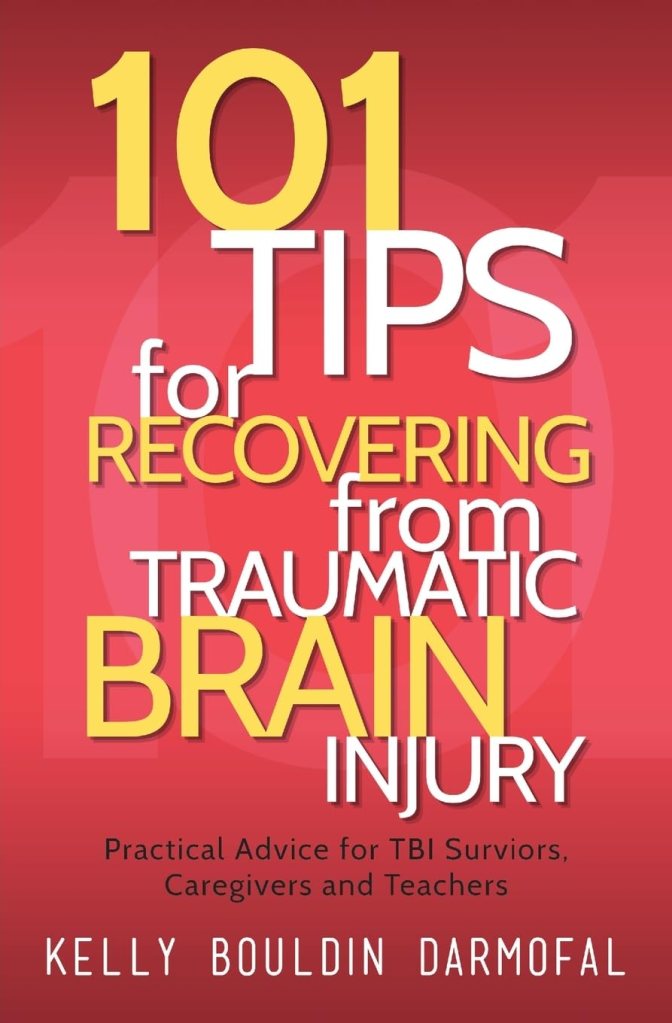
Book cover belongs to the publisher and is displayed for identification and review purposes.
Note: This book review is for informational and educational purposes only. It is not medical advice and should not replace guidance from a qualified healthcare professional. Every brain injury and recovery journey is different.


Do you Love Love YOUR Brain?