
What happens when an injury changes the way the brain works?
For some people, the answer begins with a car accident.
For others, it may be a fall.
A sports injury.
A workplace accident.
A physical assault.
Or another event that suddenly forces life in a different direction.
Traumatic brain injury can affect thinking, memory, movement, emotions, behavior, communication, and everyday independence.
But understanding TBI requires more than learning a list of symptoms.
It requires understanding the people who live with those symptoms.
Traumatic Brain Injury, edited by Arthur Gillard, is an educational collection that explores TBI through information and different perspectives. The book is part of the Perspectives on Diseases and Disorders series and was published by Greenhaven Press.
📖 Understanding Traumatic Brain Injury
A traumatic brain injury occurs when an external force causes injury to the brain.
The consequences can vary enormously.
One person may experience physical symptoms.
Another may struggle primarily with memory or concentration.
Someone else may experience emotional or behavioral changes.
And some survivors may experience several of these at once.
That variability is one reason TBI can be so difficult to understand.
🧠 TBI Is More Than a Physical Injury
When people think about brain injury, they may immediately think about physical symptoms.
Headaches.
Dizziness.
Balance problems.
Weakness.
But the brain controls much more than movement.
TBI can affect:
🧠 Memory
🎯 Attention
🗣️ Communication
💭 Thinking
❤️ Emotions
⚡ Energy
🤝 Relationships
🧩 Executive functioning
These changes can affect nearly every part of daily life.
💭 The Person Behind the Diagnosis
One of the useful aspects of Gillard’s book is its inclusion of personal perspectives.
Descriptions of TBI become more meaningful when we hear from people actually living with the condition.
A medical definition might tell us what memory impairment is.
A survivor can tell us what it feels like to forget something important.
A medical explanation might describe fatigue.
A survivor can describe what it is like to be exhausted after completing an ordinary task.
Both forms of information matter.
💔 When Recovery Is Not Obvious
Brain injury can be invisible.
A survivor may look completely healthy while struggling internally.
They may lose track of conversations.
Forget appointments.
Become overwhelmed in crowded places.
Struggle to find words.
Have difficulty organizing tasks.
Become emotionally exhausted.
And other people may not understand why.
Invisible symptoms are still real symptoms.
🧩 Diagnosis Can Be Complicated
Understanding TBI involves looking at many factors.
What caused the injury?
How severe was it?
What parts of the brain were affected?
What symptoms developed?
How long have they lasted?
What other health factors are present?
The book explores symptoms, causes, treatments, and potential cures, while also presenting different perspectives and controversies surrounding TBI.
This makes it useful as an introductory educational resource.
🩺 Treatment Is Not One-Size-Fits-All
There is no single recovery path that applies to every brain injury survivor.
Treatment can depend on the nature and severity of the injury and the individual’s symptoms and circumstances.
Rehabilitation may involve different professionals working together.
Physical rehabilitation.
Occupational therapy.
Speech-language therapy.
Neuropsychology.
Medical care.
Psychological support.
Social support.
The right combination depends on the individual.
🔎 Looking at Different Perspectives
The book’s format is particularly useful because it presents multiple perspectives rather than treating TBI as a simple subject with one answer.
Some questions surrounding brain injury can involve disagreement.
How should symptoms be interpreted?
How should different treatments be evaluated?
What should recovery look like?
How do we balance established medical approaches with alternative claims?
These questions require careful thinking.
⚠️ Be Careful With “Cures”
Brain injury survivors are often searching for answers.
That makes them vulnerable to anyone promising a quick solution.
A treatment described in a book isn’t automatically proven.
A personal story isn’t the same as clinical evidence.
And an alternative treatment shouldn’t replace appropriate medical care without careful discussion.
Hope is important.
But hope should be paired with good information.
🌱 Recovery Can Be a Long Process
Some people recover quickly.
Others experience symptoms for much longer.
Progress may happen slowly.
Sometimes the improvements are so small that you don’t notice them until you look back.
You may realize:
“I couldn’t do that six months ago.”
That matters.
Progress doesn’t have to be dramatic to be meaningful.
🤝 Families Need Education Too
A brain injury affects more than the survivor.
Families may suddenly have to understand symptoms they have never encountered before.
They may wonder why someone is behaving differently.
They may struggle with changing responsibilities.
They may become caregivers.
They may grieve the life they expected.
Education can help families replace confusion with understanding.
🗣️ Let Survivors Tell Their Stories
Statistics matter.
Medical information matters.
Research matters.
But personal stories matter too.
They remind us that behind every diagnosis is a person.
A person with hopes.
Fears.
Relationships.
Responsibilities.
Dreams.
And a life that continues after the injury.
Listening to survivors can help us understand what the medical terminology doesn’t always capture.
💡 Knowledge Can Create Empowerment
Learning about TBI can help survivors ask better questions.
What symptoms should I discuss with my doctor?
What rehabilitation options might be appropriate?
What accommodations could help me?
What can my family do to support me?
What information should I keep track of?
Knowledge doesn’t eliminate uncertainty.
But it can make uncertainty easier to navigate.
❤️ You Are More Than Your Injury
A diagnosis can become a label.
Sometimes people begin to see themselves only through what their brain injury has taken away.
But you are still a whole person.
You are not only:
Your memory problems.
Your fatigue.
Your headaches.
Your difficulties concentrating.
Your emotional changes.
Your limitations.
Those things may be part of your experience.
They are not the entirety of who you are.
🌻 Recovery Is About the Whole Person
Brain injury rehabilitation isn’t only about improving test scores.
It is also about living.
Returning to meaningful activities.
Connecting with people.
Finding independence.
Creating routines.
Discovering new interests.
Learning what your brain needs.
And finding ways to participate in life that work for you now.
💗 Love Love Brain Thoughts
Traumatic Brain Injury, edited by Arthur Gillard, provides an educational introduction to a complex subject while incorporating multiple perspectives, including information about symptoms, causes, treatments, controversies, and personal experiences.
For the Love Love Brain community, one of the most important reminders is this:
There is no single story of brain injury.
Every survivor’s experience is different.
One person may struggle with memory.
Another may struggle with fatigue.
Another may struggle with emotional regulation.
Another may have physical disabilities.
Another may have symptoms that almost nobody else can see.
And some people may experience several challenges at the same time.
Understanding those differences can help us become more compassionate.
It can also remind us that recovery shouldn’t be measured against someone else’s timeline.
At Love Love Brain, we believe education can be an important part of recovery.
The more we understand the brain, the more effectively we can communicate our needs, advocate for ourselves, support one another, and find appropriate resources.
Your injury is part of your story.
It is not the whole story.
💬 We’d Love to Hear From You
What is one thing you wish more people understood about traumatic brain injury?
Have you ever felt misunderstood because your symptoms weren’t visible?
What helped you learn more about your own brain injury?
Share your experience in the comments.
Your story may help another survivor feel seen and understood.
📖 Where to Find the Book
Traumatic Brain Injury by Arthur Gillard is part of Greenhaven Press’s Perspectives on Diseases and Disorders series. The 2012 edition is a 144-page library-bound educational book intended primarily for student and educational readers.
🛒 Get the Book on Amazon
Love Love Brain may earn a small commission from qualifying purchases made through this link. This does not affect the price you pay.
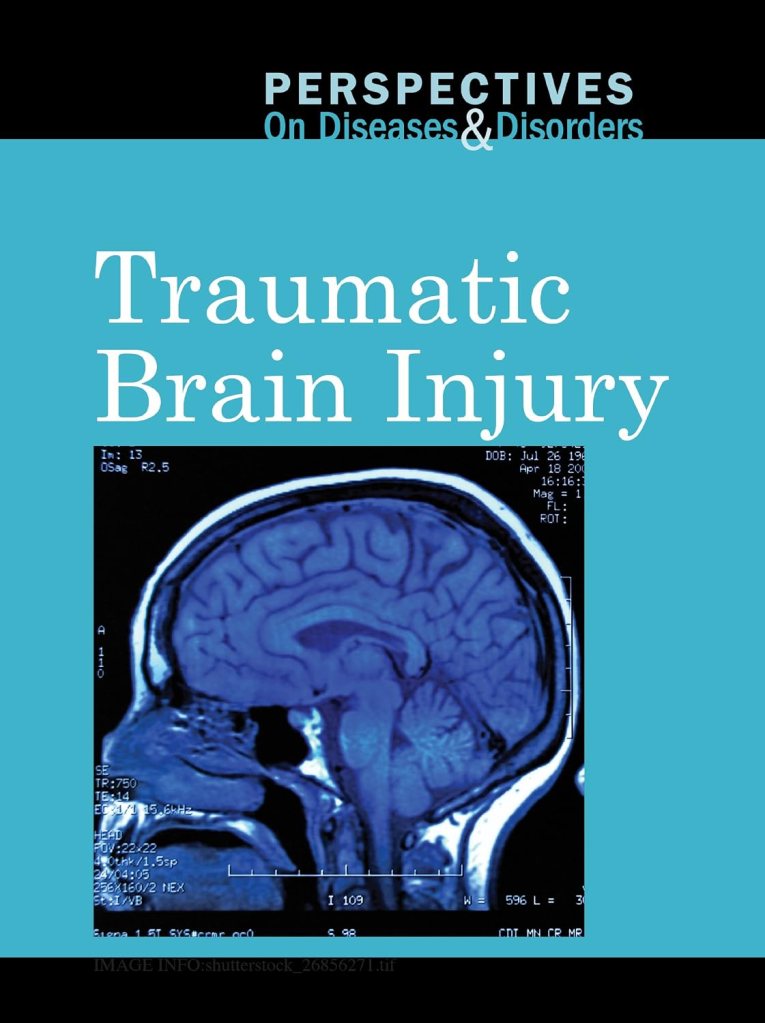
Book cover belongs to the publisher and is displayed for identification and review purposes.
Note: This book review is for informational and educational purposes only. It is not medical advice and should not replace guidance from a qualified healthcare professional. Every brain injury and recovery journey is different.


Do you Love Love YOUR Brain?