
What if the way we understand the brain is missing an important piece?
We often talk about mental health in terms of symptoms.
Depression.
Anxiety.
OCD.
PTSD.
Bipolar disorder.
But what is actually happening inside the brain?
Why do these conditions develop?
Why do some treatments work for some people but not others?
And how might the brain’s metabolism and energy systems influence mental health?
In Brain Energy, Christopher M. Palmer, MD proposes a framework that connects mental health with brain metabolism.
His central theory is that mental disorders can be understood, in part, as disorders involving brain energy metabolism. He explores the role of mitochondria, genetics, inflammation, hormones, neurotransmitters, sleep, stress, trauma, and metabolic health.
🧠 Your Brain Needs Energy
The brain is an extraordinarily energy-demanding organ.
It is constantly working.
Thinking.
Remembering.
Processing information.
Regulating emotions.
Controlling movement.
Interpreting sensory information.
Maintaining attention.
Even when you’re sitting quietly, your brain is busy.
Palmer’s book asks readers to think about what happens when the systems responsible for producing and using energy in brain cells are disrupted.
His theory connects these metabolic processes with mental health conditions.
⚡ What Does “Brain Energy” Mean?
The phrase sounds simple.
But the biology behind it is complex.
Brain cells require energy to communicate and function.
Mitochondria, often described as the cell’s energy-producing structures, play an important role in this process.
Palmer argues that problems with brain energy metabolism may help explain a wide range of psychiatric conditions.
This is presented as a unifying theory rather than a simple explanation for every individual case.
🔄 Looking Beyond One Explanation
Mental health has often been discussed through individual categories.
Depression.
Anxiety.
Bipolar disorder.
Schizophrenia.
ADHD.
But people can experience overlapping symptoms.
A person may experience anxiety and depression.
Someone may have trauma alongside other mental health conditions.
Different conditions may share biological pathways.
Brain Energy explores whether metabolic dysfunction could be one of the connections between them.
🧠 Why This Matters to the Brain Injury Community
Although Brain Energy is primarily about mental health rather than traumatic brain injury, its broader message can be relevant to people living with brain injuries.
The brain doesn’t operate in isolation.
Sleep matters.
Nutrition matters.
Stress matters.
Physical health matters.
Hormones matter.
Inflammation matters.
Metabolism matters.
These factors can influence how a person feels and functions.
That doesn’t mean every symptom after TBI is caused by metabolism.
It means the brain is part of a larger biological system.
💭 The Brain After Injury
After brain injury, survivors may experience changes in:
🧠 Cognition
❤️ Mood
⚡ Energy
😴 Sleep
💭 Emotional regulation
🎯 Motivation
These changes can interact with one another.
Poor sleep can make concentration harder.
Fatigue can make emotional regulation more difficult.
Stress can make everything feel more overwhelming.
Pain can interfere with rest.
The brain and body constantly communicate.
🍽️ Food, Metabolism, and the Brain
One of the most discussed areas of Brain Energy is the relationship between metabolism, food, and mental health.
Palmer explores nutrition, fasting, metabolism, and the gut as contributing factors within his broader framework.
For readers, this can open interesting questions about how lifestyle and metabolic health interact with brain function.
But this is an area where caution matters.
A book’s theory is not the same thing as a universal treatment recommendation.
Dietary changes, fasting, or specialized diets can have medical implications and should be discussed with an appropriate healthcare professional.
🌱 The Brain Is Connected to the Body
One of the most valuable ideas to take from this book is that brain health cannot always be separated from physical health.
Your brain needs:
😴 Sleep
🥗 Nutrients
💧 Hydration
⚡ Energy
🫀 Healthy body systems
🧘 Stress regulation
Taking care of the body can also mean taking care of the brain.
That doesn’t replace medical treatment.
It complements the broader idea that brain health is connected to whole-body health.
🔬 A Different Scientific Lens
Palmer’s theory is ambitious.
He proposes a framework intended to bring together different lines of evidence and rethink how mental disorders are understood and treated.
Readers should approach the book as an exploration of a proposed framework rather than assuming that every claim represents settled scientific consensus.
Science develops through research, testing, debate, and replication.
New ideas need to be evaluated carefully.
That is part of what makes scientific thinking valuable.
💡 What We Can Take Away
Regardless of whether readers agree with every aspect of Palmer’s theory, the book encourages us to ask better questions.
How does sleep affect the brain?
How does stress affect the body?
How does physical health affect mental health?
How does metabolism influence brain function?
How might different biological systems interact?
Questions can lead to better understanding.
❤️ Mental Health Is Not a Personal Failure
Perhaps one of the most compassionate implications of a biological perspective is that mental health difficulties are not simply a matter of willpower.
Someone experiencing depression isn’t necessarily choosing to feel depressed.
Someone experiencing anxiety isn’t simply failing to “calm down.”
Someone with PTSD isn’t choosing to remain stuck in the past.
The brain is a biological organ.
And biological systems can become disrupted.
Understanding this can reduce shame.
🤝 Brain Health Needs a Bigger Conversation
Brain health is often discussed in separate categories.
Neurology.
Psychiatry.
Nutrition.
Sleep.
Physical rehabilitation.
Mental health.
But the person experiencing the symptoms doesn’t live in separate categories.
They experience one body.
One brain.
One life.
A more integrated approach can help us think about the whole person rather than only one symptom at a time.
🌻 Recovery Is Bigger Than One Piece of the Puzzle
For brain injury survivors, recovery can involve many pieces.
Medical care.
Rehabilitation.
Sleep.
Energy management.
Emotional support.
Relationships.
Movement.
Nutrition.
Cognitive strategies.
Mental health care.
There may not be one answer.
There may be many pieces that work together.
💗 Love Love Brain Thoughts
Brain Energy offers a thought-provoking look at the relationship between brain metabolism and mental health.
Christopher Palmer proposes that mental disorders may be understood as disorders of brain energy metabolism and explores how metabolism may intersect with genetics, inflammation, hormones, neurotransmitters, sleep, stress, and trauma.
For the Love Love Brain community, the larger message is worth considering:
The brain is connected to the rest of the body.
Brain health isn’t only about thinking.
It involves energy.
Rest.
Physical health.
Emotions.
Stress.
Sleep.
And the many biological systems that keep the brain functioning.
At the same time, we should be careful not to turn one theory into a promise of a cure.
Every brain injury is different.
Every mental health condition is different.
And treatments should be individualized and guided by qualified healthcare professionals.
But asking better questions about how the brain works can still be empowering.
Sometimes understanding your brain can be the first step toward treating yourself with more compassion.
💬 We’d Love to Hear From You
Have you noticed a connection between your sleep, energy, physical health, and how your brain feels?
Did your understanding of mental health change after your brain injury?
What helps you take care of both your brain and your body?
Share your experience in the comments.
Your perspective may help someone else feel less alone.
📖 Where to Find the Book
Brain Energy was published by BenBella Books in 2022 and is available in hardcover and digital formats.
🛒 Get the Book on Amazon
Love Love Brain may earn a small commission from qualifying purchases made through this link. This does not affect the price you pay.
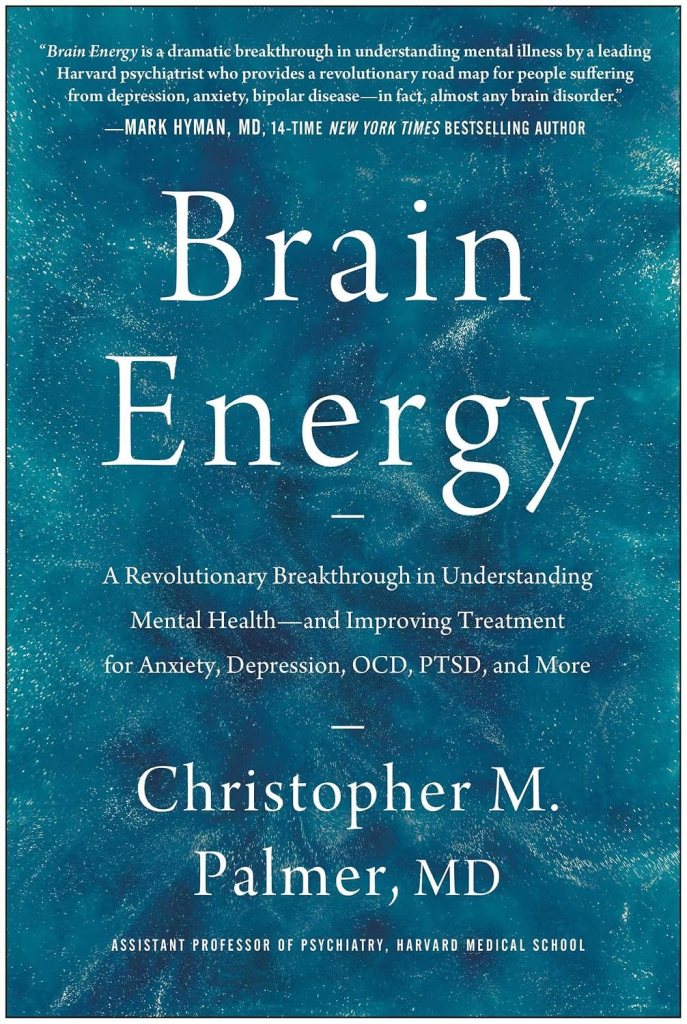
Book cover belongs to the publisher and is displayed for identification and review purposes.
Note: This book review is for informational and educational purposes only. It is not medical advice and should not replace guidance from a qualified healthcare professional. Every brain injury and recovery journey is different.
 ♥️♥️🧠 Love Love Brain
Do you Love Love YOUR Brain?